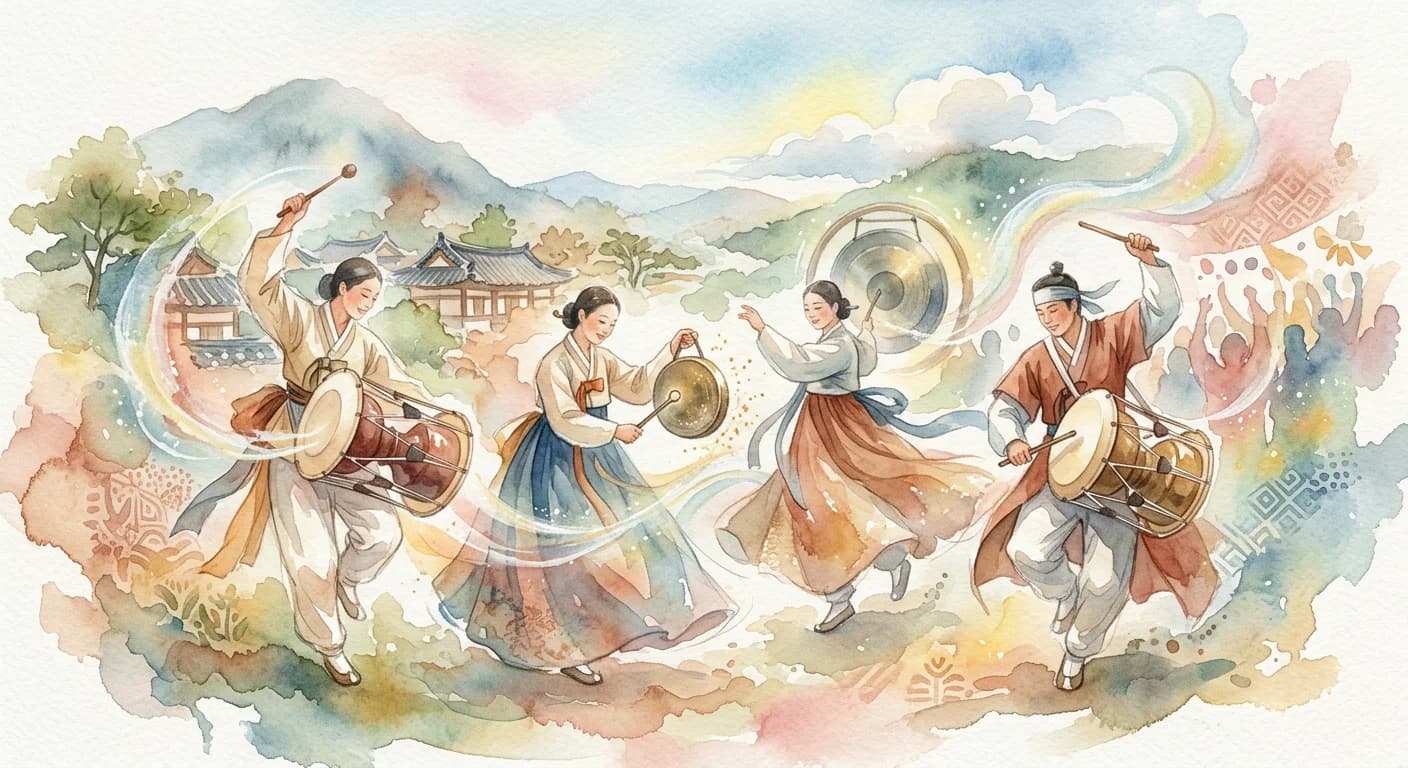
Samulnori
/SAH-mool-noh-ree/
Meaning
Samulnori is a captivating genre of traditional Korean percussion music, literally meaning 'four things playing,' that transcends mere performance to become a communal celebration. It masterfully weaves together the distinct voices of the kkwaenggwari, jing, janggu, and buk into a vibrant tapestry of sound. Characterized by its electrifying rhythms, improvisational flair, and often incorporating dynamic dance and acrobatic movements, Samulnori ignites a shared sense of excitement and embodies the very spirit of Korean folk tradition and lively festivity.
Literal Translation
four things playing
The Story Behind the Word
Samulnori emerged in the late 1970s, drawing heavily from pungmul (farmers' music and dance) and gut (shamanic rituals), which historically played vital roles in Korean agrarian communities. It distills the essence of these communal traditions, transforming them into a stage-friendly art form while retaining their inherent energy and spiritual underpinnings. The four instruments represent the elements of nature: the kkwaenggwari (thunder/lightning), jing (wind), janggu (rain), and buk (clouds), symbolizing a harmonious interaction with the natural world and a prayer for good harvest and well-being. Its existence reflects a deep-seated cultural value of collective joy, resilience, and the power of rhythm to unite and uplift spirits, even in modern, urbanized Korea. It's a living link to the past, reminding Koreans of their roots and the enduring power of community.
Experience It
Festival's Heartbeat
At the annual Chuseok festival, a Samulnori troupe takes center stage. The powerful beats of the buk and janggu lay a foundation, while the piercing kkwaenggwari and resonant jing weave complex patterns, drawing a massive crowd into a collective rhythmic trance. Children dance spontaneously, and elders tap their feet, all united by the electrifying sound.
Welcoming New Beginnings
A university holds its matriculation ceremony, and a student Samulnori club performs to mark the occasion. Their energetic performance, filled with synchronized movements and escalating rhythms, symbolizes the vibrant spirit of youth and the hopeful journey ahead. The new students feel a surge of camaraderie and excitement for their academic adventure.
The Deeper Meaning
Samulnori embodies the Korean philosophical concept of 'heung,' a collective effervescence or joyful excitement that transcends individual pleasure. It's about finding harmony in dynamic interplay, where each instrument, much like each individual in a community, contributes its unique voice to create a powerful, unified whole. This reflects a worldview that values communal spirit, resilience, and the transformative power of shared experience and rhythm to overcome hardship and celebrate life.
Did You Know?
While often performed indoors today, Samulnori's roots in pungmul mean it was traditionally played outdoors, accompanying farmers in their fields, during village processions, and at shamanic rites, connecting music directly to daily life and spiritual practices.
How It's Used
Samulnori is performed at festivals, cultural events, and public gatherings in South Korea. It can also be found in theatrical performances and educational settings.