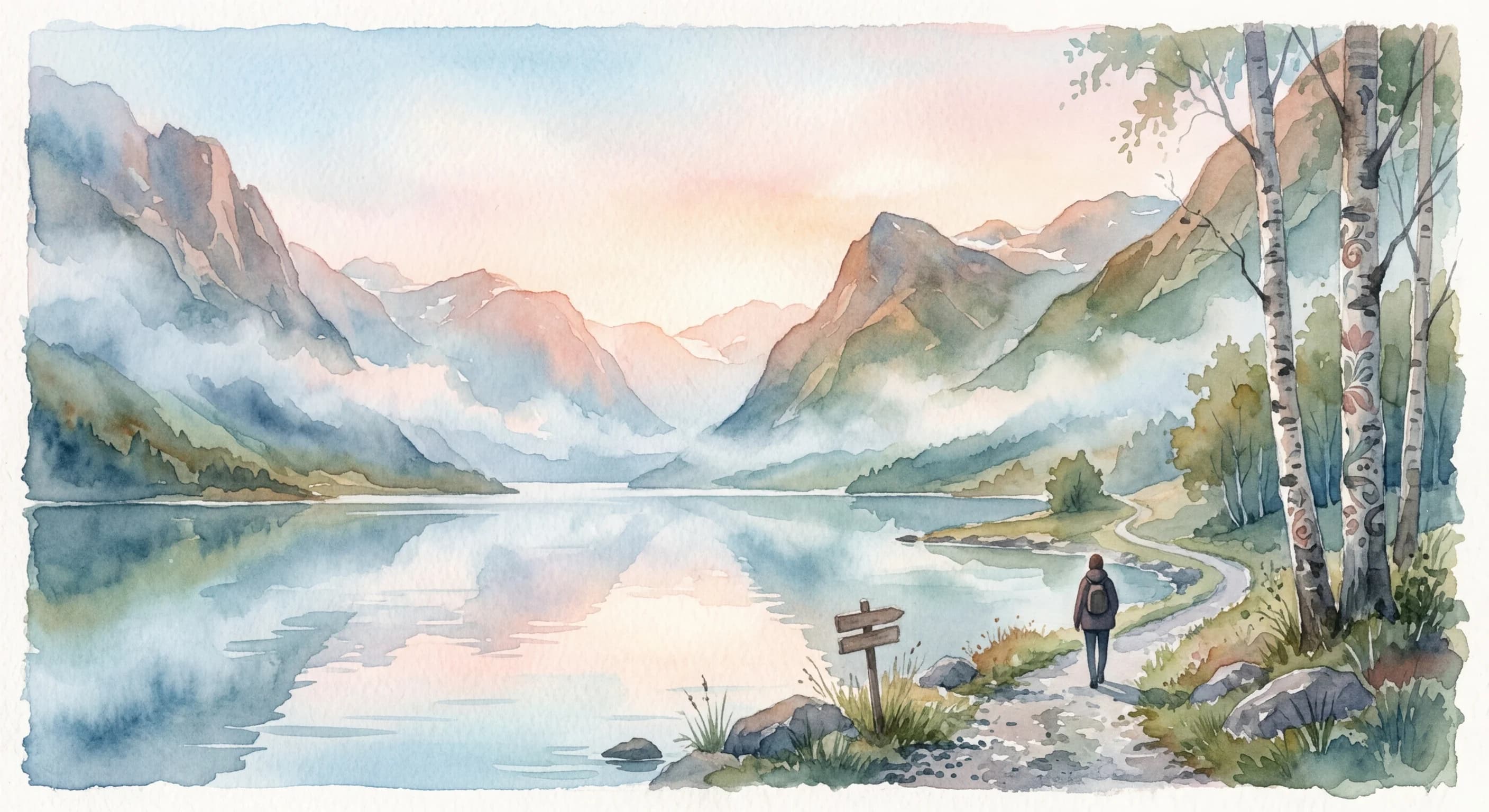
Ut på tur, aldri sur
/OOT poh TOOR, AL-dree SOOR/
Meaning
This cherished Norwegian adage, "Ut på tur, aldri sur," translates to "Out on a trip, never grumpy." It embodies a profound national conviction that immersion in nature, regardless of external conditions or internal disposition, is a sovereign remedy for low spirits. Far more than a simple idiom, it's a living philosophy championing the restorative power of Norway's rugged landscapes and the unadulterated joy found in outdoor exploration. The phrase fosters an optimistic outlook, suggesting that a step into the wild is an immediate antidote to negativity and a direct path to inner serenity and contentment.
Literal Translation
Out on a trip, never grumpy/sour
The Story Behind the Word
The phrase "Ut på tur, aldri sur" is deeply interwoven with the Norwegian concept of 'friluftsliv' – literally 'free-air life' – a cornerstone of national identity. Rooted in the country's vast and often challenging natural environment, friluftsliv emerged as a cultural ideal in the late 19th century, promoting outdoor recreation as a means of physical, mental, and spiritual well-being. This saying reflects the resilience and pragmatism developed by generations living in close communion with nature, where the weather is often unpredictable. It posits that true contentment isn't found in avoiding discomfort but in embracing it as part of the outdoor experience, transforming potential grumpiness into a sense of accomplishment and connection with the natural world. It reveals a culture that values grit, resourcefulness, and a profound respect for nature as a source of solace and strength.
Experience It
Rainy Sunday Hike
The rain was pouring, and young Ingrid grumbled about canceling their planned hike. Her grandmother, with a twinkle in her eye, patted her shoulder and declared, "Ut på tur, aldri sur!" Ingrid reluctantly pulled on her rain gear, but an hour later, splashing through puddles and breathing the fresh forest air, she found herself laughing, utterly forgetting her earlier gloom.
Post-Work Blues
After a particularly stressful day at work, Ole felt a heavy cloud of frustration. His partner, noticing his mood, suggested a short walk along the fjord. Ole initially resisted, wanting only to collapse on the sofa, but his partner gently reminded him, "Ut på tur, aldri sur." Reluctantly, he joined, and as the cool sea breeze cleared his head, his worries began to dissipate with each step.
The Deeper Meaning
This phrase encapsulates a core Norwegian philosophy that happiness and well-being are not merely states of mind but are actively cultivated through engagement with the natural world. It suggests that external circumstances, even adverse ones like bad weather, should not dictate one's inner state. Instead, it champions an active, resilient approach to life, where discomfort can be transformed into joy and personal growth through the simple, profound act of stepping outside.
Did You Know?
This phrase is so ingrained in Norwegian culture that it's often taught to children from a young age, becoming a fundamental part of their upbringing and understanding of outdoor life.
How It's Used
This phrase is commonly used by Norwegians to encourage themselves or others to go outside and enjoy nature, especially when the weather is poor or spirits are low. It's a motivational expression often heard before embarking on hikes, ski trips, or any outdoor excursion.