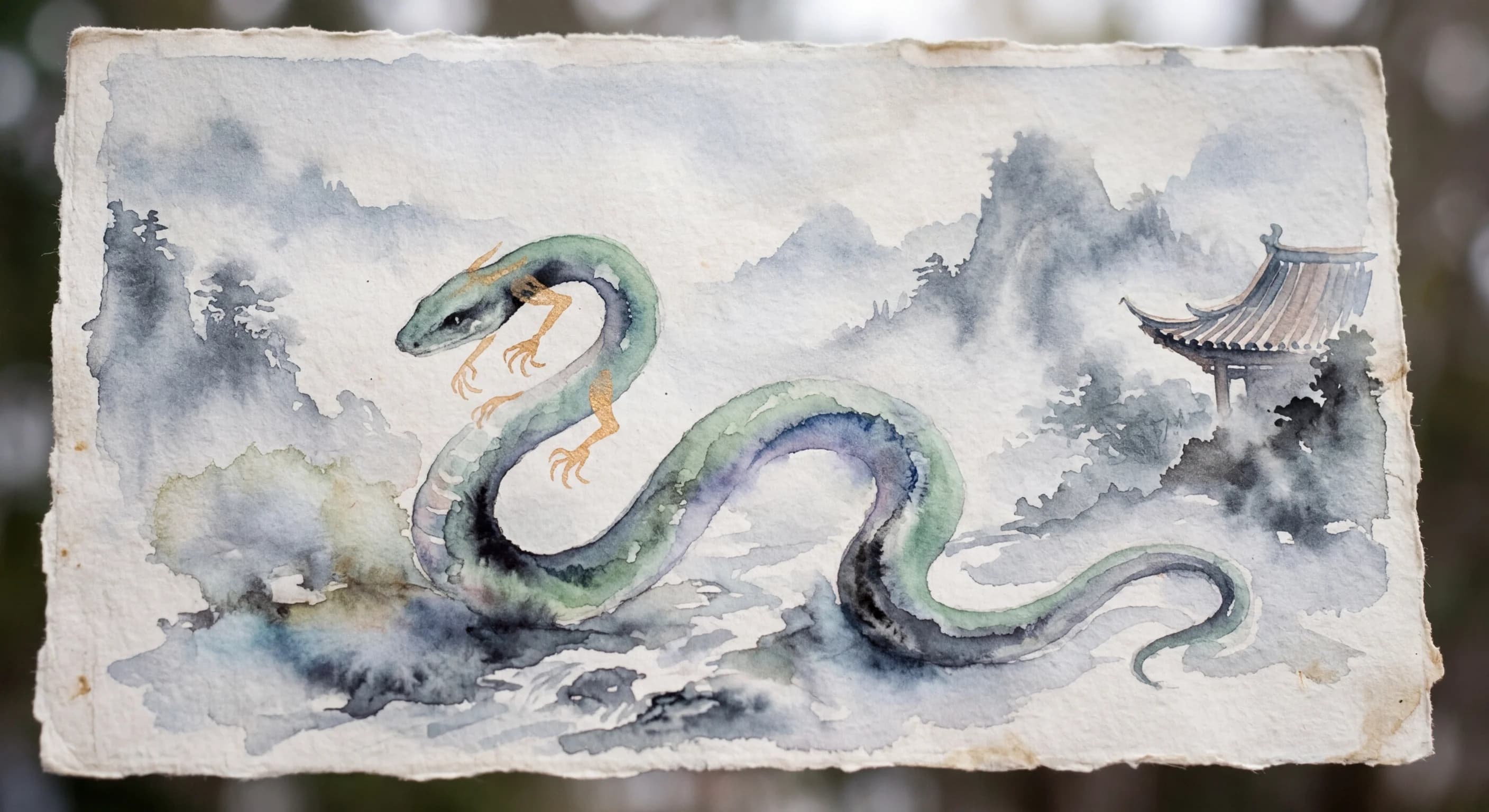
Huàshétiānzú
/hwah sheh tee-an zoo/
Meaning
This ancient idiom vividly captures the folly of overzealous embellishment, likening it to a painter who, having perfectly rendered a snake, foolishly adds feet to it, thereby ruining his masterpiece and forfeiting his prize. It serves as a sharp admonition against actions that, though seemingly intended to improve, ultimately detract from perfection or completeness by introducing unnecessary, even detrimental, elements. The phrase cautions against hubris and the misguided belief that more is always better, highlighting how superfluous efforts can spoil an otherwise good outcome.
Literal Translation
draw snake add feet
The Story Behind the Word
The idiom "huàshétiānzú" springs from a foundational story in Chinese culture, found in the ancient text "Strategies of the Warring States" (Zhàn Guó Cè). It reflects a deeply ingrained philosophical principle valuing balance, moderation, and knowing when to stop. This concept is interwoven with Daoist tenets of wu wei (effortless action) and Confucian ideals of propriety and harmony, where excess is often seen as disrupting natural order. The narrative emphasizes the importance of precision and the dangers of overconfidence, a recurring theme in Chinese historical parables used to impart moral and strategic lessons. It reveals a cultural perspective that often prizes subtle perfection and efficiency over ostentatious display, viewing unnecessary additions as a sign of poor judgment rather than creativity.
Experience It
Over-designed Website
The new company website was sleek and user-friendly, but the marketing team insisted on adding flashing animations and pop-up videos to every page. Now, it's slow, cluttered, and impossible to navigate, a classic case of huàshétiānzú.
Unnecessary Speech Extension
The speaker delivered a concise, powerful presentation, earning widespread applause. However, he then decided to add another ten minutes of rambling anecdotes, completely undermining the impact he had initially achieved, truly a huàshétiānzú moment.
The Deeper Meaning
This idiom embodies a core Chinese philosophical principle: the appreciation of sufficiency and the avoidance of excess. It's a reminder that true mastery lies not just in creation, but in knowing the limits and respecting the inherent perfection of a thing. It underscores the wisdom in restraint and the understanding that sometimes, the best action is no further action at all, aligning with Daoist ideas of natural balance and the perils of human intervention.
Did You Know?
The original story from which "huàshétiānzú" derives was used to illustrate a point about the dangers of seeking additional gains after already achieving victory, emphasizing the importance of knowing when to quit.
How It's Used
Used to criticize actions that are excessive, redundant, or spoil a good thing by trying to improve it unnecessarily. It's often invoked when someone adds details or elements that are not needed and actually make the outcome worse.