Haak hei
/HAHK HAY/
Meaning
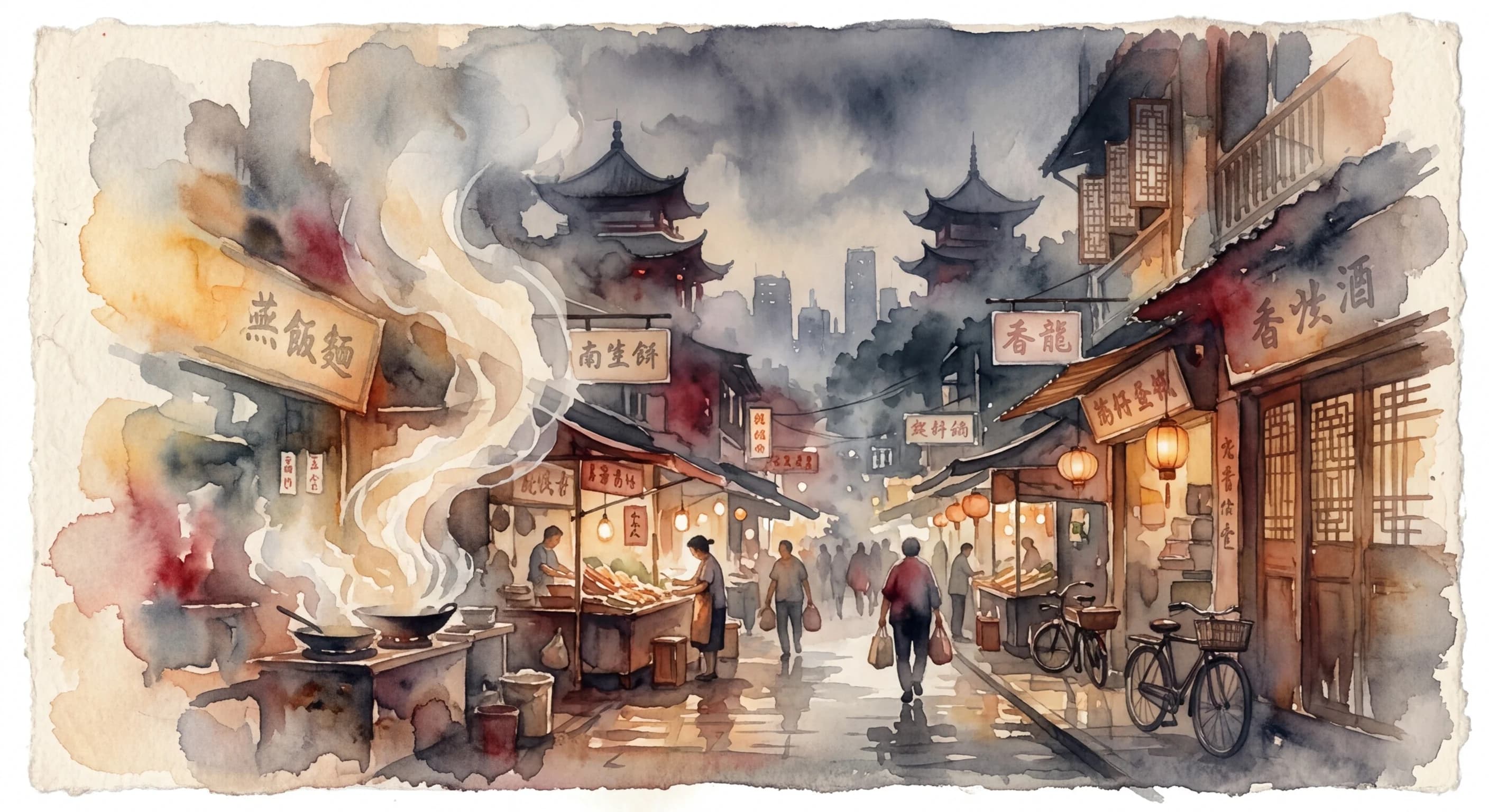
“Haak hei” transcends a mere olfactory sensation; it’s the visceral, atmospheric signature of Hong Kong and southern Chinese urbanity. This distinctive, often smoky and slightly acrid aroma, born from the ceaseless wok hei of street-side kitchens and bustling eateries, permeates the very air, becoming an inseparable part of the city's pulse. It's a sensory tapestry that weaves together the relentless energy of the metropolis with its deep-rooted culinary traditions, a scent that isn't just smelled but felt, signaling the vibrant, fast-paced rhythm of daily life.
Literal Translation
Smoke smell / cooking smell
The Story Behind the Word
The existence of "haak hei" as a distinct concept speaks volumes about the centrality of food and the culinary arts in Cantonese culture, particularly in bustling urban centers like Hong Kong. It reflects a society where cooking is not confined to private homes but spills out onto the streets, becoming a public spectacle and a communal experience. The continuous, high-heat stir-frying (wok hei) that creates this aroma is not just a cooking technique but an art form, signifying skill, freshness, and flavor. For many, "haak hei" is deeply intertwined with nostalgia and identity, evoking memories of childhood, family meals, and the vibrant street life that defines their heritage. It represents the persistent, industrious spirit of the people, where even the air itself carries the scent of hard work and delicious sustenance.
Experience It
Evening Market Buzz
Stepping out of the MTR station onto Temple Street, the evening air immediately enveloped Sarah. 'Ah, the haak hei is so strong tonight,' she remarked, inhaling deeply. The rich, smoky scent of char siu, sizzling noodles, and simmering broths mingled, making her stomach rumble as she navigated the crowded stalls.
A Taste of Home
After years abroad, David returned to his old neighborhood in Mong Kok. The moment he turned onto his childhood street, the familiar 'haak hei' hit him. It wasn't just a smell; it was the comforting embrace of home, of countless dinners and bustling mornings, a sensory reminder that he was truly back.
The Deeper Meaning
The concept of "haak hei" subtly reveals a worldview that embraces and even celebrates the raw, unrefined aspects of urban life. It suggests that true vitality isn't found in sterile environments but in the sensory richness of a bustling, productive community. It implies a deep connection between labor, sustenance, and identity, where the very air reflects the collective effort and culinary artistry that sustains a city and its people. It's a testament to finding beauty and comfort in the everyday, often intense, realities of existence.
Did You Know?
The very intensity of 'haak hei' is often seen as a positive sign, indicating a popular eatery with high-volume cooking, which usually correlates with delicious, freshly prepared food.
How It's Used
Used to describe the distinct smell of Cantonese cooking and urban atmosphere, especially in busy food districts or during peak meal times.