Natkhat
/NUT-khut/
Meaning
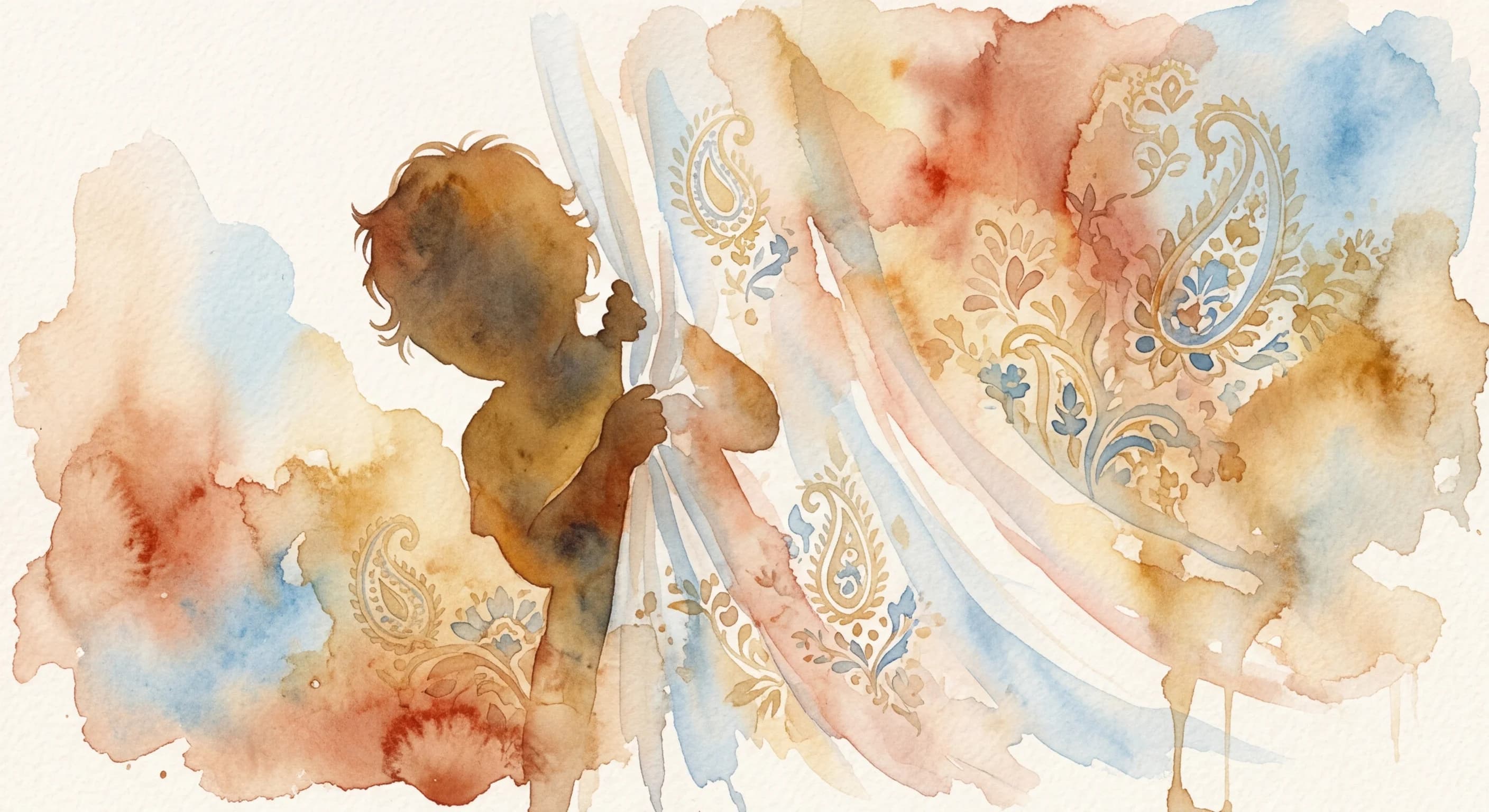
Natkhat encapsulates a delightful, often endearing naughtiness, primarily observed in children. It signifies a playful, impish spirit that, while sometimes disobedient, is never malicious or genuinely harmful. This quality is seen as a vibrant expression of curiosity, vitality, and a budding sense of independent exploration, typically evoking smiles and affectionate chuckles rather than stern reprimands. It's a term of endearment that celebrates a child's spirited, adventurous nature, framing their antics as charming rather than troublesome.
Literal Translation
Naughty/Mischievous
The Story Behind the Word
The concept of 'natkhat' is deeply woven into the fabric of Indian culture, reflecting a society that often cherishes and even deifies the playful, mischievous aspects of childhood. This is perhaps best exemplified by Lord Krishna, who is famously depicted as 'Natkhat Krishna' – a mischievous child-god known for stealing butter, playing pranks, and enchanting all with his charm. This divine archetype imbues 'natkhat' with a spiritual resonance, suggesting that a certain degree of playful disobedience is not just natural but also divine, a sign of lively intelligence and a joyful spirit. It reveals a cultural acceptance, and even admiration, for spirited individualism and creativity, especially in formative years, viewing it as a foundation for a vibrant personality rather than a flaw to be corrected. This cultural lens encourages parents and elders to view such behavior with a forgiving and often delighted perspective, fostering a nurturing environment for exploration and expression.
Experience It
Stolen Sweets
Little Rohan, with chocolate smudged around his lips, emerged from the kitchen giggling, leaving a trail of cookie crumbs. His grandmother, noticing the half-empty jar, shook her head with a smile. 'Oh, you natkhat one!' she exclaimed, knowing he couldn't resist the fresh ladoos.
Playful Prankster
During a family gathering, Auntie Priya noticed her nephew, Aryan, had cleverly swapped the sugar and salt shakers at the dinner table. As guests reacted with surprise, she simply winked at Aryan, calling him a 'big natkhat' under her breath, appreciating his clever prank rather than scolding him.
The Deeper Meaning
The prevalence of 'natkhat' reflects a worldview that embraces and even celebrates the inherent spontaneity and non-conformity of youth. It suggests a philosophy where playful rebellion is not merely tolerated but is seen as a healthy, vital expression of life force and burgeoning individuality. This perspective values the spirit of inquiry and the joy of innocent transgression as essential components of a well-rounded and vibrant personality, rather than viewing them as deficiencies to be disciplined out of a child.
Did You Know?
Lord Krishna, one of the most revered deities in Hinduism, is frequently referred to as 'Natkhat Krishna' due to his famous childhood antics and playful mischief, elevating the term to a divine attribute.
How It's Used
Typically used to describe children who are playfully disobedient, curious, or engaged in harmless pranks. It can also be used affectionately for adults who exhibit a similar playful, impish charm.