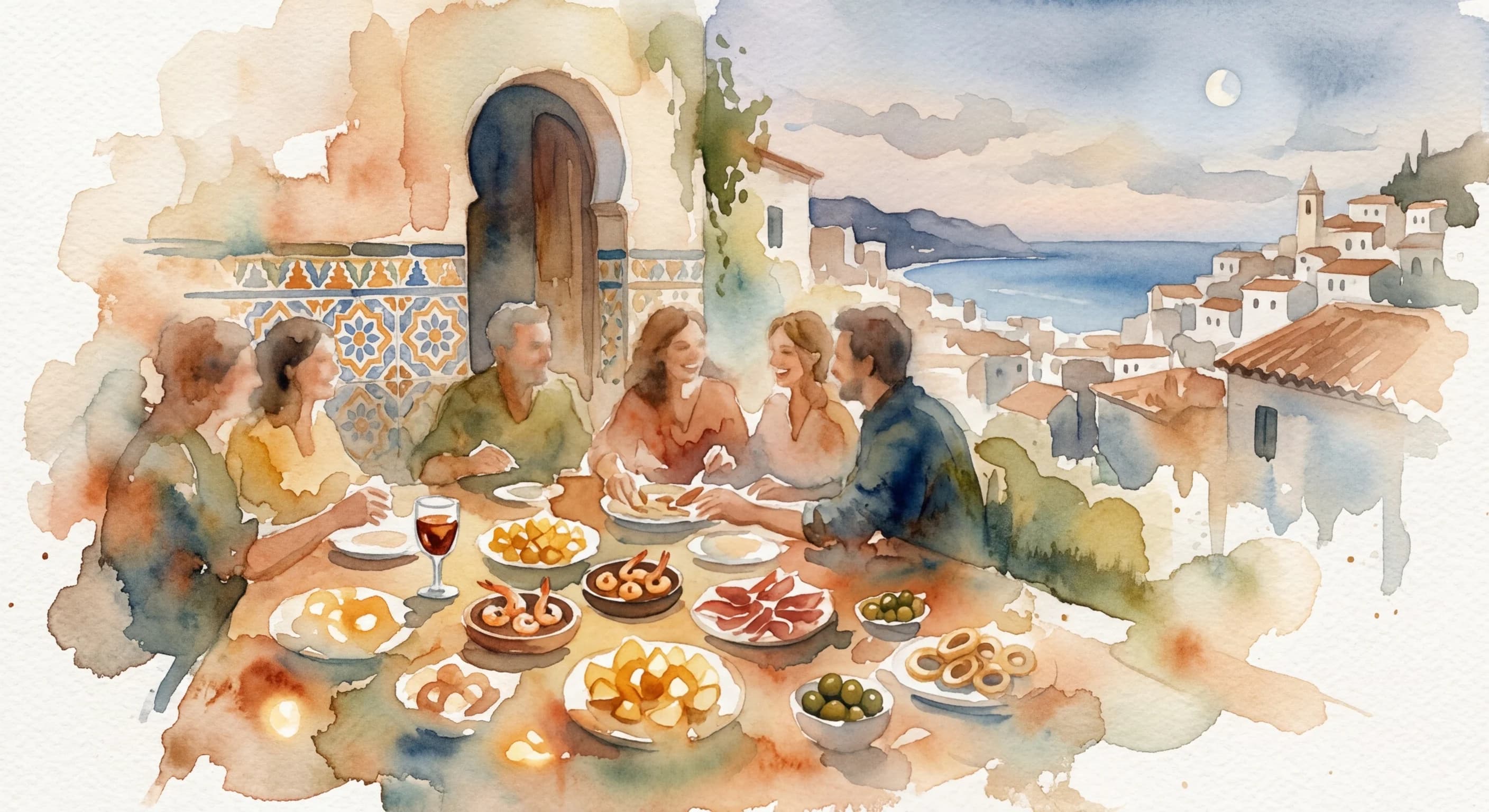
Tapas
/TAH-pahs/
Meaning
Tapas are not merely appetizers; they are a cherished Spanish institution, embodying a vibrant, communal dining experience. These diverse small plates, ranging from simple olives to elaborate regional specialties, are designed for sharing, encouraging lively conversation and a relaxed pace of enjoyment. They transform eating into a social ritual, where friends and family gather to graze, sip, and connect, making each bite a celebration of conviviality and cultural richness.
Literal Translation
lids or covers
The Story Behind the Word
The concept of 'tapas' likely originated from the practical need to cover drinks to keep out flies or dust, using a slice of bread or ham. Over time, these 'lids' evolved into small culinary offerings, transforming a simple cover into a delightful accompaniment. This tradition reflects a profound Spanish appreciation for social interaction and leisurely living, where food serves as a catalyst for connection rather than just sustenance. It underscores a cultural value placed on shared moments, spontaneity, and the joy of collective indulgence, illustrating a world where dining is inherently intertwined with community and celebration.
Experience It
Evening Tapas Hopping
María and her friends drift from bar to bar on a warm evening, each stop offering a different specialty. They share patatas bravas, jamón serrano, and gambas al ajillo, their laughter echoing in the bustling atmosphere as they recount their day over sips of vermouth.
Family Sunday Lunch
Abuela Carmen lays out a spread of various tapas for the family's Sunday gathering. Children dart between plates of croquetas and tortilla, while adults linger over glasses of wine, catching up and savoring the homemade delights that foster a sense of togetherness and tradition.
The Deeper Meaning
Tapas encapsulate a philosophy of 'slow living' and collective joy. They represent an intentional rejection of rushed, individualistic meals, instead championing the value of shared time, conversation, and the simple pleasure of good food and company. It's a culinary expression of 'carpe diem' lived communally.
Did You Know?
One popular theory suggests King Alfonso X of Castile decreed that no wine should be served without a small bite of food to prevent drunkenness, thus inadvertently solidifying the 'tapa' tradition.
How It's Used
Tapas are eaten as a snack or light meal, often in a bar or restaurant, usually with alcoholic beverages like wine or beer. They are a fundamental part of Spanish social life, particularly in the evenings.