Dugnadsånd
/DOOG-nahds-ohnd/
Meaning
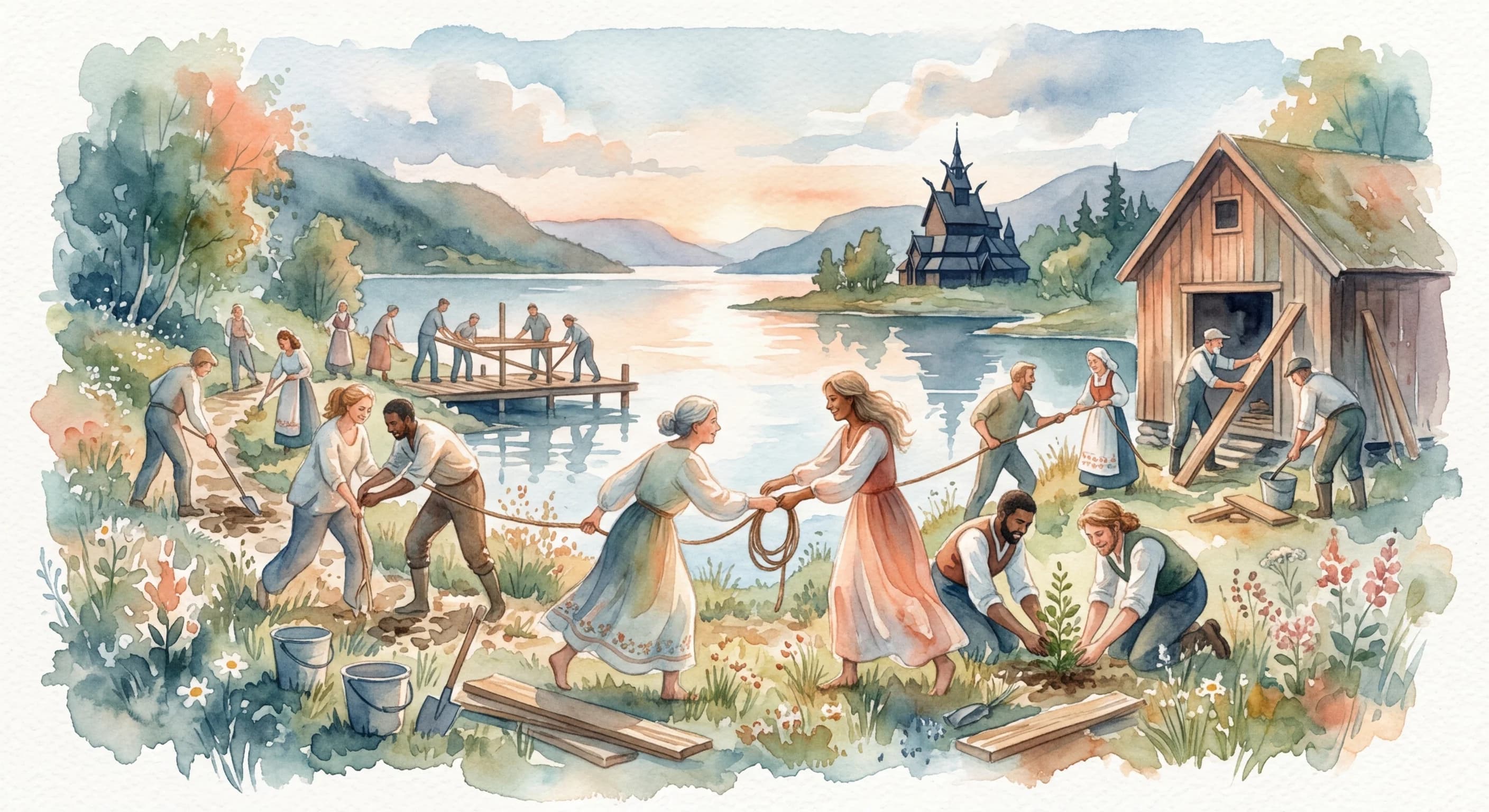
Dugnadsånd encapsulates the profound ethos of collective, voluntary action deeply woven into the fabric of Norwegian society. It signifies the proactive, unpaid contribution of time and effort by individuals for the betterment of their local community, whether tending shared spaces, constructing vital infrastructure, or organizing communal events. More than mere cooperation, it's a potent blend of civic duty, neighborly solidarity, and a shared pride in one's surroundings, forging robust social bonds and a tangible sense of belonging. This spirit reflects an ingrained understanding that mutual respect and collective goodwill are the cornerstones of a thriving environment for all.
Literal Translation
Dugnad (communal work) + ånd (spirit)
The Story Behind the Word
The concept of dugnadsånd is deeply rooted in Norway's agrarian past and its challenging geography. Historically, isolated communities relied on mutual aid for survival, whether building barns, harvesting fields, or clearing roads after heavy snow. This necessity fostered a strong collective identity and a pragmatic understanding that communal effort was essential for individual and collective prosperity. It became enshrined as a core cultural value, transcending rural life to become a cornerstone of modern Norwegian civil society. It reveals a worldview that prioritizes community welfare over extreme individualism, viewing shared responsibility and collective action as fundamental to societal well-being. This ethos is reinforced by Norway's strong social democratic traditions, where collective solutions are often favored, but dugnadsånd provides a grassroots, voluntary layer of community building that complements formal structures.
Experience It
Neighborhood Park Cleanup
On a crisp Saturday morning, the local community gathers at the dilapidated playground. Armed with rakes, paintbrushes, and positive attitudes, families work side-by-side, clearing debris, painting swings, and planting flowers, all fueled by the shared dugnadsånd to create a vibrant space for their children.
Village Road Maintenance
A remote mountain village faces a damaged access road after winter. Instead of waiting for external help, residents organize a dugnad. Farmers bring their tractors, others wield shovels, and teenagers carry rocks, demonstrating a collective spirit to restore their vital connection to the outside world.
The Deeper Meaning
Dugnadsånd embodies a pragmatic communitarian philosophy, suggesting that true societal strength lies not just in individual rights but in collective responsibility and mutual aid. It posits that a harmonious society is actively built and maintained by its members through shared effort and goodwill, rather than solely relying on governmental structures. This worldview fosters a deep sense of ownership and belonging, where individual well-being is intrinsically linked to the health and vitality of the community at large.
Did You Know?
During the COVID-19 pandemic, the Norwegian government actively encouraged 'dugnadsånd' as a national strategy, calling on citizens to collectively follow guidelines and support each other to overcome the crisis.
How It's Used
Used to describe the willingness of people to volunteer their time and effort for the common good of their neighborhood or community.