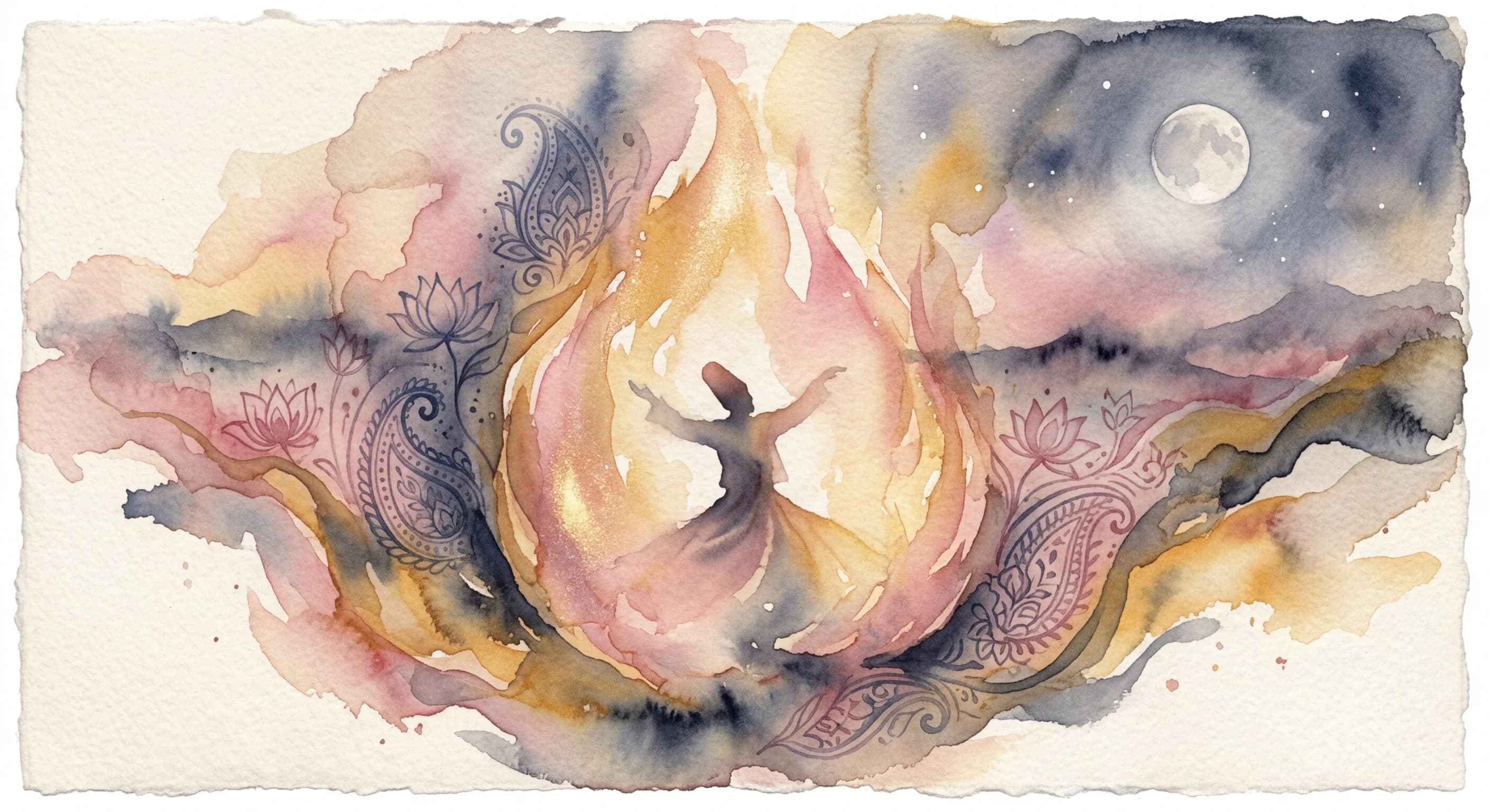
Shama
/SHAH-mah/
Meaning
Shama, while literally signifying a flame, transcends its physical form to embody an ardent, all-consuming devotion. It represents a spiritual yearning so intense that it mirrors a moth's irresistible, self-sacrificing draw to a light, symbolizing a profound desire for union with the divine or a beloved. This powerful metaphor, deeply rooted in Sufi mysticism, speaks to an ultimate surrender and dissolution of the self in the crucible of love, burning away worldly attachments for a transcendent connection. It is the radiant core of passion, illuminating the path to spiritual ecstasy and ultimate truth.
Literal Translation
flame
The Story Behind the Word
The concept of 'shama' is profoundly embedded in the spiritual landscape of India and Persia, particularly within the Sufi tradition and its poetic expressions. This word exists because it encapsulates a core tenet of Sufism: the passionate, often agonizing, journey of the soul towards divine love. The moth (parwana) and the flame (shama) serve as a central allegory, illustrating the lover's complete surrender and sacrifice for the Beloved (God). This imagery reveals a worldview where spiritual enlightenment is not a passive contemplation but an active, consuming passion, demanding the ego's dissolution. It highlights the belief that true love, whether human or divine, necessitates a burning away of the self, mirroring the flame's destructive yet illuminating power. This intense metaphor resonates deeply in Urdu and Hindi ghazals, where poets frequently invoke 'shama' to articulate the extremes of love, longing, and spiritual annihilation for ultimate union.
Experience It
The Poet's Devotion
Lost in the rhythmic trance of the qawwali, the poet closed his eyes, feeling the 'shama' of his devotion burn within. Each couplet was an offering, a flicker of his soul reaching out to the unseen Beloved, a testament to the consuming fire of his spiritual yearning.
A Mother's Love
As she watched her child sleep, the mother felt a profound 'shama' in her heart, a fierce, protective love that would sacrifice anything. It was a silent, unwavering flame, a testament to the selfless devotion that illuminated her entire being.
The Deeper Meaning
The concept of 'shama' reveals a philosophical perspective where love is not merely an emotion but a transformative, even destructive, force. It underscores the idea that true spiritual growth or profound connection requires a shedding of the ego and worldly attachments. This worldview embraces the paradox that ultimate creation or union often arises from a process of dissolution, suggesting that the most intense forms of devotion lead to a transcendent state beyond the individual self.
Did You Know?
In Sufi poetry, the moth drawn to the 'shama' is not merely a symbol of destruction, but of ultimate union through self-annihilation, considered the highest form of love.
How It's Used
The word 'shama' is frequently used in Urdu and Hindi poetry, especially within the Sufi tradition, to describe the passionate, often sacrificial, love for the divine or a spiritual guide. It's also used literally to refer to a candle flame.