Hijr
/HIJ-r/
Meaning
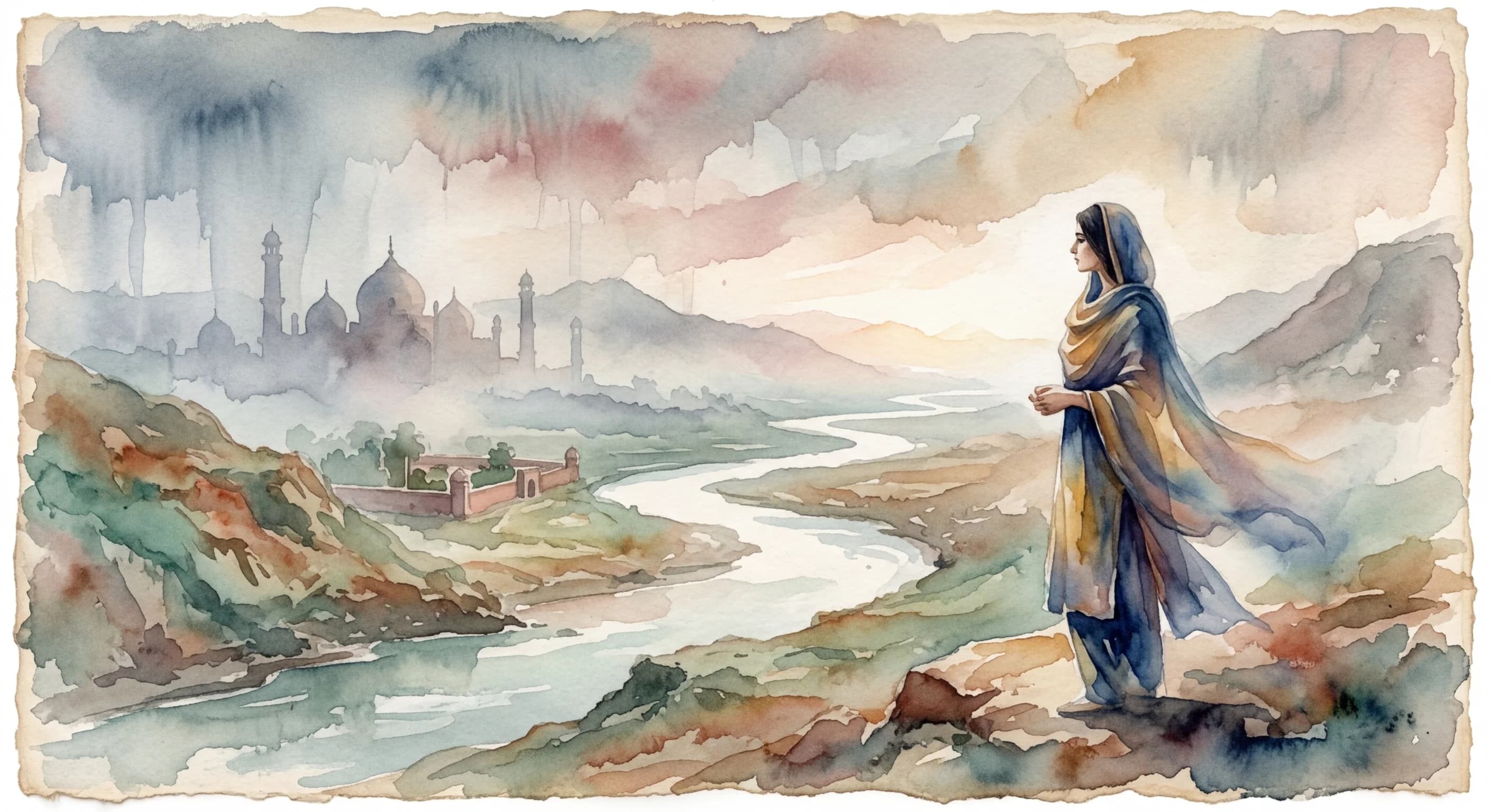
Hijr encapsulates the profound, aching sorrow of separation from a cherished beloved, transcending mere sadness to describe an intense, almost physical pain of absence. It is the deep yearning for reunion, a relentless suffering that permeates one's being, often felt in the context of passionate romantic love or a fervent spiritual quest. This emotional void is not just missing someone; it's the very agony of their non-presence, a central theme in the rich tapestry of Urdu and Persian poetry that elevates separation itself into a poignant experience.
Literal Translation
Separation, abandonment, absence
The Story Behind the Word
Hijr is a cornerstone of classical Urdu and Persian poetry, often intertwined with the mystical tradition of Sufism. It represents not just earthly separation from a lover, but also the soul's profound yearning for union with the Divine. This concept reveals a culture that embraces emotional depth, where suffering in love is not to be avoided but explored as a path to spiritual or personal growth. The enduring popularity of ghazals (a poetic form) dedicated to Hijr underscores a societal appreciation for articulating profound emotional states, recognizing the transformative power of longing and absence. It suggests a worldview where love, even in separation, is a defining force of human existence.
Experience It
Poet's Lonely Night
The old poet gazed out at the moon, his pen still. Decades had passed since his beloved left, yet the Hijr remained a fresh wound, each line of verse a testament to the unending ache in his chest, a constant echo of her laughter in the silent night.
Lover's Distant Hope
Across continents, she clutched a faded photograph, the Hijr a heavy cloak around her heart. Every sunrise brought a renewed pang of longing, yet also the faint, persistent hope that one day, the agony of absence would finally give way to the warmth of his return.
The Deeper Meaning
Hijr reveals a philosophy where love, even in its most painful forms, is intrinsically linked to existence and spiritual realization. It posits that true devotion is tested and deepened through separation, suggesting that absence can paradoxically strengthen connection and lead to profound self-discovery. This perspective views suffering not as an end, but as a crucible for growth and intensified yearning.
Did You Know?
In Sufi poetry, Hijr is often seen as a necessary stage on the path to divine union, a 'purging fire' that intensifies the lover's devotion to God.
How It's Used
Hijr is used to describe the intense suffering and emotional turmoil caused by the absence or separation from a beloved person, often in a romantic or spiritual context. It is frequently found in poetry, literature, and discussions of love and loss.