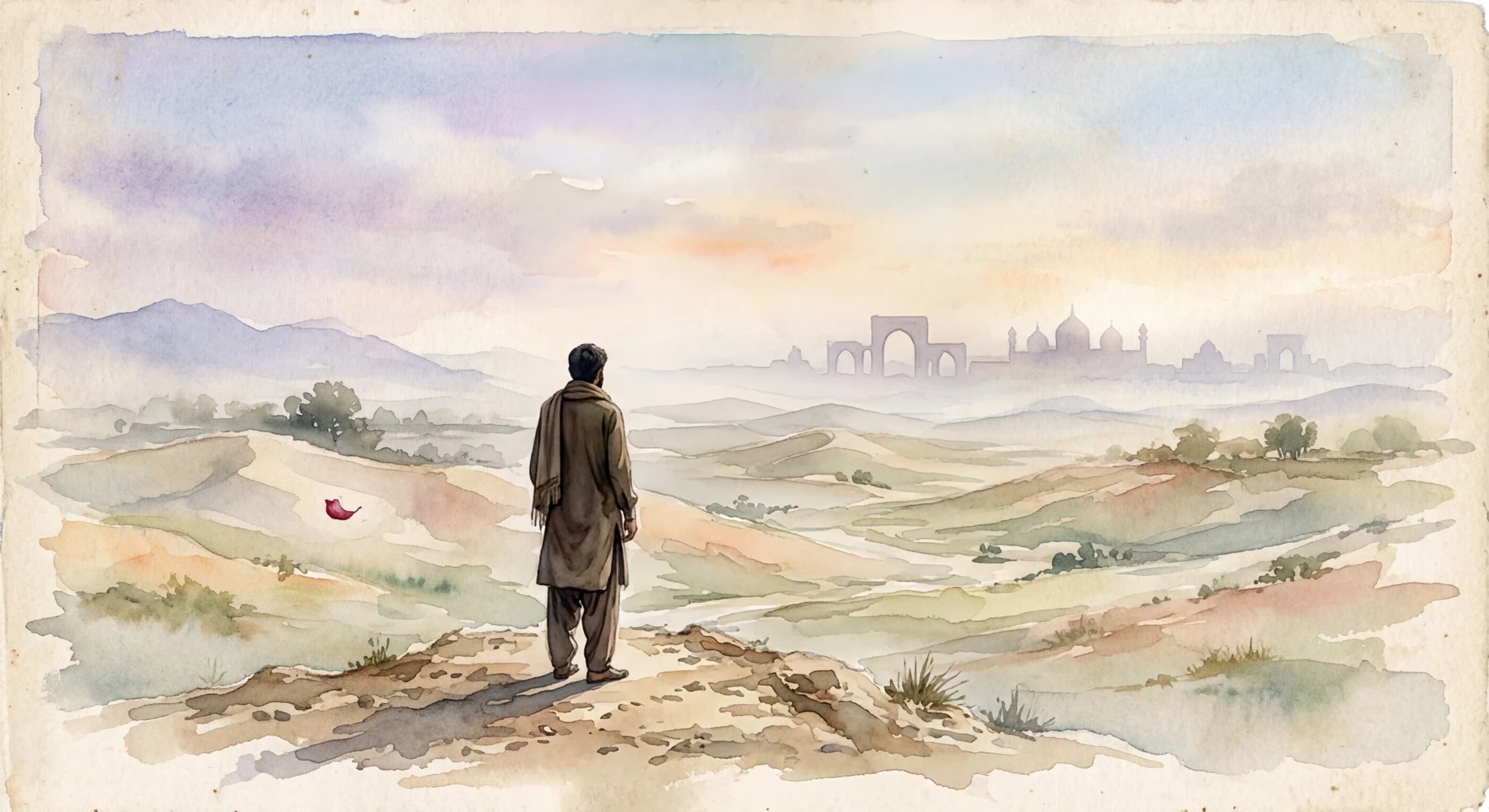
Hasrat
/HAZ-rut/
Meaning
Hasrat is more than a mere wish; it's a poignant ache in the soul, a profound longing for something irrevocably lost or forever out of reach. It carries the bittersweet burden of unfulfilled desires and the quiet sorrow of opportunities that slipped away, whether from a distant past or a future that never materialized. This complex emotion intertwines wistful yearning with a deep regret, creating a sentiment that is both deeply personal and universally understood in its human experience of absence.
Literal Translation
longing, desire, regret
The Story Behind the Word
The prevalence of 'Hasrat' in Urdu and South Asian cultures speaks to a worldview deeply rooted in poetry, a sense of destiny, and an acceptance of life's inherent impermanence. Classical Urdu poetry, particularly ghazals, frequently explores themes of lost love, separation, and the unfulfilled desires that define human existence, making 'Hasrat' a cornerstone of emotional expression. This word often reflects a cultural resignation to fate while simultaneously acknowledging the profound human capacity for yearning. It signifies not just a personal feeling but a shared understanding of life's often unyielding nature, where aspirations frequently contend with harsh realities, leading to a contemplative, often melancholic, appreciation of what could have been.
Experience It
A Poet's Unsung Love
An aging poet gazes at an old photograph, a faint smile playing on his lips, yet his eyes hold a deep 'Hasrat'. He remembers the love he never confessed, the words he never spoke, and the life they might have built together, now only a ghost of a possibility.
Homeland Left Behind
An immigrant, many decades removed from their birthplace, feels a surge of 'Hasrat' watching a documentary about their ancestral village. The longing for the scents, sounds, and familiar faces of a home they can never truly return to washes over them, a bittersweet ache for a life left behind.
The Deeper Meaning
Hasrat reveals a philosophy that acknowledges the inherent human condition of striving and falling short, of desiring more than life often grants. It suggests a deep awareness of both the beauty of yearning and the sorrow of its unfulfillment, embracing the idea that some of life's most profound emotions stem from what remains just beyond our grasp. This word encapsulates a contemplative acceptance of longing as an intrinsic part of existence.
Did You Know?
Many classical Urdu ghazals are entirely built around the concept of 'Hasrat', using it as a central motif to explore themes of unrequited love and the pain of separation.
How It's Used
Used to express a deep longing, regret, or yearning for something that is absent, lost, or unattainable. It can refer to past events, missed opportunities, or a future that never materialized.