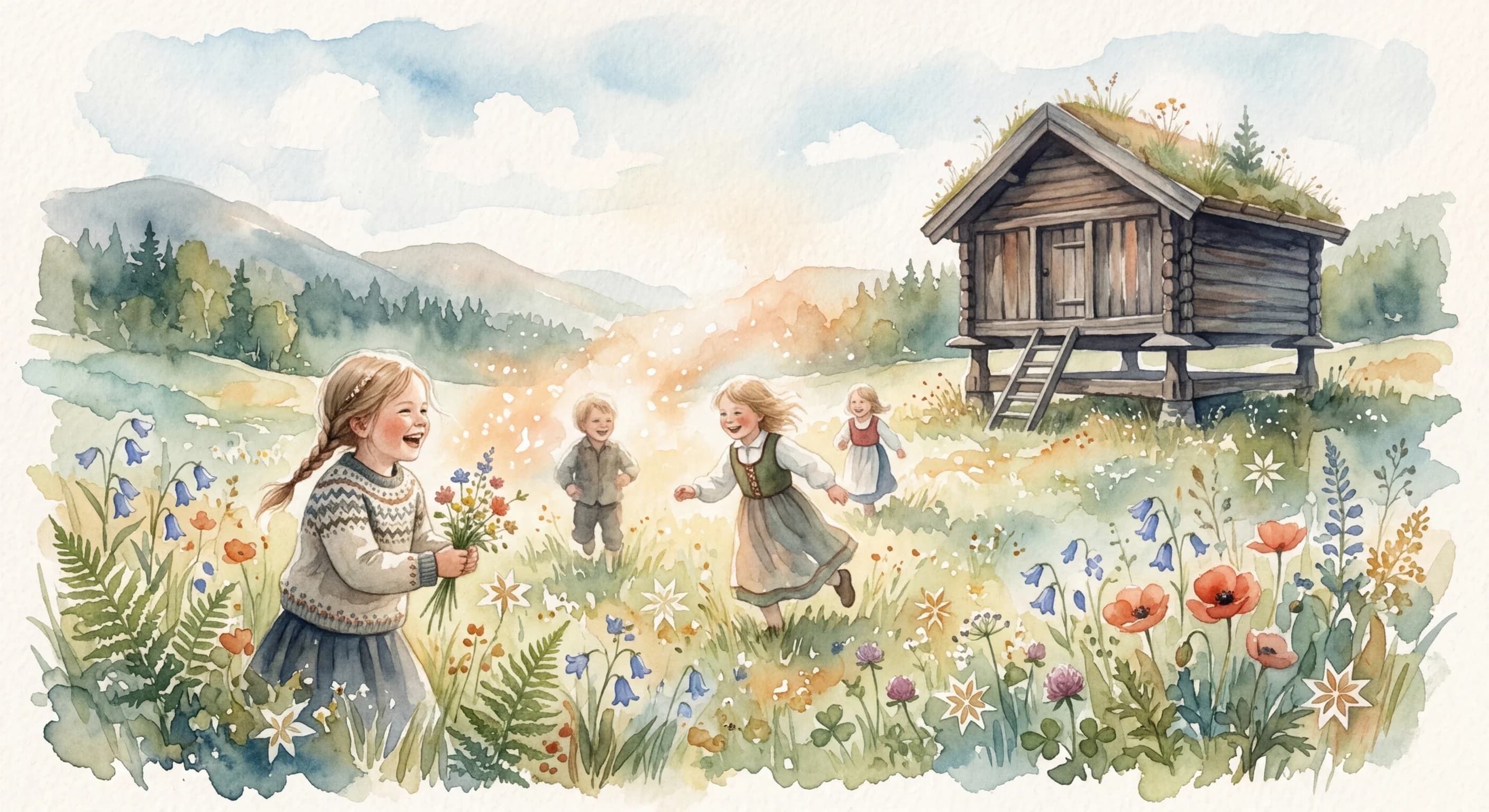
Barneglede
/BAR-neh-glay-deh/
Meaning
Barneglede encapsulates the effervescent, unfiltered joy that radiates from children engaged in play, discovery, and innocent merriment. It's the infectious happiness gleaned from their boundless energy, uninhibited laughter, and genuine wonder at the world. This profound sense of delight transcends mere observation, often drawing adults into a shared space of childlike wonder and contentment, reminding them of life's simplest, purest pleasures. It signifies a specific, heartwarming happiness deeply rooted in the authentic and unburdened expressions of childhood.
Literal Translation
Child-joy
The Story Behind the Word
The existence of 'barneglede' in Norwegian culture speaks to a profound societal valuing of childhood and the recognition of its intrinsic worth. In a culture that often prioritizes outdoor activity, simplicity, and a close connection to nature (friluftsliv), children's uninhibited play becomes a powerful symbol of these ideals. It reflects a collective understanding that observing and partaking in children's pure joy is not just pleasant but restorative, offering a vital counterpoint to adult complexities. This word highlights a cultural philosophy that sees childhood as a sacred, fundamental wellspring of happiness, deserving of its own specific linguistic reverence. It underscores a belief in the importance of fostering environments where such unbridled joy can flourish, recognizing its positive impact on the entire community.
Experience It
Snow Day Laughter
A group of children tumbles down a snowy hill, shrieking with laughter as they roll into a pile. Their parents, watching from a nearby bench, feel a deep warmth spread through them, a vivid sense of barneglede as they witness the pure, unadulterated fun.
Imaginary World
In the living room, a toddler meticulously arranges toy blocks, narrating an elaborate story to unseen characters. Her grandmother, quietly observing from the doorway, smiles, filled with barneglede at the imaginative world unfolding before her eyes.
What Gets Lost in Translation
English speakers might mistake 'barneglede' simply as 'joy for children' or 'children's joy.' However, it's more nuanced; it's the *experience* of joy *derived from* children's happiness, often felt by adults. It's not merely the joy children feel, but the specific emotional resonance that their joy creates in others, a particular kind of vicarious, pure happiness that transcends typical affection or fondness for children.
Across Cultures
While many cultures cherish children's happiness, few have a single word that so precisely captures the *adult experience* of joy derived from witnessing it. Japanese 'kodomo no egao' (children's smiles) conveys a similar positive feeling, but 'barneglede' emphasizes the *delight* it brings to the observer. German 'kinderfreude' is a direct translation but lacks the same widely recognized cultural resonance and specific emotional weight as its Norwegian counterpart.
The Deeper Meaning
The concept of 'barneglede' reveals a profound philosophical stance within Norwegian culture: that true happiness often lies in simplicity, authenticity, and connection to innocent wonder. It suggests a societal recognition that the unburdened spirit of a child holds a mirror to essential human joy, reminding adults of what truly matters. This worldview prioritizes fostering environments where such pure joy can thrive, understanding its restorative power for individuals and the collective spirit.
Did You Know?
Norway's long, dark winters make the vibrant, uninhibited joy of children even more precious and noticeable when the sun finally returns, intensifying the feeling of 'barneglede' as a celebration of light and life.
How It's Used
This term is used to describe the joy and happiness associated with children's activities, play, and general merriment. It can be used by parents, educators, or anyone observing or experiencing the delightful atmosphere created by children.