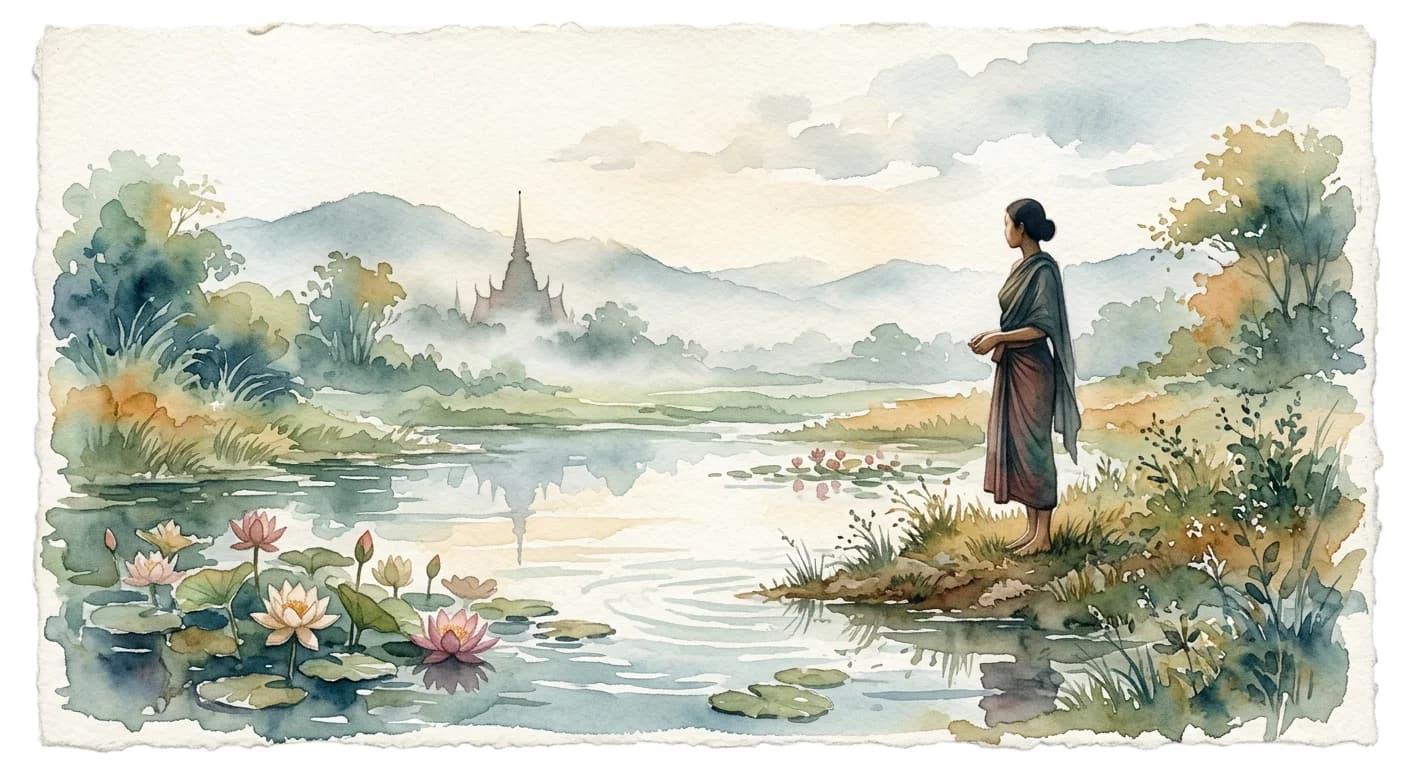
น้อยใจ (noi jai)
/NOY-jai/
Meaning
น้อยใจ (noi jai) encapsulates a poignant, often unspoken, emotional hurt that arises from feeling overlooked, unappreciated, or insufficiently cared for by someone significant. It's a deep-seated disappointment rooted in the unmet expectation of affection or attention, leading to a quiet withdrawal or a sensitive pang in the heart. This feeling is distinct from overt anger or jealousy, instead reflecting a vulnerable sadness when one's emotional investment in a close relationship is not reciprocated as hoped, causing a sense of being 'little-hearted' or diminished.
Literal Translation
little heart
The Story Behind the Word
The existence and prominence of น้อยใจ (noi jai) in Thai culture reveal a profound emphasis on interpersonal harmony, emotional sensitivity, and the intricate web of reciprocal care within relationships. Thai society often prioritizes indirect communication and the avoidance of direct confrontation (เกรงใจ - kreng jai), which can lead to emotions like น้อยใจ being expressed subtly rather than overtly. This word reflects a cultural understanding that emotional well-being is deeply intertwined with feeling valued by one's social circle, especially family and close friends. It highlights a collectivist worldview where individual feelings are often processed within the context of group dynamics and mutual support, making the absence of expected care particularly impactful. The concept underscores the importance of 'jai' (heart/mind) in Thai emotional lexicon, where internal states are central to understanding human experience.
Experience It
Forgotten Anniversary
Preeya had hinted for weeks about her wedding anniversary, hoping her husband, Somchai, would plan something special. When he came home from work with no mention of it, her heart sank. She didn't say anything, but a deep น้อยใจ settled in, making her quiet and withdrawn for the rest of the evening, feeling unappreciated despite their years together.
Friendship Overlooked
During a group outing, Nisa noticed her best friend, Lek, spent the entire day engrossed in conversation with a new acquaintance, barely acknowledging Nisa. Nisa felt a pang of น้อยใจ. She understood Lek was making new friends, but the feeling of being sidelined by someone she cherished left her with a quiet, hurt disappointment, wondering if their bond was less important to Lek.
What Gets Lost in Translation
English speakers often confuse น้อยใจ with simple sadness, jealousy, or sulking. However, น้อยใจ is distinct because it specifically arises from a perceived lack of affection or attention from someone close, rather than general unhappiness or envy. It's a more vulnerable, internal hurt, often not expressed directly, unlike Western notions of 'being upset' which might lead to confrontation.
Across Cultures
While no direct equivalent exists, similar sentiments can be found. Japanese has 'amae,' a desire to be loved and cared for, which can lead to disappointment if unmet. The German 'Weltschmerz' (world-weariness) touches on a broader melancholic disappointment, though not as personally directed. Portuguese 'saudade' carries a deep longing, which can be tinged with the sadness of absence that might provoke น้อยใจ.
The Deeper Meaning
น้อยใจ illuminates a worldview where emotional reciprocity and the affirmation of one's value by loved ones are fundamental to well-being. It underscores the profound interdependence of individuals within Thai social structures, suggesting that personal happiness is deeply contingent upon feeling seen, cherished, and acknowledged within one's intimate relationships. The emotion highlights the delicate balance between expectation and reality in human connection.
Did You Know?
The literal translation of น้อยใจ is 'little heart.' This imagery perfectly captures the feeling of one's heart shrinking or feeling diminished due to a perceived lack of affection or attention from a loved one.
How It's Used
Used to describe a feeling of being hurt or disappointed because someone you care about has not shown you the affection or attention you expected, often leading to a quiet sadness or sulking.