U.
HomeRegionsLanguagesEmotionsCollections
Find Your Word

“The limits of my language mean the limits of my world.”

— Ludwig Wittgenstein, Philosopher

Untranslatable

A curated collection of the world's most beautiful expressions—words that remind us language is humanity's greatest invention.

  • Home
  • Collections
  • Regions
  • Countries
  • Emotions
  • Tags
  • Contexts
  • Finder
  • Europe
  • Asia
  • Americas
  • Africa
  • Middle East
  • About
  • Contact
  • Privacy Policy
  • Terms of Service

2026 © Untranslatable. All rights reserved.

    /
    /
    1. Home
    2. /
    3. Asia
    4. /
    5. Nam jai
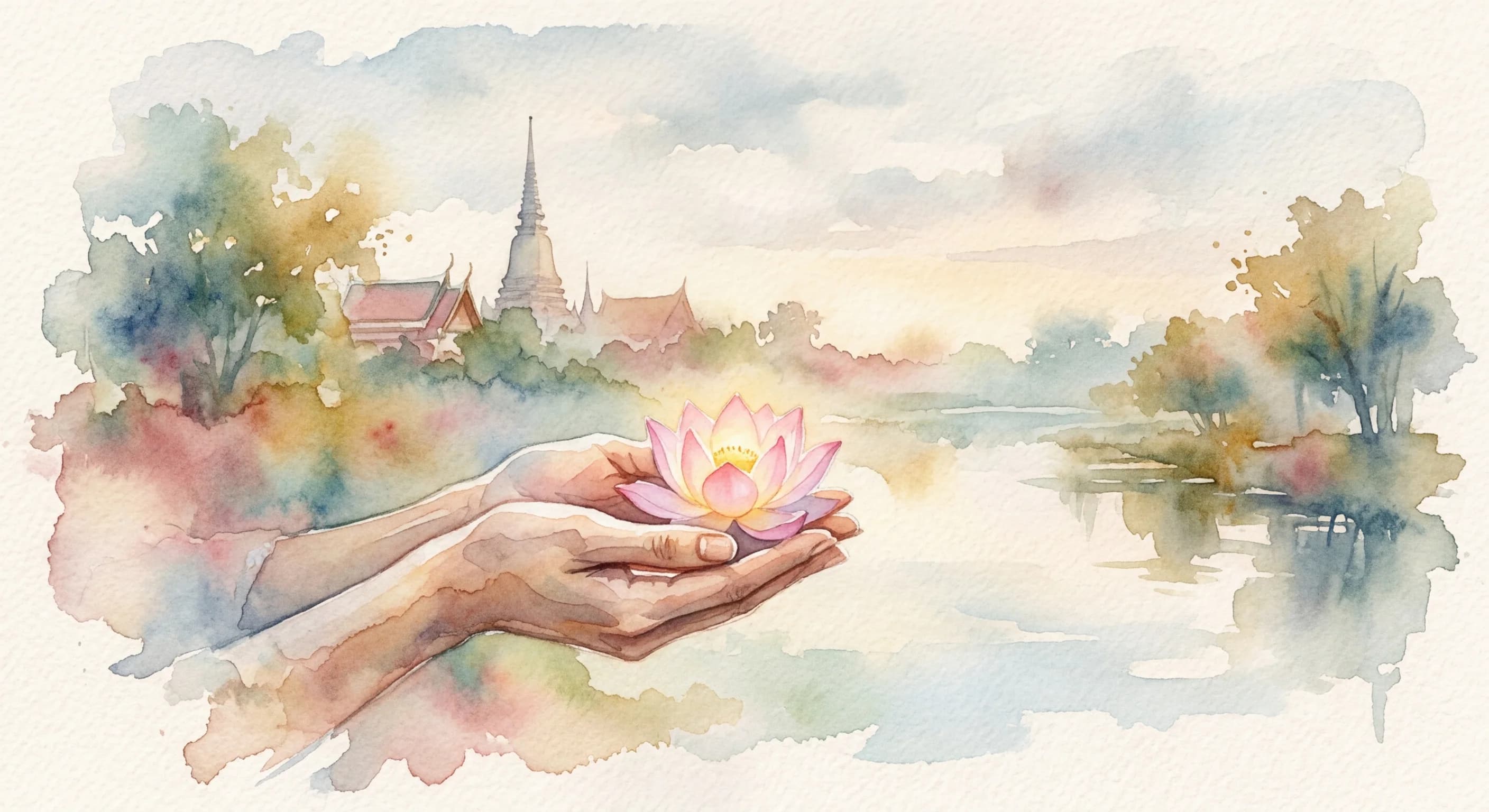
    Artistic representation of nam jai
    Thai•
    🇹🇭Thailand

    Nam jai

    /NAHM-jai/

    Meaning

    Nam jai, literally 'water from the heart,' embodies a profound Thai ethos of selfless generosity and intrinsic kindness. It signifies a spontaneous, deep-seated empathy that compels individuals to offer help, support, or compassion to others, often without any expectation of reciprocation. This virtue is a cornerstone of Thai social harmony, reflecting a communal spirit where genuine goodwill and looking out for one another are paramount, transcending mere politeness to become a fundamental aspect of one's character and societal contribution.

    Literal Translation

    water from the heart

    The Story Behind the Word

    The concept of nam jai is deeply woven into the fabric of Thai Buddhism, specifically the Theravada tradition, which emphasizes merit-making (tham bun) and compassion (metta). Acts of nam jai are seen as opportunities to accrue good karma, contributing to a better future existence, but also as essential for maintaining social cohesion in the present. Thai society, historically agrarian and community-focused, thrived on mutual support, making nam jai not just a virtue but a practical necessity for survival and well-being. It reflects a worldview where individual actions are intrinsically linked to the collective good, fostering a sense of interconnectedness and shared responsibility. The 'heart' (jai) in Thai culture is considered the seat of emotions, intellect, and character, thus 'water from the heart' implies a pure, unforced outpouring of genuine goodness.

    Experience It

    Roadside Assistance

    A car breaks down on a busy Bangkok street. Before the driver can even call for help, several strangers pull over, offering tools, water, and assistance, refusing any payment. This spontaneous, unsolicited help is a clear demonstration of nam jai.

    Sharing Food in Need

    During a local festival, a street vendor notices an elderly woman struggling to carry her groceries. Without a word, the vendor offers her a free meal and helps her with her bags, simply out of a kind heart. This act, small yet significant, is pure nam jai.

    The Deeper Meaning

    Nam jai reveals a philosophy where compassion and interconnectedness are not just ideals but lived practices. It underscores the belief that true human flourishing comes from giving freely and supporting one another, fostering a society built on mutual care rather than individual gain. This worldview prioritizes collective well-being and emotional harmony, viewing acts of kindness as essential contributions to a peaceful and balanced existence.

    Did You Know?

    The phrase 'nam jai' is often used as a compliment, implying someone possesses a truly good and generous spirit, and it's a quality highly admired and sought after in Thai society.

    How It's Used

    Used to describe acts of kindness, generosity, and helpfulness, especially when offered spontaneously and without expecting anything in return. It's a core value in Thai social interactions.

    Emotions
    belonging,compassion,gratitude,warmth
    Contexts
    community,daily life,family,friendship
    🇹🇭Thailand

    by Anya Petrova·Written Mar 10, 2026·Updated Apr 3, 2026

    Related Words

    Explore more
    GezelligDutch

    Gezellig encapsulates a profound sense of warmth, belonging, and convivial comfort, extending beyond mere coziness to embrace the social and emotional atmosphere. It's the feeling of being truly at ease, surrounded by good company, laughter, and a shared sense of contentment. This untranslatable term describes not just a physical space, but a holistic experience where time seems to slow down, fostering genuine connection and a deep sense of well-being.

    SobremesaSpanish

    Sobremesa is the cherished, often extended period immediately following a meal, particularly lunch or dinner, where diners remain seated at the table to enjoy conversation, coffee, and digest not just the food, but the company itself. It’s a dedicated time for unhurried social bonding, storytelling, and shared laughter, transforming a simple meal into a profound communal experience. Far from just clearing the dishes, sobremesa is an integral part of Spanish social life, often lasting for hours.

    Wabi-sabiJapanese

    Wabi-sabi is the profound appreciation for the ephemeral, the imperfect, and the incomplete aspects of existence. It is about discovering beauty in the subtle textures of age, the unique character of flaws, and the gentle decay that marks the passage of time. This philosophy encourages a quiet acceptance of impermanence and a mindful connection to the natural world, finding elegance in simplicity and authenticity.

    IkigaiJapanese

    Ikigai is more than just a reason to get out of bed; it's a deeply personal and evolving sense of purpose that brings genuine fulfillment and joy to one's life. It represents the sweet spot where your passions, talents, needs of the world, and what you can be paid for beautifully converge. Discovering your ikigai often leads to a life lived with intentionality, resilience, and a profound connection to one's contributions. It's the intrinsic motivation that fuels a meaningful existence, regardless of external circumstances.

    Featured in 1 collection

    🤝The Art of Togetherness