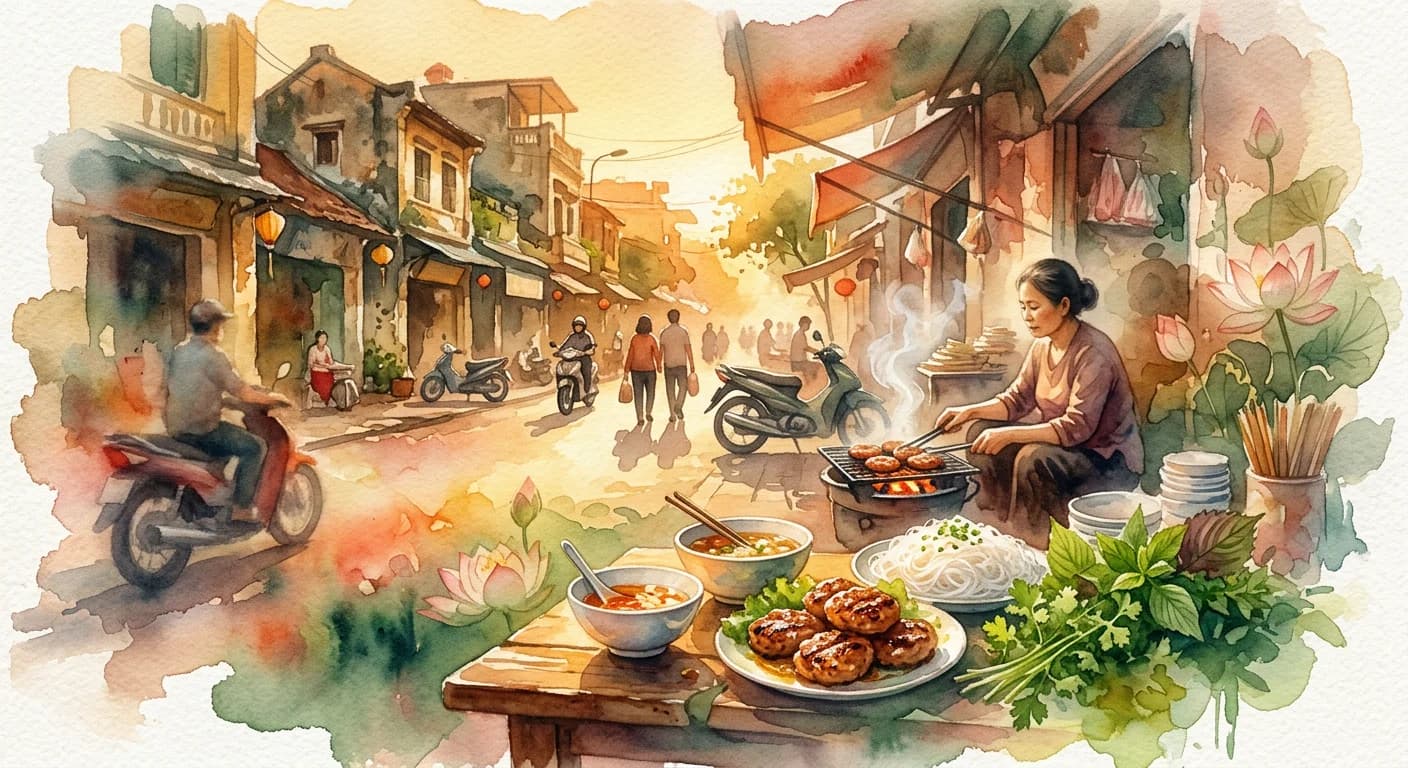
Bún chả
/BOON CHAH/
Meaning
Bún chả is a symphony of flavors and textures, a quintessential Hanoi dish that captures the very essence of Vietnamese street food. It features succulent grilled pork patties and fatty pork slices, bathed in a warm, sweet, sour, and savory fish sauce-based broth. This delightful ensemble is served alongside delicate fresh rice vermicelli noodles and a vibrant platter of aromatic herbs and crisp vegetables, inviting diners to compose their perfect bite. It's more than just a meal; it's a communal ritual, a perfect balance of smoky, fresh, and umami that embodies everyday Vietnamese culinary artistry.
Literal Translation
Rice vermicelli (bún) + grilled pork (chả)
The Story Behind the Word
Bún chả embodies the spirit of Hanoi's culinary landscape, reflecting a culture that values fresh ingredients, balanced flavors, and communal dining. Its popularity as a street food staple highlights accessibility and the joy of simple, perfectly executed dishes. The act of dipping, mixing, and combining speaks to an appreciation for personal customization within a shared experience, where each diner crafts their ideal mouthful. It's a dish that has absorbed generations of Hanoian life, from bustling markets to family gatherings, symbolizing comfort, tradition, and the city's enduring culinary identity.
Experience It
Hanoi Lunch Rush
The midday sun beat down on Hanoi's Old Quarter. A group of office workers squeezed onto plastic stools outside a bún chả stall, eagerly waiting for their steaming bowls. Laughter and the clatter of chopsticks filled the air as they dipped fragrant grilled pork into the sweet-sour broth, a perfect respite before returning to work.
Family Dinner Tradition
On Sunday, Mrs. Mai laid out a sprawling spread of bún chả for her family. Her grandchildren giggled as they picked out their favorite herbs, carefully placing them with noodles and pork into their individual bowls of dipping sauce. It was a cherished tradition, a time for stories and shared enjoyment around a beloved meal.
What Gets Lost in Translation
English speakers often perceive bún chả simply as 'grilled pork with noodles,' missing the crucial interactive element. The dipping sauce isn't just a side; it's the heart of the dish, meant to be customized with chili and garlic, and the grilled meats are traditionally submerged in it. Furthermore, the fresh herbs and vegetables are not mere garnish but integral components, providing essential freshness and textural contrast to every mouthful.
Across Cultures
While bún chả is unique, similar concepts of dipping grilled meats into flavorful broths or sauces with noodles exist across Asia. Japan's tsukemen involves dipping cold ramen noodles into a concentrated hot broth. Korea's galbi (grilled ribs) are often wrapped in lettuce with various condiments, creating a personalized bite. These dishes all share the communal joy of assembling one's own perfect combination of flavors and textures, a testament to the interactive nature of dining in many Asian cultures.
The Deeper Meaning
Bún chả, in its very structure, reflects a Vietnamese philosophy of balance and harmony – a principle known as 'âm dương.' The dish skillfully marries hot and cold, fresh and cooked, sweet, sour, salty, and savory, creating a holistic sensory experience. It underscores the belief that true enjoyment comes from the interplay of contrasting elements, where no single flavor dominates, but all contribute to a perfectly integrated whole.
Did You Know?
Former US President Barack Obama famously enjoyed bún chả with Anthony Bourdain during his 2016 visit to Hanoi, propelling the dish to international fame and cementing its status as a must-try Vietnamese delicacy.
How It's Used
Bún chả is a popular dish, typically enjoyed for lunch or dinner, and is a staple in Vietnamese restaurants and street food stalls across Vietnam.