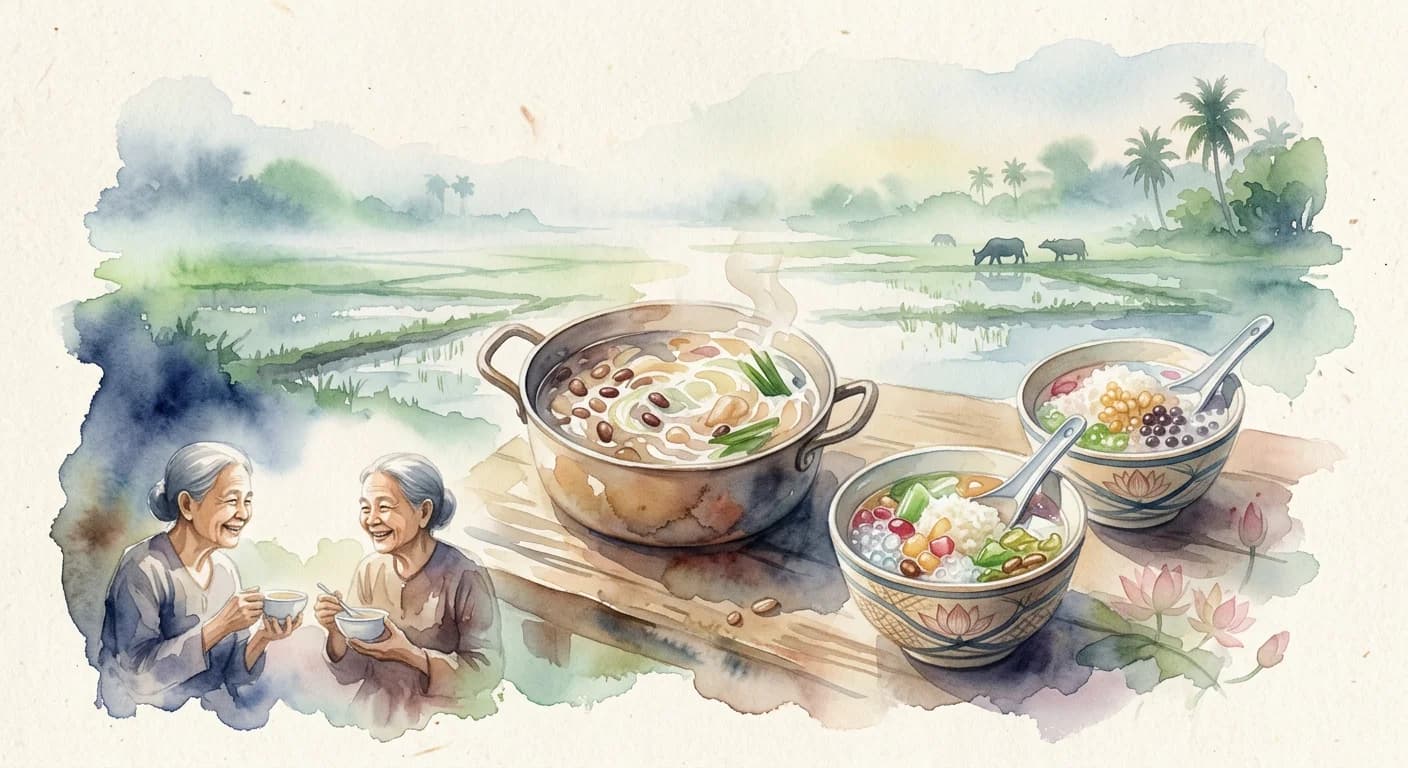
Chè
/CHAY/
Meaning
Chè is a beloved category of traditional Vietnamese sweet soups, puddings, and drinks, celebrated for its incredible diversity and comforting appeal. It masterfully blends an array of ingredients like vibrant beans, chewy tapioca pearls, fresh fruits, and fragrant jellies, often simmered in coconut milk or pandan-infused water. This versatile treat offers a delightful interplay of textures and flavors, from subtly sweet to richly decadent, providing a refreshing escape on a hot day or a satisfying conclusion to any meal.
Literal Translation
sweet soup/dessert
The Story Behind the Word
The ubiquity of chè throughout Vietnam speaks to a profound cultural appreciation for balance, resourcefulness, and the simple pleasures of life. Historically, chè often utilized readily available local ingredients like various beans, grains, and fruits, reflecting an agricultural society's ingenuity in creating nourishing and delicious treats. Its presence at every level of society, from humble street vendors to elaborate family gatherings, underscores its role as a democratic comfort food. Chè embodies a culinary philosophy that values harmony in textures and flavors – the chewiness of tapioca alongside the creaminess of coconut, the sweetness of fruit balanced by the earthiness of beans – mirroring a broader cultural inclination towards equilibrium and interconnectedness. It's more than just a dessert; it's a taste of home, tradition, and shared moments.
Experience It
Summer Evening Comfort
After a sweltering Saigon afternoon, Liên stops at her favorite street vendor. She orders a cold Chè Ba Màu, its vibrant layers of green, yellow, and red beans, jellies, and coconut milk a perfect antidote to the heat. Each spoonful brings a refreshing coolness and a burst of sweet, varied textures.
Family Gathering Dessert
During Tết, Đại's grandmother proudly serves her homemade Chè Trôi Nước. The warm, glutinous rice balls filled with mung bean paste, swimming in a ginger-infused syrup, evoke a sense of tradition and love. Everyone savors the comforting warmth, a sweet symbol of family unity.
The Deeper Meaning
Chè embodies the Vietnamese philosophy of 'âm dương' (Yin and Yang) in its culinary form. The careful balance of hot and cold, sweet and subtly savory, soft and chewy textures, reflects a desire for harmony and equilibrium, not just in food, but in life itself. It's a reminder that true satisfaction often comes from the interplay of diverse elements, creating a richer whole.
Did You Know?
There are hundreds of varieties of chè, with regional specialties and seasonal ingredients constantly inspiring new creations. Some chè even incorporate savory elements like ginger or salt to balance the sweetness!
How It's Used
Chè is a broad term used to describe a variety of Vietnamese sweet soups, puddings, and drinks. It can be found everywhere from street food stalls to family gatherings and restaurants, enjoyed by people of all ages. It is often consumed as a dessert, a snack, or even a light meal, especially during hot weather.