U.
HomeRegionsLanguagesEmotionsCollections
Find Your Word

“The limits of my language mean the limits of my world.”

— Ludwig Wittgenstein, Philosopher

Untranslatable

A curated collection of the world's most beautiful expressions—words that remind us language is humanity's greatest invention.

  • Home
  • Collections
  • Regions
  • Countries
  • Emotions
  • Tags
  • Contexts
  • Finder
  • Europe
  • Asia
  • Americas
  • Africa
  • Middle East
  • About
  • Contact
  • Privacy Policy
  • Terms of Service

2026 © Untranslatable. All rights reserved.

    /
    /
    1. Home
    2. /
    3. Asia
    4. /
    5. Tết
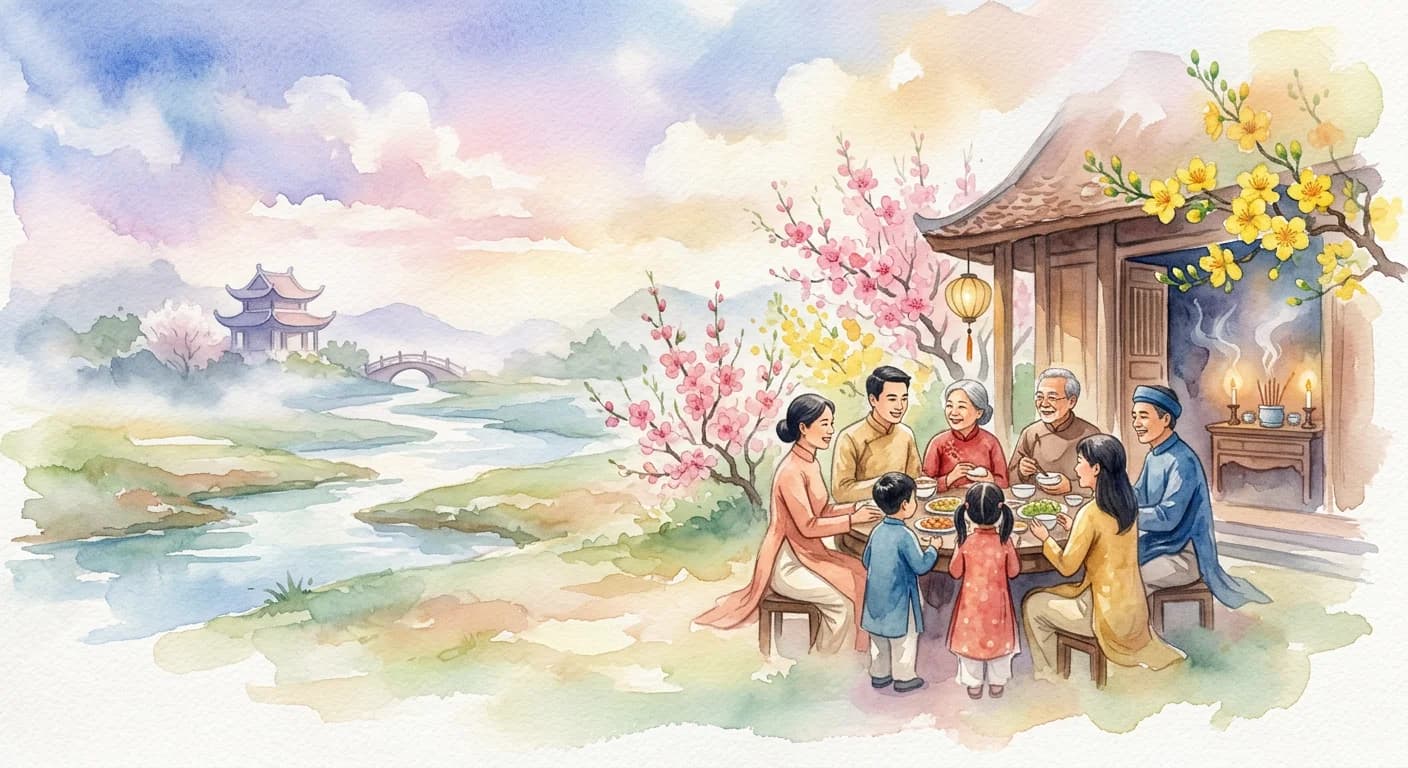
    Artistic representation of Tết
    Vietnamese•
    🇻🇳Vietnam

    Tết

    /TET/

    Meaning

    Tết, or Tết Nguyên Đán, is far more than just the Vietnamese Lunar New Year; it's the soul of Vietnamese culture, a profound celebration of renewal, family, and ancestral veneration. This vibrant period bursts with the hopeful spirit of spring, as families meticulously prepare to honor their heritage, express deep gratitude for the past year's blessings, and invite prosperity for the coming twelve months. It is a sacred time for homecoming, heartfelt reunions, and engaging in time-honored rituals that strengthen familial bonds and connect generations to their roots.

    Literal Translation

    Feast of the First Day (of Spring)

    The Story Behind the Word

    Tết's roots are intertwined with Vietnam's agrarian history, marking the end of the harvest season and the beginning of spring, a period of rest and hope for abundance. Its significance is deeply embedded in Confucian values, emphasizing filial piety, respect for elders, and ancestor worship. The belief that the spirits of ancestors return home during Tết underscores the importance of family unity and continuity. This holiday reveals a worldview where the past, present, and future are inextricably linked, where individual well-being is tied to the collective harmony of family and community, and where auspicious beginnings are crucial for a prosperous year ahead. The meticulous preparations, from cleaning homes to preparing traditional foods like Bánh Chưng, are not just chores but acts of devotion and hope, reflecting a deep-seated desire for balance and good fortune.

    Experience It

    Family Reunion Joy

    After months abroad, Linh finally landed in Hanoi, the city already buzzing with Tết preparations. Her grandmother's face lit up as Linh walked through the door, a traditional 'chúc Tết' (Tết greeting) on her lips, symbolizing the cherished return of family for the most important celebration of the year.

    Ancestral Altar

    On Giao Thừa, the New Year's Eve, Ông Ba carefully arranged offerings of fruit, flowers, and Bánh Chưng on the ancestral altar. He lit incense, bowing respectfully, his silent prayers connecting him and his family to generations past, seeking their blessings for a healthy and prosperous Tết.

    The Deeper Meaning

    Tết embodies a profound cyclical philosophy, mirroring nature's rhythm of death and rebirth. It teaches the importance of letting go of the old to embrace the new, of honoring the spiritual lineage that shapes one's identity, and of proactively sowing seeds of positivity and good deeds to ensure a bountiful future. It's a reminder that life is a continuous flow of renewal and connection.

    Did You Know?

    Traditionally, Vietnamese people believe that the first person to enter their house on Tết (xông đất) can determine their family's fortune for the entire year, so careful consideration goes into choosing this 'lucky' visitor!

    How It's Used

    Tết is used to refer to the Vietnamese Lunar New Year celebration. It is the most important holiday in Vietnam, marked by family gatherings, traditional foods, gift-giving, and ancestral worship.

    Emotions
    belonging,gratitude,hope,joy
    Contexts
    celebration,family,greeting,seasons
    🇻🇳Vietnam

    by Anya Petrova·Written Mar 10, 2026·Updated Apr 3, 2026

    Related Words

    Explore more
    SobremesaSpanish

    Sobremesa is the cherished, often extended period immediately following a meal, particularly lunch or dinner, where diners remain seated at the table to enjoy conversation, coffee, and digest not just the food, but the company itself. It’s a dedicated time for unhurried social bonding, storytelling, and shared laughter, transforming a simple meal into a profound communal experience. Far from just clearing the dishes, sobremesa is an integral part of Spanish social life, often lasting for hours.

    Wabi-sabiJapanese

    Wabi-sabi is the profound appreciation for the ephemeral, the imperfect, and the incomplete aspects of existence. It is about discovering beauty in the subtle textures of age, the unique character of flaws, and the gentle decay that marks the passage of time. This philosophy encourages a quiet acceptance of impermanence and a mindful connection to the natural world, finding elegance in simplicity and authenticity.

    IkigaiJapanese

    Ikigai is more than just a reason to get out of bed; it's a deeply personal and evolving sense of purpose that brings genuine fulfillment and joy to one's life. It represents the sweet spot where your passions, talents, needs of the world, and what you can be paid for beautifully converge. Discovering your ikigai often leads to a life lived with intentionality, resilience, and a profound connection to one's contributions. It's the intrinsic motivation that fuels a meaningful existence, regardless of external circumstances.

    NunchiKorean

    Nunchi is the sophisticated, almost telepathic, ability to instantly grasp the unspoken dynamics of any social situation, anticipating others' thoughts and feelings, and then responding with impeccable grace and timing. It's an acute form of social intuition, allowing one to navigate complex interpersonal landscapes by reading subtle cues like body language, tone, and context. Possessing good nunchi means effortlessly understanding the underlying emotional currents and adjusting one's behavior to maintain harmony and effectiveness, often without a single word exchanged.