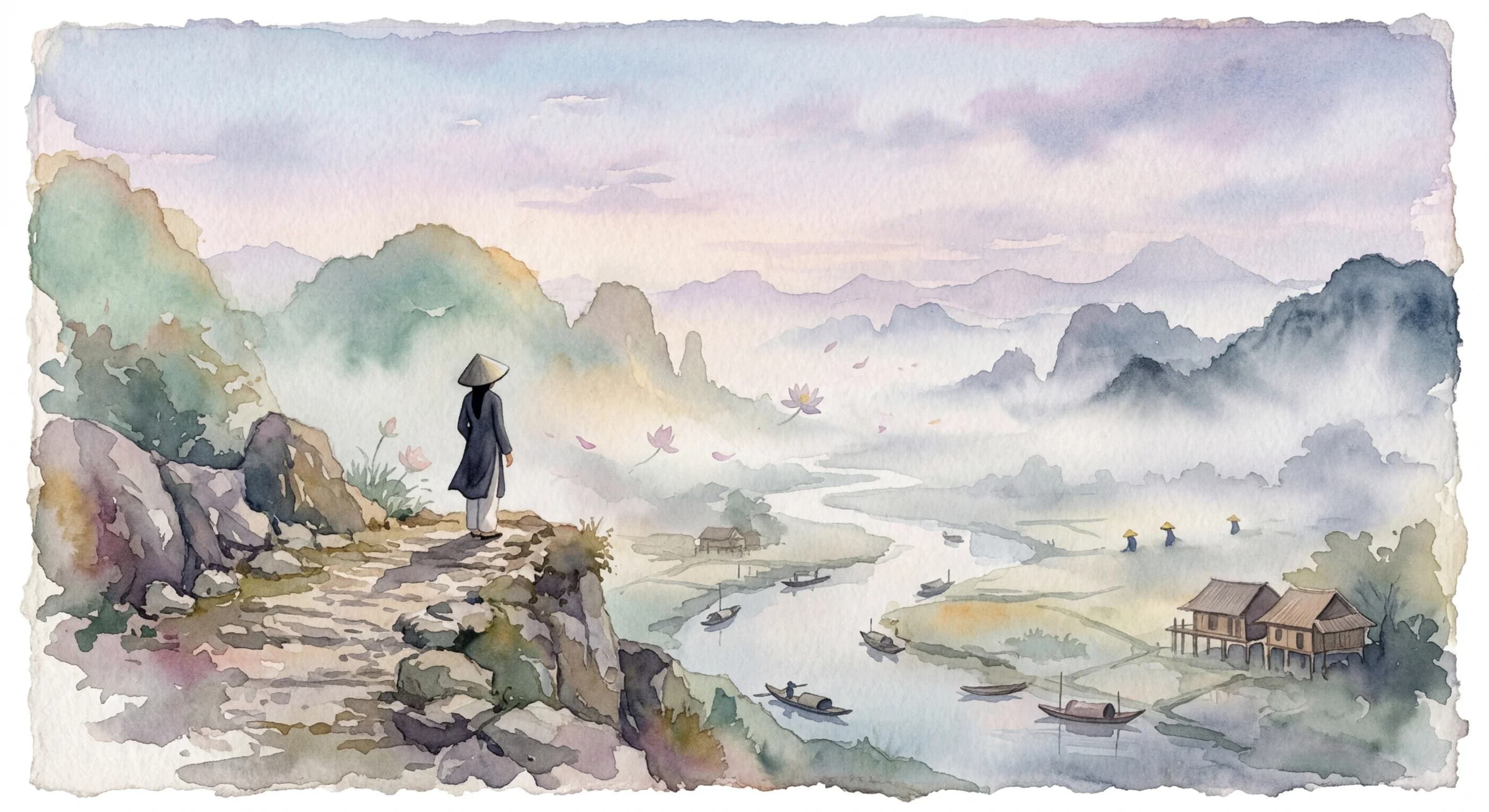
Bâng khuâng
/BANG kwoong/
Meaning
Bâng khuâng captures a tender, introspective state, a gentle melancholy that isn't sadness but a quiet, contemplative wistfulness. It's the feeling of being lost in thought, often triggered by a familiar melody, a scent from childhood, or the sight of a fading sunset, stirring a nuanced blend of longing for what was, what is, and what might be. This complex emotion evokes a poetic yearning, a deep reflection on the impermanence of moments and the subtle beauty of fleeting experiences, without the sharpness of regret or despair.
Literal Translation
There isn't a direct literal translation as it's an idiomatic expression of a complex feeling.
The Story Behind the Word
The existence of 'bâng khuâng' in Vietnamese culture speaks volumes about a societal inclination towards introspection and a profound appreciation for the subtle, often bittersweet, nuances of life. Rooted in a historical context marked by resilience, change, and a deep connection to nature and communal ties, Vietnamese philosophy often embraces the transient nature of existence. This word reflects a cultural sensibility that values patience, emotional depth, and a contemplative approach to personal experience, rather than an overt expression of emotion. It signifies a collective understanding that life's most profound feelings are often those that linger quietly, like a soft echo, rather than erupting loudly. This emotional landscape is further shaped by literary traditions, particularly poetry, which frequently explores themes of longing, memory, and the passage of time, making 'bâng khuâng' a cornerstone of the Vietnamese emotional lexicon.
Experience It
Evening Rain Contemplation
Sitting by the window as the first drops of a summer rain begin to fall, a young woman finds herself lost in 'bâng khuâng.' The rhythmic patter on the roof and the scent of wet earth transport her back to childhood evenings, stirring a gentle longing for simpler times and a quiet contemplation of the path her life has taken.
Old Melody Echoes
An elderly man hears a familiar folk song drift from a nearby café. His eyes glaze over slightly, a 'bâng khuâng' settling over him as he recalls youthful romances and old friends, a soft ache mingling with the warmth of cherished memories, acknowledging the passage of time without sorrow.
The Deeper Meaning
This word reveals a philosophy that embraces the complexity of emotion, recognizing that profound feelings often exist in a space between joy and sorrow, certainty and doubt. It highlights a cultural valuing of introspection and a nuanced understanding of time – where past memories, present moments, and future uncertainties intertwine into a rich, contemplative emotional tapestry. It suggests that true understanding often comes from quiet reflection rather than overt declaration.
Did You Know?
Many Vietnamese poets and songwriters intentionally weave 'bâng khuâng' into their works, knowing it immediately resonates with listeners, evoking a shared, subtle emotional landscape unique to the culture.
How It's Used
Used to describe a feeling of quiet contemplation, often when one is lost in thought about the past or uncertain about the future, typically evoked by memories or specific sensory experiences.