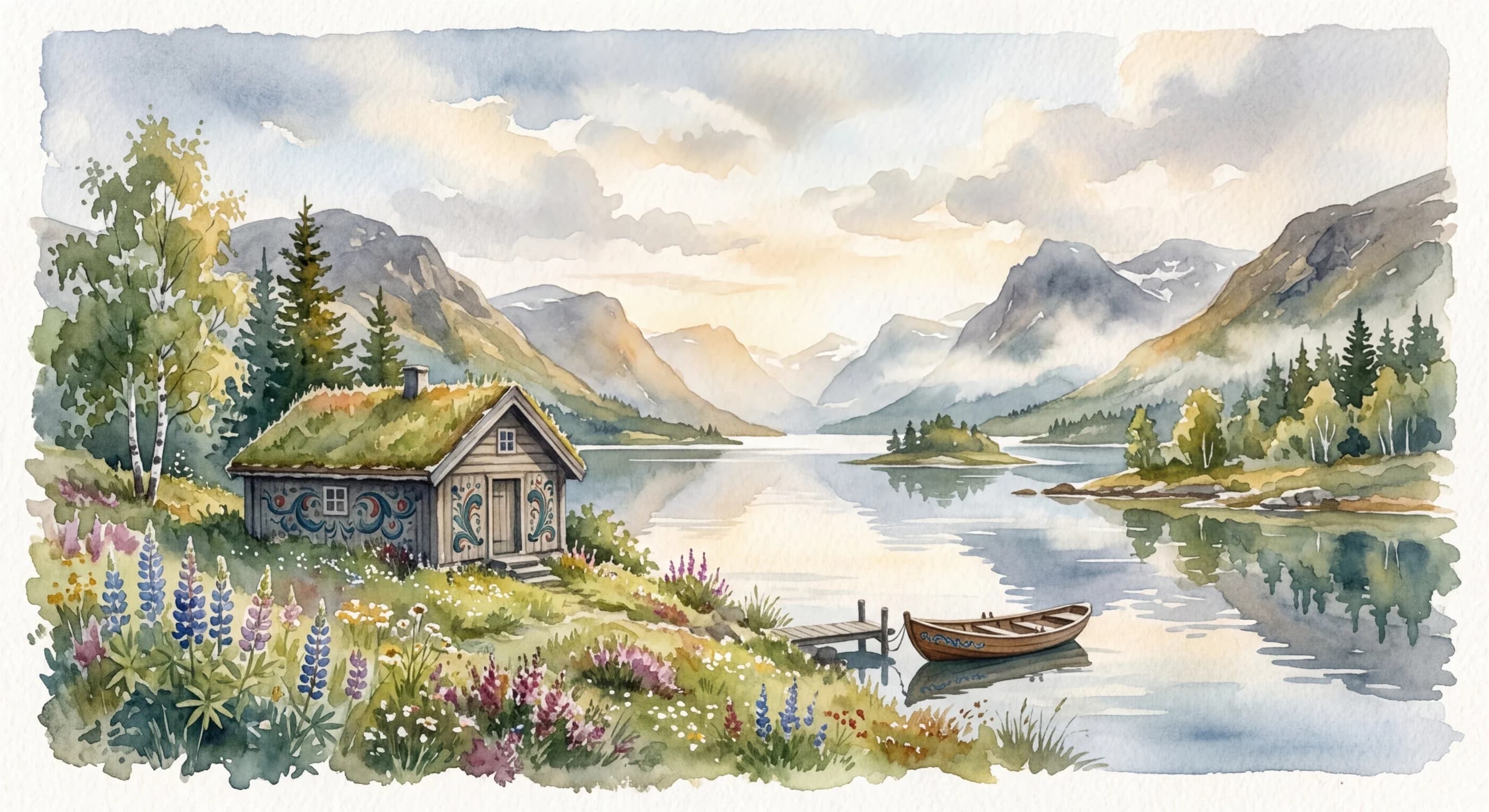
Næringsvett
/NAIR-ings-vet/
Meaning
Næringsvett encapsulates a profound, almost innate understanding and reverence for the natural world, particularly its abundant yet finite resources. It's the practical wisdom to interact with land, sea, and forest in a way that ensures their long-term health and productivity, recognizing that human well-being is inextricably linked to ecological balance. This concept transcends simple resource management; it's a deep-seated cultural ethos of responsible stewardship, gratitude, and an almost spiritual interdependence with nature, guiding sustainable living from individual foraging to national policy.
Literal Translation
Nourishment/sustenance + sense/wit
The Story Behind the Word
The existence of 'Næringsvett' in Norwegian culture is deeply rooted in the country's historical reliance on its natural environment. For centuries, survival in Norway's often harsh climate and rugged terrain depended directly on the judicious use of resources from the sea, mountains, and forests. Fishing, farming, and forestry were not just livelihoods but ways of life, demanding an intimate knowledge of ecosystems and weather patterns. This led to a pragmatic yet respectful relationship with nature, where sustainability wasn't an abstract concept but a necessity for future generations. The word reflects a collective memory of close-to-the-land living, where waste was unthinkable and foresight paramount. It reveals a worldview where humans are not masters of nature, but rather integral, responsible participants in its ongoing cycle, emphasizing humility and long-term thinking over short-term gain.
Experience It
The Old Fisherman's Wisdom
An elderly fisherman knows exactly when to cast his nets and when to leave the fishing grounds undisturbed, understanding the delicate balance of fish stocks and marine life. His 'næringsvett' tells him that a smaller catch today ensures a livelihood for his grandchildren tomorrow, guiding his decisions with an unspoken respect for the sea.
Forestry with Foresight
A community council debates logging practices. One elder, demonstrating strong 'næringsvett,' argues for selective felling and reforestation schedules that prioritize biodiversity and soil health over immediate timber yields, ensuring the forest remains a robust resource for centuries, not just decades.
The Deeper Meaning
Næringsvett embodies a profound eco-centric philosophy, challenging anthropocentric views by positioning humanity as part of, rather than separate from, nature. It suggests that true 'sense' or 'wit' involves understanding and honoring the intricate web of life, fostering a reciprocal relationship where sustenance is earned through respectful interaction. This worldview underscores the belief that long-term prosperity is inseparable from ecological integrity, advocating for a humility and gratitude towards the natural world that sustains us.
Did You Know?
The 'vett' part of 'Næringsvett' is also found in 'folkevett' (common sense) and 'fjellvett' (mountain sense), highlighting that this wisdom is often seen as a critical, almost instinctual, form of intelligence.
How It's Used
This term is used to describe an individual's or a community's innate or learned ability to interact with and manage natural resources wisely and respectfully, often in contexts related to outdoor activities, resource management, or environmental awareness.