Cà khịa
/Kah kee-ah/
Meaning
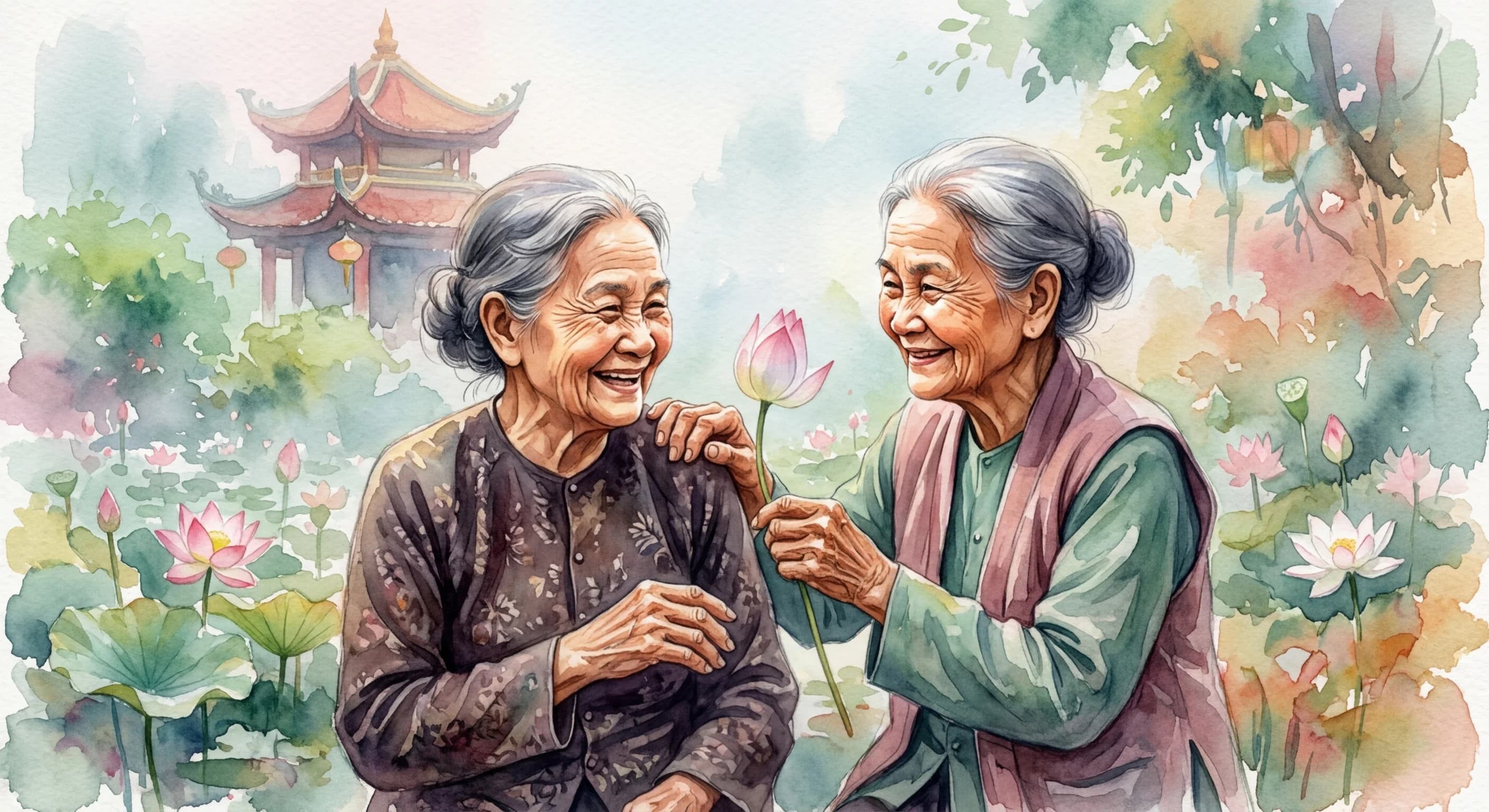
Cà khịa encapsulates the art of playful provocation, a social dance where one subtly yet pointedly teases another to elicit a reaction. It's a nuanced form of banter, often laced with sarcasm or witty observations, designed to 'push buttons' without causing genuine offense. This act of good-natured ribbing serves to invigorate social interactions, forging connections through shared laughter and the lighthearted challenge of a quick retort.
Literal Translation
To sow discord/stir up trouble (often playfully)
The Story Behind the Word
The existence of "cà khịa" in Vietnamese culture speaks volumes about the value placed on indirect communication, social harmony, and the role of humor in navigating relationships. Unlike overt confrontation, "cà khịa" allows for the expression of playful disagreement or observation without threatening face or causing serious discord. It reflects a cultural inclination towards reading between the lines and appreciating subtlety. This practice often acts as a social lubricant, testing boundaries in a safe, accepted manner, and reinforcing bonds through shared understanding of unspoken social cues. It highlights a community that values quick wit and the ability to engage in playful intellectual sparring.
Experience It
Teasing a Latecomer
At a friend's gathering, Linh arrived fashionably late. Her friend Minh immediately quipped, "Took you long enough, thought you were still deciding which filter to use!" Everyone chuckled, and Linh, rolling her eyes playfully, retorted, "Unlike some, I actually put effort into my appearance." This was a clear act of cà khịa, designed to tease but also to welcome her into the banter.
Siblings' Lunch Banter
During a family lunch, Mai noticed her younger brother, Khoa, meticulously arranging his food before eating. She leaned over and whispered, "Still playing with your food, little one? Some things never change." Khoa grinned, knowing she was cà khịa-ing him, and shot back, "At least my plate looks better than yours!" Their mother smiled, recognizing the familiar sibling dynamic.
Colleague's Work Jibe
After a long meeting, An's colleague, Nam, saw him still diligently typing away. Nam playfully remarked, "Still trying to impress the boss, An? Don't work too hard, or you'll make the rest of us look bad!" An laughed, understanding the cà khịa, and responded, "Someone has to pick up the slack from you, Nam." It was a lighthearted exchange that eased post-meeting tension.
The Deeper Meaning
Cà khịa reveals a worldview where social harmony is paramount, yet genuine connection is fostered through playful challenge. It suggests that relationships deepen not just through shared pleasantries, but also through a safe space for good-natured antagonism. This reflects a profound understanding of human interaction, valuing the ability to 'read the room' and engage in witty, indirect communication that strengthens bonds rather than fracturing them.
Did You Know?
The phrase "cà khịa" can sometimes be accompanied by a playful nudge or a knowing look, further emphasizing its lighthearted, non-aggressive intent in Vietnamese social interactions.
How It's Used
Used in informal social interactions, often among friends or acquaintances, to describe playful teasing or banter. It can be used as a verb or a noun to describe the act or the person who engages in it.