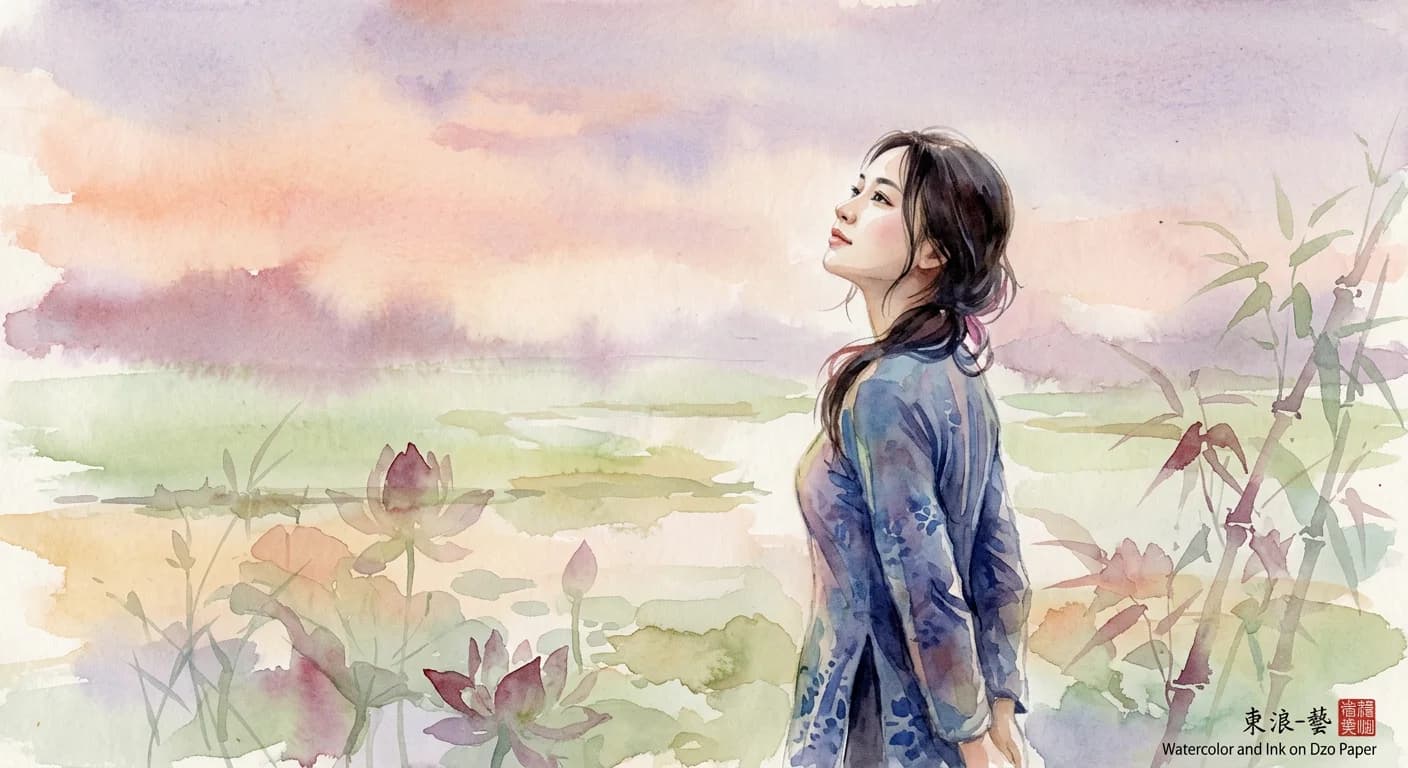
Điệu
/DYEW/
Meaning
The Vietnamese word 'điệu' encapsulates a captivating, often deliberate, stylization in one's mannerisms, speech, or movement. It goes beyond mere elegance, hinting at a charming affectation or a coquettish flair that distinguishes an individual. This unique 'điệu' is an instantly recognizable signature, cherished for its expressiveness and the distinct personality it conveys, deeply embedded in Vietnamese ideals of social grace and personal allure.
Literal Translation
mannerism, style, tune (in music)
The Story Behind the Word
The concept of 'điệu' is deeply rooted in Vietnam's rich aesthetic traditions, particularly influenced by courtly arts, classical theater (like cải lương), and traditional dance forms where stylized movements and expressions are paramount. It reflects a society that values nuanced communication, both verbal and non-verbal, and appreciates an individual's conscious effort to present themselves with a certain artistic flair. 'Điệu' reveals a cultural preference for beauty, grace, and a subtle theatricality in everyday interactions, where self-expression is not just about authenticity but also about an artful presentation of the self within social contexts. It's a testament to a culture that finds beauty in refined performance and personal charm.
Experience It
Her Elegant Walk
Linh walked into the room, her áo dài flowing gently. Every step was measured, a slight sway to her hips, and a delicate tilt of her head as she greeted everyone. 'Cô ấy có cái điệu đi thật duyên dáng,' someone whispered, admiring her graceful, almost dance-like composure.
A Playful Tease
Nam was recounting a story, his voice rising and falling with dramatic pauses, a mischievous twinkle in his eye. He stretched out certain words, drawing out the suspense. 'Anh ấy kể chuyện có điệu quá,' his friends chuckled, appreciating his entertaining and slightly exaggerated storytelling style.
The Deeper Meaning
The existence of 'điệu' suggests a worldview where self-presentation is an art form, not merely a functional act. It speaks to a society that values aesthetic consciousness in daily life, recognizing that how one carries oneself can be as significant as what one says or does. This concept underscores an appreciation for the subtle performance of personality, where charm and grace are cultivated and celebrated as integral aspects of identity and social interaction.
Did You Know?
The word 'điệu' can also refer to a musical tune or melody, highlighting the inherent rhythm and artistry perceived in someone's distinctive mannerisms.
How It's Used
Used to describe someone's mannerisms, style of speech, or way of walking, often implying a deliberate and noticeable grace or affectation.