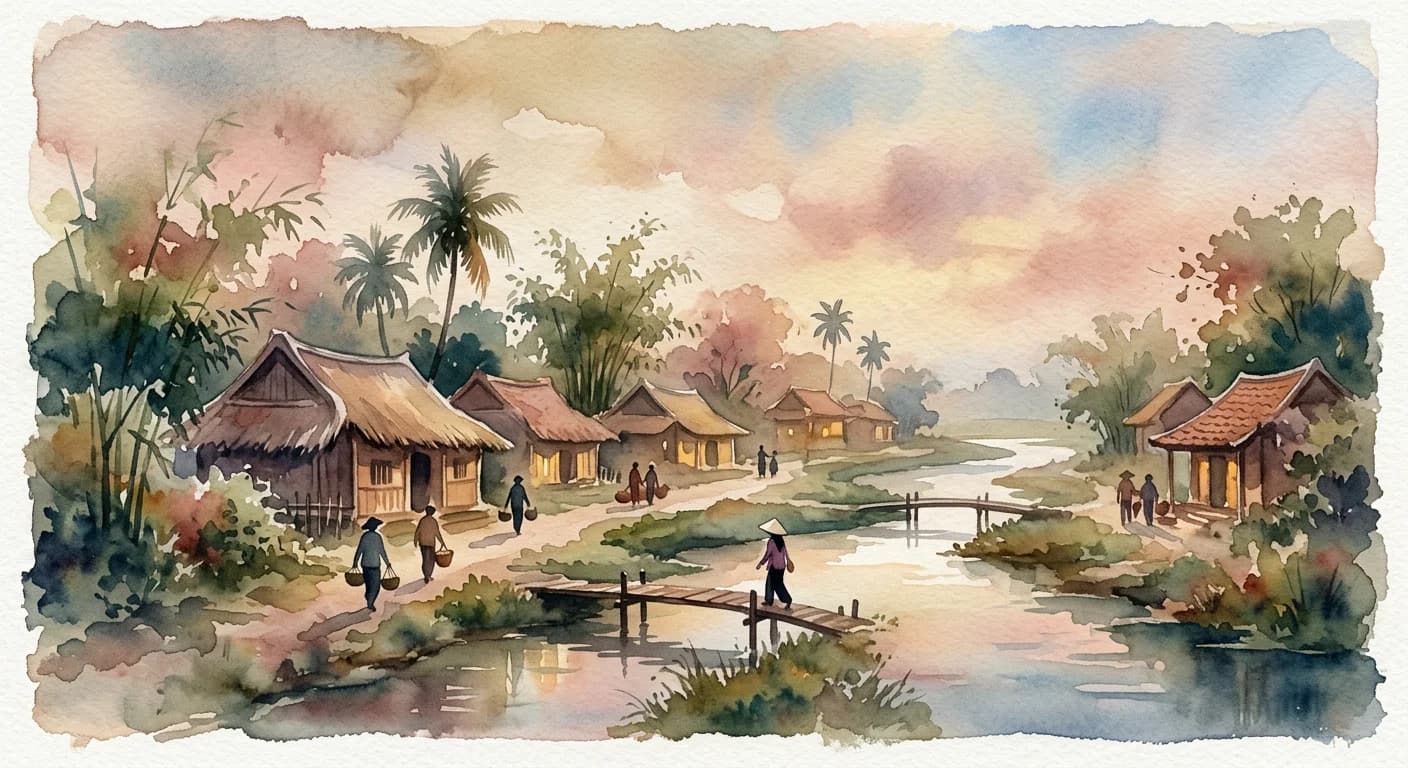
Làng xóm
/LANG SOM/
Meaning
Làng xóm transcends a mere geographical location; it embodies the vibrant, living tapestry of a Vietnamese village or neighborhood where every individual is interwoven into a collective identity. It signifies a profound sense of belonging, mutual reliance, and shared destiny, where generations have cultivated a deep-seated understanding and support system. This concept evokes a communal spirit, where personal joys and sorrows are collectively experienced, and traditions are upheld through shared participation and responsibility.
Literal Translation
Village neighborhood
The Story Behind the Word
The concept of "làng xóm" is deeply rooted in Vietnam's agrarian history, where survival and prosperity were intrinsically linked to collective effort and social cohesion. For centuries, villages were self-sufficient units, and the strength of the community, rather than individual prowess, determined well-being. This created a cultural emphasis on harmony, respect for elders, and the subordination of individual desires for the greater good of the collective. The "làng xóm" serves as the primary social safety net, a place where people rely on each other for everything from childcare to harvesting, and where traditional customs, festivals, and spiritual practices are preserved and celebrated, reinforcing a shared heritage and identity. It reflects a worldview where the individual is always part of a larger whole.
Experience It
Community Harvest Day
During the rice harvest, Mrs. Mai's family fell ill. Without a second thought, the entire làng xóm arrived, hoes and baskets in hand, to help them bring in their crops, ensuring no family was left behind.
Wedding Celebration
When Linh got married, the làng xóm transformed into a bustling hub. Neighbors contributed food, helped with decorations, and celebrated together for days, showcasing the collective joy and support for the new couple.
The Deeper Meaning
Làng xóm reveals a foundational Vietnamese philosophy that prioritizes the collective over the individual, emphasizing interdependence and social harmony. It suggests that true well-being and identity are found not in isolation, but within the intricate web of relationships and shared responsibilities that bind a community together. This worldview fosters resilience, mutual respect, and a deep sense of moral obligation towards one's neighbors.
Did You Know?
Historically, the làng xóm often had its own communal house (đình) which served as both a spiritual center and a place for community meetings and decisions, underscoring its central role in village life.
How It's Used
Used to describe the collective social fabric of a Vietnamese village or rural neighborhood, emphasizing close-knit relationships and mutual support.