U.
HomeRegionsLanguagesEmotionsCollections
Find Your Word

“The limits of my language mean the limits of my world.”

— Ludwig Wittgenstein, Philosopher

Untranslatable

A curated collection of the world's most beautiful expressions—words that remind us language is humanity's greatest invention.

  • Home
  • Collections
  • Regions
  • Countries
  • Emotions
  • Tags
  • Contexts
  • Finder
  • Europe
  • Asia
  • Americas
  • Africa
  • Middle East
  • About
  • Contact
  • Privacy Policy
  • Terms of Service

2026 © Untranslatable. All rights reserved.

    /
    /
    1. Home
    2. /
    3. Asia
    4. /
    5. Nắng mưa
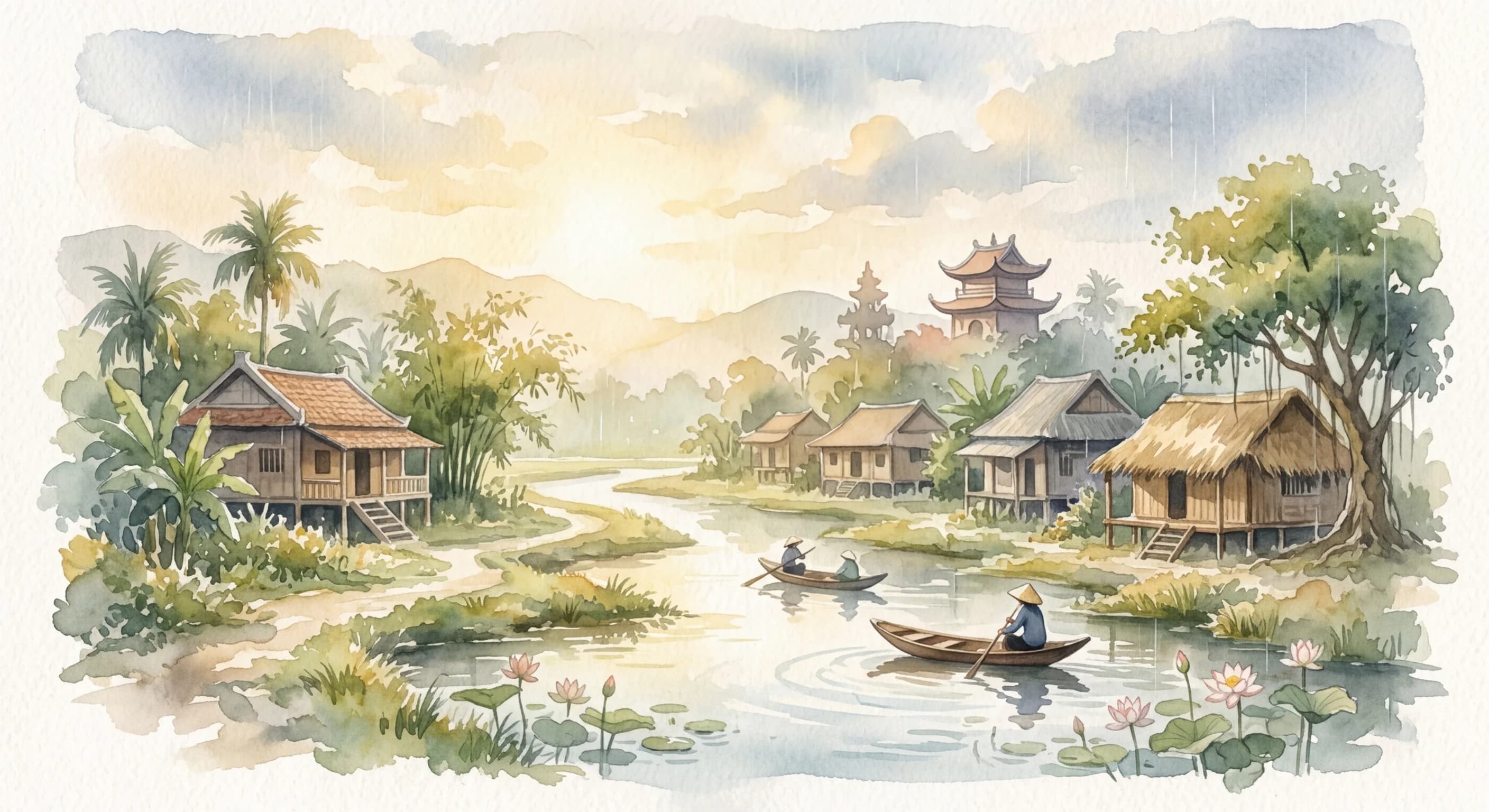
    Artistic representation of Nắng mưa
    Vietnamese•
    🇻🇳Vietnam

    Nắng mưa

    /NAHNG-moo-uh/

    Meaning

    This Vietnamese phrase, literally "sunshine rain," encapsulates the dramatic and often instantaneous meteorological shifts characteristic of tropical climates. Beyond mere weather, it serves as a profound philosophical metaphor for life's inherent unpredictability, acknowledging that periods of joy and hardship are inextricably linked and follow one another with natural rhythm. It cultivates a resilient worldview, encouraging acceptance of these inevitable fluctuations and a deep appreciation for the present moment, regardless of life's prevailing conditions.

    Literal Translation

    sun rain

    The Story Behind the Word

    The phrase "nắng mưa" is deeply embedded in Vietnamese culture, reflecting centuries of life lived in a tropical monsoon climate where weather can change from scorching sun to torrential downpour within minutes. This constant environmental flux has shaped a pragmatic and adaptive worldview, where stability is less expected than change. It embodies a Taoist-influenced acceptance of duality and impermanence, recognizing that life's 'sunshine' (fortune, happiness) and 'rain' (misfortune, sadness) are not opposing forces but two sides of the same coin, essential for balance. This perspective fosters resilience and a capacity to endure, viewing challenges not as aberrations but as integral parts of the human experience, much like the weather itself.

    Experience It

    Unexpected Downpour

    A group of friends was enjoying a sunny picnic by the lake when, without warning, dark clouds gathered and a sudden downpour began. One friend laughed, "Đúng là nắng mưa!" – acknowledging the abrupt shift with a shrug, as they quickly packed their things, not letting the change spoil their spirits.

    Life's Rollercoaster

    After a period of great success in his business, Minh faced a significant setback. His grandmother comforted him, saying, "Cuộc đời ai cũng có lúc nắng mưa cháu ạ. Quan trọng là mình biết đứng dậy sau cơn mưa." (Everyone's life has its sunshine and rain, my child. What's important is knowing how to get up after the rain.)

    The Deeper Meaning

    This phrase reveals a deeply ingrained philosophy of acceptance and resilience within Vietnamese culture. It's a recognition that life is not a linear progression but a cyclical dance of highs and lows. This perspective encourages an inner equanimity, where one doesn't become overly attached to good times or overly despondent during bad, fostering a mindful appreciation for the transient nature of all experiences.

    Did You Know?

    The rapid weather changes described by "nắng mưa" are so common that Vietnamese often carry raincoats even on sunny days, a practical habit born from this unpredictable climate.

    How It's Used

    Used colloquially to describe sudden weather changes, and metaphorically to refer to the unpredictable nature of life and fortune.

    Emotions
    acceptance,bittersweet,resilience
    Contexts
    philosophy,seasons,weather
    🇻🇳Vietnam

    by Annelise Dubois·Written Mar 10, 2026·Updated Apr 3, 2026

    Related Words

    Explore more
    Wabi-sabiJapanese

    Wabi-sabi is the profound appreciation for the ephemeral, the imperfect, and the incomplete aspects of existence. It is about discovering beauty in the subtle textures of age, the unique character of flaws, and the gentle decay that marks the passage of time. This philosophy encourages a quiet acceptance of impermanence and a mindful connection to the natural world, finding elegance in simplicity and authenticity.

    IkigaiJapanese

    Ikigai is more than just a reason to get out of bed; it's a deeply personal and evolving sense of purpose that brings genuine fulfillment and joy to one's life. It represents the sweet spot where your passions, talents, needs of the world, and what you can be paid for beautifully converge. Discovering your ikigai often leads to a life lived with intentionality, resilience, and a profound connection to one's contributions. It's the intrinsic motivation that fuels a meaningful existence, regardless of external circumstances.

    NunchiKorean

    Nunchi is the sophisticated, almost telepathic, ability to instantly grasp the unspoken dynamics of any social situation, anticipating others' thoughts and feelings, and then responding with impeccable grace and timing. It's an acute form of social intuition, allowing one to navigate complex interpersonal landscapes by reading subtle cues like body language, tone, and context. Possessing good nunchi means effortlessly understanding the underlying emotional currents and adjusting one's behavior to maintain harmony and effectiveness, often without a single word exchanged.

    JugaadHindi

    Jugaad is more than just a quick fix; it embodies the spirit of resourceful, ingenious improvisation in the face of scarcity or systemic challenges. It's the art of bending rules, repurposing materials, and thinking outside the box to achieve a desired outcome, often with limited financial or technological resources. This approach celebrates clever workarounds and innovative adaptations, turning constraints into catalysts for creative problem-solving. It's about making do and making something work, brilliantly.