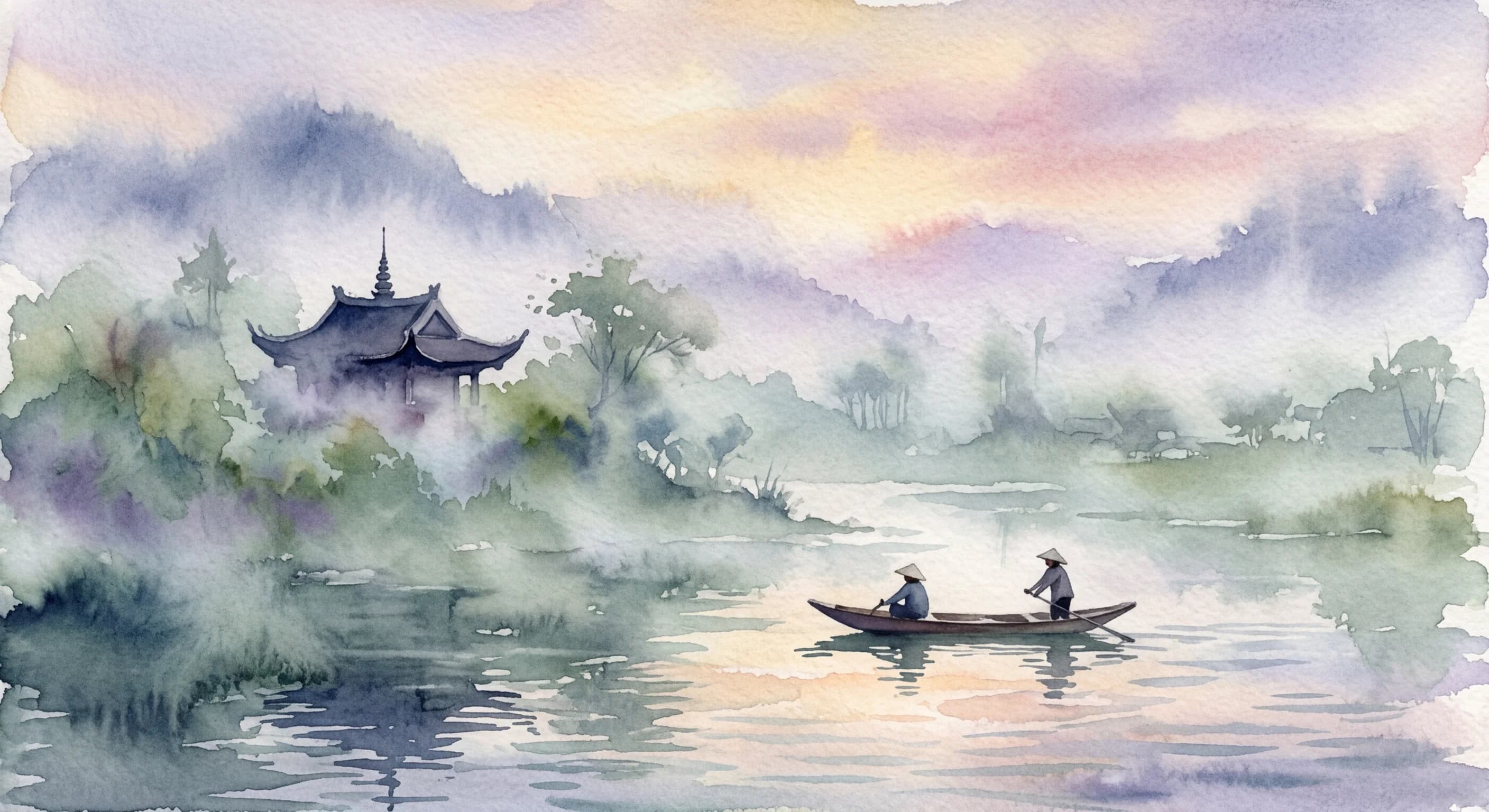
Sương khói
/SOO-uhng KHOY/
Meaning
“Sương khói” is a beautifully evocative Vietnamese phrase that literally translates to "mist and smoke." It conjures an image of ethereal, translucent beauty—like a mountain range shrouded in morning fog or the lingering scent of incense after a prayer. More than just a physical description, it deeply embodies a feeling of gentle melancholy, wistful longing, or the poignant awareness of life's transient nature. It speaks to the heart's yearning for something beautiful yet intangible, forever just beyond grasp, much like a fading memory or a dream just out of reach.
Literal Translation
mist smoke
The Story Behind the Word
The existence and resonance of "sương khói" in Vietnamese culture is deeply rooted in a blend of agricultural life, Buddhist philosophy, and a profound appreciation for nature's subtle shifts. For centuries, the Vietnamese landscape, particularly the rice paddies and mountainous regions, has been frequently veiled in mist, making such atmospheric conditions a familiar and often beautiful part of daily life. This constant interaction with nature fostered a sensitivity to impermanence and the transient beauty of the world, themes central to Buddhist thought which widely influenced Vietnamese spirituality. The concept of "sương khói" thus reflects a worldview that embraces the fleeting, finds beauty in the ephemeral, and acknowledges the inherent impermanence of existence. It reveals a culture that values introspection, poetic expression, and a deep connection to the natural world's gentle, yet powerful, rhythms. It's not about absence, but about a presence that is soft, hazy, and imbued with emotion.
Experience It
Morning on the River
As the sun began to rise over the Mekong Delta, a thick blanket of "sương khói" clung to the water, blurring the outlines of fishing boats and distant coconut trees. The old fisherman sighed, a gentle acceptance of the day's soft, hazy start, mirroring the quiet contemplation in his heart.
A Fading Memory
She looked at the old photograph, a joyful wedding scene from decades past. The faces, once so vivid, now seemed to float in a "sương khói" of memory, beautiful but indistinct, stirring a bittersweet ache for a time that was no more.
The Deeper Meaning
This word encapsulates a core Vietnamese philosophical outlook that embraces impermanence and finds beauty in the transient. It suggests that true beauty is often fleeting, elusive, and tinged with a gentle sadness. Rather than lamenting what disappears, "sương khói" encourages an appreciation for the moment's delicate, hazy charm, reflecting a worldview that values emotional depth and poetic sensitivity over stark, definitive realities.
Did You Know?
The phrase "sương khói" is often used in Vietnamese poetry and folk songs to add a layer of poetic depth, transforming a simple description of weather into a profound emotional landscape.
How It's Used
Used to describe atmospheric conditions, particularly mist or haze, and metaphorically to evoke a sense of transience, nostalgia, or a dreamlike state.