Bayanihan
/bah-yah-NEE-han/
Meaning
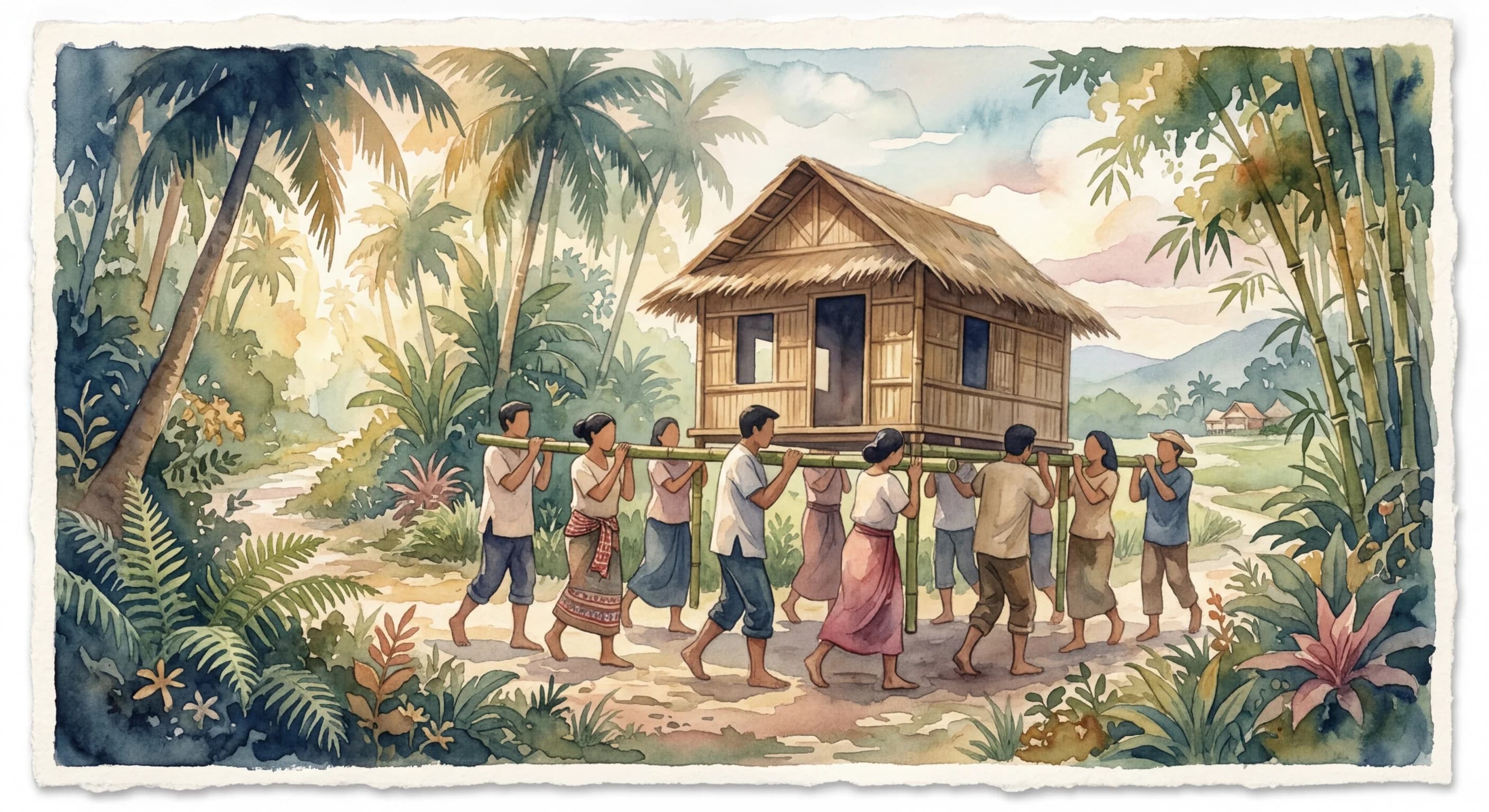
Bayanihan encapsulates the quintessential Filipino ethic of communal unity and fervent collective action. It describes the spontaneous, heartwarming convergence of a community to assist one another, often through voluntary, unpaid labor. This spirit manifests in acts ranging from neighbors literally relocating a house by carrying it, to larger-scale community initiatives like infrastructure building or comprehensive disaster relief efforts, all underpinned by a profound sense of shared responsibility and mutual betterment. It’s a powerful expression of solidarity, where individual contributions are willingly offered for the group's welfare, forging an unbreakable bond among its members.
Literal Translation
From 'bayan' meaning 'nation' or 'community'.
The Story Behind the Word
The concept of Bayanihan is deeply rooted in the pre-colonial communal living structures of the Philippines, where survival and progress were inherently linked to collective effort. The very act of 'moving a nipa hut' (paglilipat ng bahay kubo) became its iconic symbol, demonstrating an intimate connection to the land and the shared vulnerability of rural life. This tradition persisted through various colonial periods, becoming a silent act of resistance and resilience, affirming community identity against external pressures. Philosophically, it reflects a worldview where individual well-being is inseparable from the collective, emphasizing harmony, reciprocity (utang na loob), and a strong sense of belonging. It's not just about helping, but about reinforcing the social fabric and ensuring the community's holistic prosperity.
Experience It
House Relocation Effort
A typhoon destroyed Mang Tonyo's small nipa hut. Without a word, his neighbors arrived the next morning, some bringing tools, others food. They dismantled the damaged hut and, in a synchronized effort, lifted the frame onto their shoulders, moving it to a safer, higher ground to begin rebuilding, showcasing an extraordinary display of strength and unity.
Community School Cleanup
Before the new school year, parents, teachers, and even older students gathered for a Brigada Eskwela. They swept, painted classrooms, fixed broken fences, and trimmed overgrown bushes. No one was paid; everyone worked tirelessly, sharing stories and laughter, ensuring the school was pristine and welcoming for the children.
The Deeper Meaning
Bayanihan embodies a profound relational philosophy, asserting that an individual's identity and well-being are intrinsically linked to the community. It challenges Western individualism, positing that true strength and prosperity emerge from collective effort and mutual support. This worldview fosters a deep sense of 'pakikipagkapwa-tao' (shared humanity), where compassion and solidarity are not just ideals but actionable principles for navigating life's challenges and celebrating its joys.
Did You Know?
The iconic image of men carrying a 'bahay kubo' (nipa hut) on their shoulders is not just symbolic; it was a common, practical way to relocate homes in rural Philippines, requiring immense coordination and trust.
How It's Used
Used to describe acts of communal unity, volunteerism, and mutual help within a community, especially in the Philippines.