Po/Opo
/POH-poh/
Meaning
"Po" and "opo" are linguistic anchors of respect in Filipino culture, transcending a simple "yes" to embody profound deference and acknowledgment of social hierarchy. These terms are woven into the fabric of daily interactions, softening speech and signifying humility, particularly when addressing elders, superiors, or those deserving of honor. Their consistent use ensures harmonious communication, upholds traditional values, and signals an understanding of one's place within the community, making their absence conspicuously impolite.
Literal Translation
Yes (with respect)
The Story Behind the Word
The deep-seated tradition of using "po" and "opo" in Filipino culture stems from a collectivist worldview where respect for elders and authority figures is paramount. This linguistic practice is a direct reflection of 'pakikisama' (harmony) and 'utang na loob' (debt of gratitude), core Filipino values that emphasize smooth interpersonal relationships and reciprocal obligations. Its origins can be traced to pre-colonial societal structures that revered age and wisdom, further reinforced by Spanish colonial influences that introduced rigid social stratification. The continuous use of "po" and "opo" today reveals a society that values humility, seeks to avoid confrontation, and prioritizes maintaining social order and familial bonds, making respect not just a feeling, but an actively performed linguistic act.
Experience It
Grandmother's Gentle Inquiry
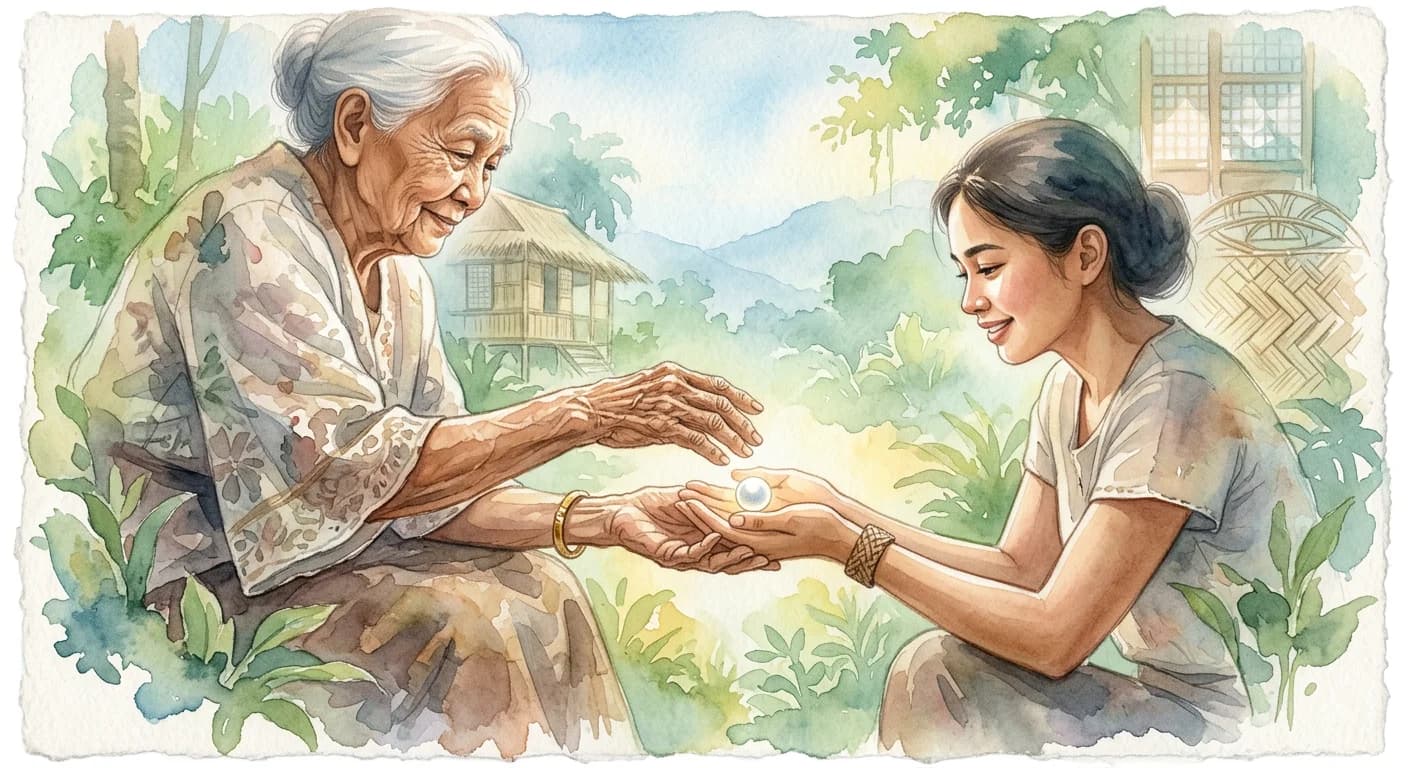
Lola Elena asks her granddaughter, 'Did you finish your homework, apo?' The granddaughter, looking up from her book, smiles and replies, 'Opo, Lola. I finished it before dinner.'
Respectful Work Interaction
During a meeting, a junior employee is asked by their manager, 'Can you prepare the report by tomorrow?' The employee responds, 'Opo, Sir. I will have it ready.' This ensures a professional and respectful exchange.
The Deeper Meaning
The consistent use of "po" and "opo" reveals a Filipino worldview where individual identity is deeply intertwined with social relationships and hierarchy. It underscores a philosophy that values collective harmony over individual assertion, where respect is not merely an emotion but a performative act essential for maintaining social order and demonstrating 'kagandahang-loob' (goodness of heart). This linguistic practice reflects a societal commitment to humility, deference, and the preservation of intergenerational respect.
Did You Know?
While commonly associated with Tagalog, many other Philippine languages have similar honorifics, like 'manong/manang' in Ilocano or 'day/dong' in Cebuano, showcasing a shared cultural emphasis on respect across the archipelago.
How It's Used
Used in spoken Filipino to show respect, especially when responding affirmatively to an elder or someone in a position of authority. It's often appended to affirmative responses like 'opo' (yes) or used independently.