Mano po
/MAH-noh poh/
Meaning
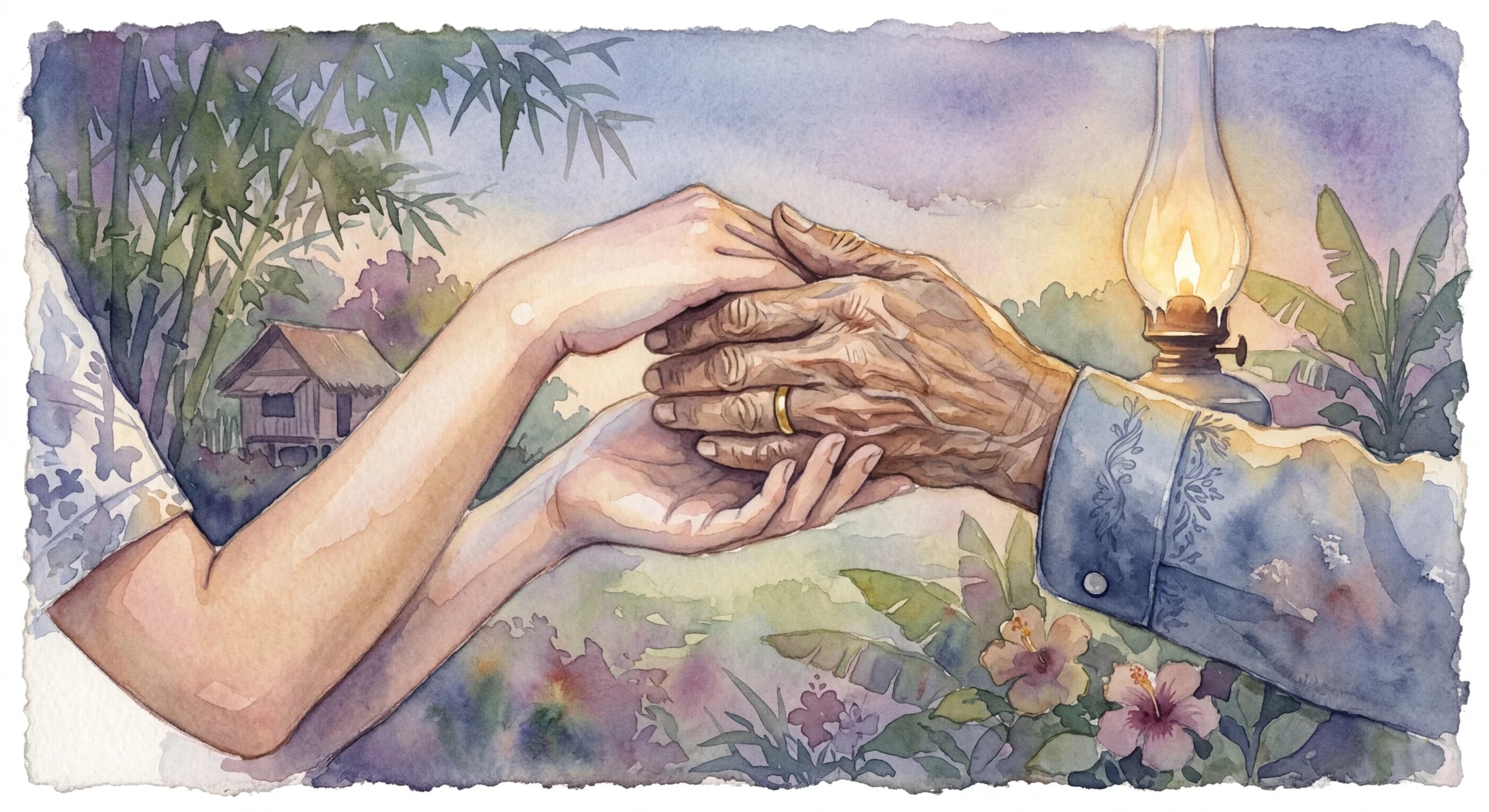
Mano po is a profound Filipino gesture of respect, a silent dialogue between generations. It involves gently taking an elder's outstretched hand and pressing one's forehead to their knuckles while uttering the phrase. This act transcends a mere greeting; it's a tangible expression of reverence, humility, and gratitude, acknowledging the elder's wisdom, life experience, and vital role within the family and community. It reinforces the deep-seated cultural value of honoring one's ancestors and those who paved the way.
Literal Translation
Hand please
The Story Behind the Word
The practice of 'Mano po' is deeply rooted in the Filipino concept of 'paggalang' (respect) and 'utang na loob' (debt of gratitude). Historically, in communal societies, elders were the keepers of knowledge, traditions, and spiritual guidance, making their wisdom invaluable for survival and cultural continuity. This gesture reflects a hierarchical yet loving family structure, where the well-being of individuals is intrinsically linked to the respect shown to their predecessors. It's a daily ritual that continuously reinforces social harmony, familial bonds, and the transmission of values across generations, embodying a collective identity that prioritizes family and community over the individual.
Experience It
Grandchild's Morning Greeting
A young girl, Maya, enters her Lola's (grandmother's) living room. Upon seeing her, she immediately approaches, takes Lola's hand, presses it to her forehead, and softly says, 'Mano po, Lola.' Lola smiles warmly, stroking Maya's hair in return.
Visiting an Aunt
Upon arriving at her Tita's (aunt's) house, Maria steps inside. Before even sitting down, she walks over to her Tita, takes her hand, performs the 'Mano po' gesture, and says, 'Mano po, Tita Elena.' It's a respectful acknowledgment of her presence.
The Deeper Meaning
Mano po embodies the Filipino philosophy of 'kapwa,' which emphasizes shared identity and interconnectedness. It's not just about individual respect but recognizing the elder as an extension of one's own lineage and community. This gesture reinforces the idea that an individual's identity and well-being are inextricably linked to their family and the collective wisdom passed down through generations, fostering a profound sense of belonging and continuity.
Did You Know?
While 'Mano po' is common, the 'po' itself is a general honorific in Tagalog, used to show respect to anyone older or in authority, even without the hand gesture!
How It's Used
This phrase is used when greeting or approaching an elder, such as a grandparent, aunt, uncle, or even a respected family friend. It is a customary practice performed upon entering a home or meeting an elder for the first time in a day.