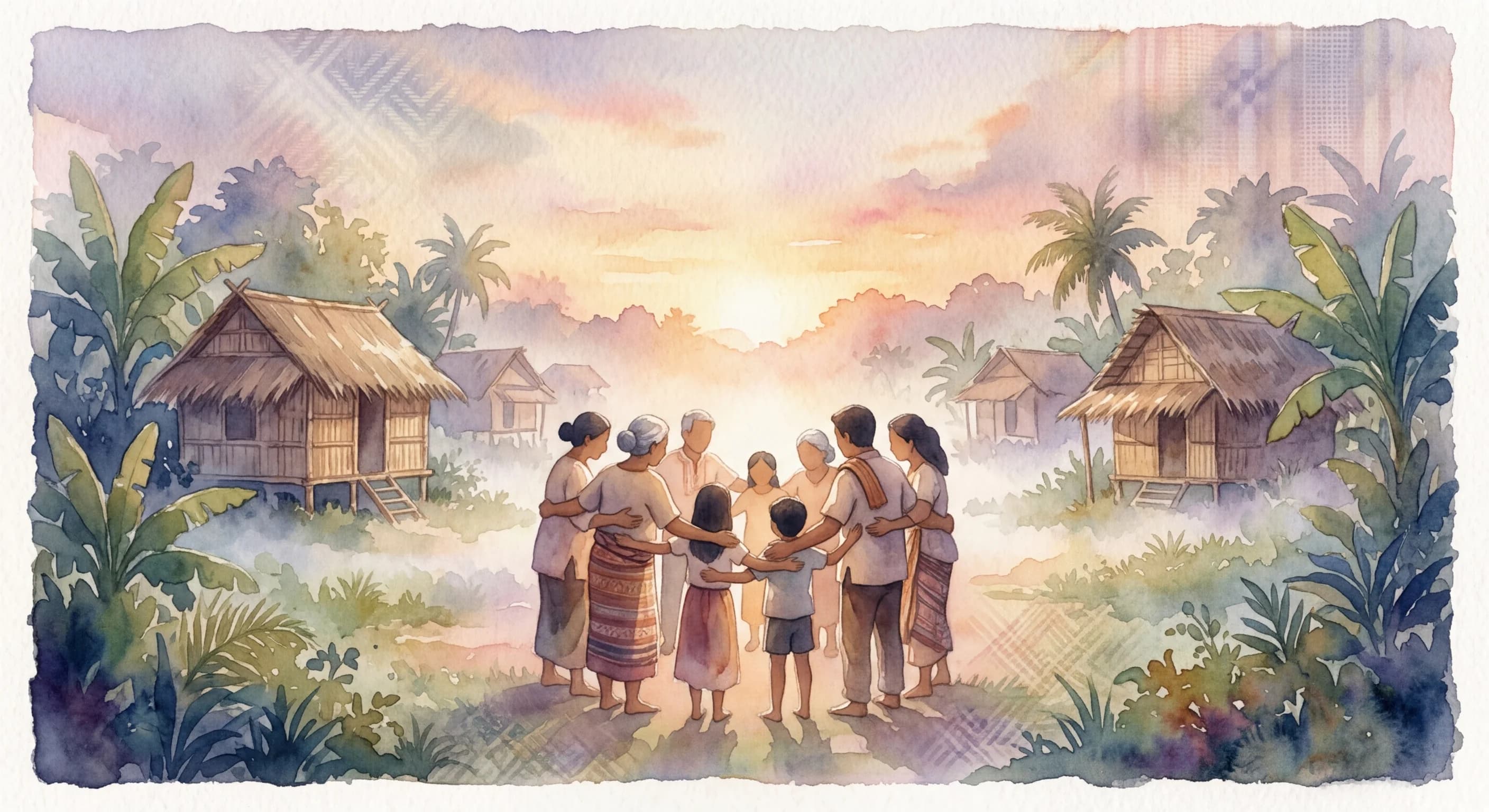
Kapit-bisig
/kah-PEET BEE-seeg/
Meaning
Kapit-bisig profoundly embodies the Filipino spirit of unwavering collective action and mutual support, literally translating to 'holding arms' or 'linking arms.' It signifies a deep-seated cultural imperative to face life's myriad challenges together, shoulder-to-shoulder, fostering an unbreakable bond of solidarity. This isn't merely about physical proximity; it's a powerful expression of shared resolve, where individuals organically pool their strength, resources, and spirit to overcome adversity or achieve a common, uplifting goal. It underpins the belief that no one should ever stand alone in times of need, nurturing a robust sense of community and shared responsibility that is fundamental to Filipino identity.
Literal Translation
Hold/Grasp-arm
The Story Behind the Word
Kapit-bisig is deeply rooted in the communal spirit of bayanihan, a traditional Filipino custom of coming together to help one another without expectation of pay. Historically, this was evident in villagers literally moving a nipa hut (bahay kubo) by lifting it together. The phrase emerged strongly during periods of social and political upheaval, becoming a rallying cry for unity against oppression, most notably during the People Power Revolution. It reflects a worldview shaped by frequent natural disasters and colonial struggles, where collective survival and resilience became paramount. This word reveals a culture that prioritizes the welfare of the group over individualistic pursuits, seeing shared burdens as lighter and shared victories as sweeter. It's a testament to the Filipino belief in innate human interconnectedness and the power found in solidarity.
Experience It
Typhoon Relief Effort
After a devastating typhoon, entire communities engaged in kapit-bisig. Neighbors cleared debris from roads, shared food and water, and helped rebuild damaged homes, working tirelessly side-by-side to restore normalcy and hope.
Community Garden Project
Residents of a crowded urban barangay decided to transform an abandoned lot into a community garden. Through kapit-bisig, they tilled the soil, planted seeds, and built fences, creating a vibrant green space and fostering stronger neighborhood ties.
The Deeper Meaning
The word reveals a profound collectivist philosophy where individual identity is often intertwined with community well-being. It underscores the belief that true strength and progress are achieved not through isolated effort, but through symbiotic relationships and mutual upliftment. This worldview posits that human connection is not just a comfort, but a fundamental necessity for survival and flourishing, especially in the face of daunting challenges, highlighting an ethos of shared destiny.
Did You Know?
Kapit-bisig gained significant prominence as a slogan during the 1986 People Power Revolution, symbolizing the unified front of Filipinos against authoritarian rule.
How It's Used
Used to describe people uniting to face a common challenge, work together on a project, or support each other during difficult times. It's often invoked during community efforts, disaster relief, or any situation requiring collective strength and solidarity.