U.
HomeRegionsLanguagesEmotionsCollections
Find Your Word

“The limits of my language mean the limits of my world.”

— Ludwig Wittgenstein, Philosopher

Untranslatable

A curated collection of the world's most beautiful expressions—words that remind us language is humanity's greatest invention.

  • Home
  • Collections
  • Regions
  • Countries
  • Emotions
  • Tags
  • Contexts
  • Finder
  • Europe
  • Asia
  • Americas
  • Africa
  • Middle East
  • About
  • Contact
  • Privacy Policy
  • Terms of Service

2026 © Untranslatable. All rights reserved.

    /
    /
    1. Home
    2. /
    3. Asia
    4. /
    5. Kudet
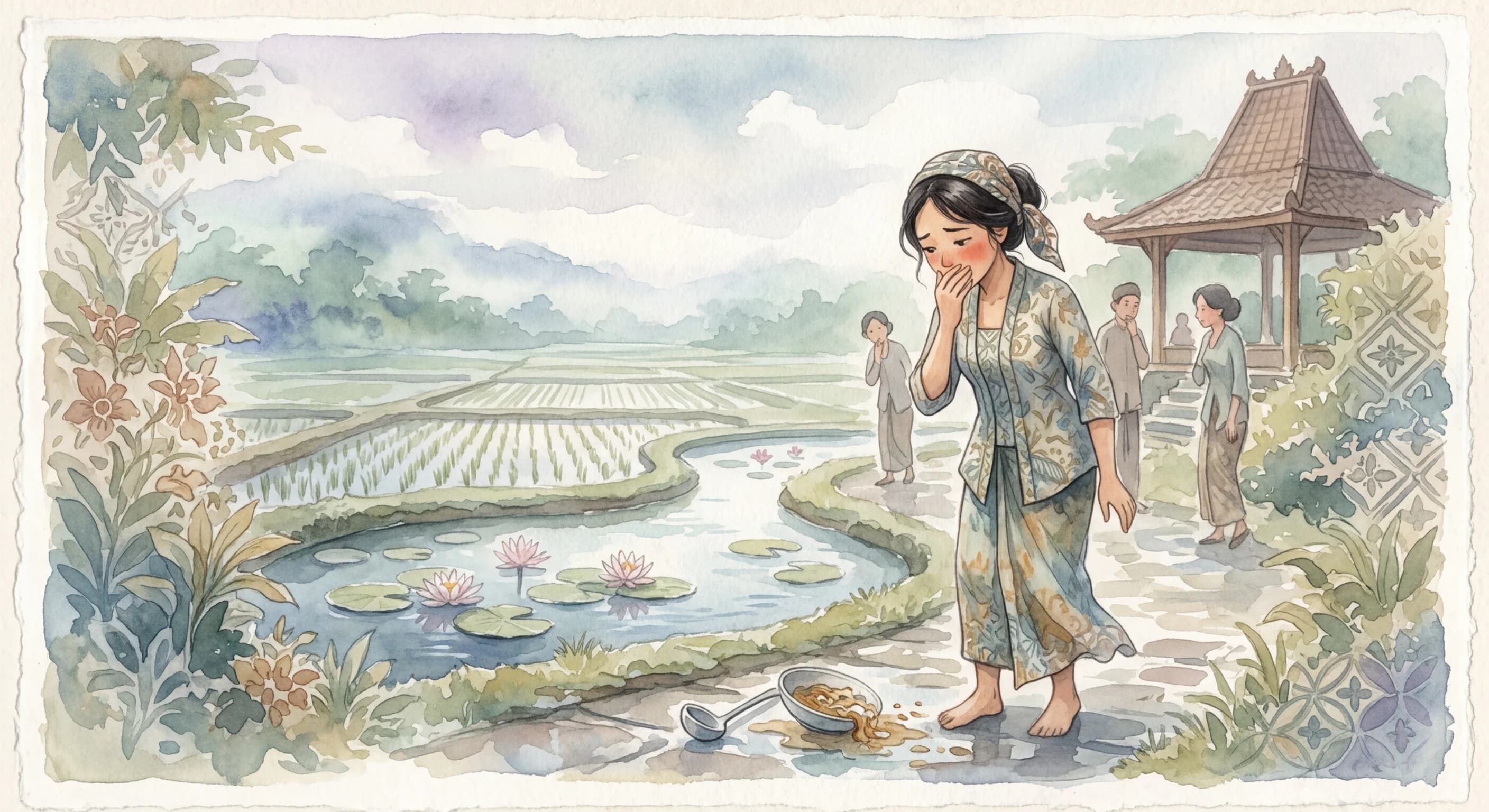
    Artistic representation of Kudet
    Indonesian•
    🇮🇩Indonesia

    Kudet

    /KOO-det/

    Meaning

    Kudet encapsulates that fleeting, almost imperceptible blush of embarrassment or awkwardness that washes over you when a minor social gaffe is realized. It's the moment your heart does a tiny flip when you trip over nothing in public, or when you momentarily draw a blank on someone's name mid-introduction. This subtle, often self-aware feeling highlights a profound cultural emphasis on maintaining decorum and harmonious social interactions, even when personal blunders inevitably occur.

    Literal Translation

    The word 'kudet' itself doesn't have a direct literal translation that captures its nuanced meaning. It's a colloquial term that evolved to encapsulate this specific feeling.

    The Story Behind the Word

    The existence of 'kudet' speaks volumes about Indonesian social dynamics, particularly the concept of 'muka' (face) and 'rukun' (harmony). In a collectivistic society where social cohesion is paramount, even minor missteps can feel magnified. 'Kudet' isn't about deep shame, but rather the momentary discomfort of disrupting the smooth flow of social interaction, however slightly. It acknowledges the human tendency to err while simultaneously reinforcing the cultural expectation of striving for grace and consideration in public. The word itself is a relatively modern, colloquial coinage, reflecting how younger generations articulate these enduring social sensitivities in a lighthearted yet accurate way.

    Experience It

    Forgotten Name Faux Pas

    At a large gathering, you introduce a new acquaintance to an old friend but completely blank on your friend's name for a second. The slight pause, the quick recovery, and the internal 'Oh no!' feeling? That's kudet.

    Minor Public Tumble

    Walking confidently, you suddenly stumble over an uneven pavement, catching yourself just before falling. You glance around quickly, hoping no one saw, feeling a warm flush spread across your cheeks. That fleeting internal cringe is kudet.

    The Deeper Meaning

    Kudet subtly reveals a worldview that values social awareness and humility. It’s an internal barometer of one's place within a community, acknowledging that self-perception is often tied to how one is perceived by others. This mild self-reprimand encourages a continuous, gentle recalibration of behavior to maintain collective harmony, rather than dwelling on individual perfection.

    Did You Know?

    The word 'kudet' is actually an abbreviation! It comes from 'kurang update,' meaning 'lacking updates' or 'out of date,' humorously applied to someone who is out of touch or, in this context, momentarily 'out of sync' with social expectations.

    How It's Used

    Used to describe a personal feeling of mild embarrassment or awkwardness after a minor social misstep.

    Contexts
    personal growth,social interaction
    🇮🇩Indonesia

    by Annelise Dubois·Written Mar 10, 2026·Updated Apr 3, 2026

    Related Words

    Explore more
    Wabi-sabiJapanese

    Wabi-sabi is the profound appreciation for the ephemeral, the imperfect, and the incomplete aspects of existence. It is about discovering beauty in the subtle textures of age, the unique character of flaws, and the gentle decay that marks the passage of time. This philosophy encourages a quiet acceptance of impermanence and a mindful connection to the natural world, finding elegance in simplicity and authenticity.

    IkigaiJapanese

    Ikigai is more than just a reason to get out of bed; it's a deeply personal and evolving sense of purpose that brings genuine fulfillment and joy to one's life. It represents the sweet spot where your passions, talents, needs of the world, and what you can be paid for beautifully converge. Discovering your ikigai often leads to a life lived with intentionality, resilience, and a profound connection to one's contributions. It's the intrinsic motivation that fuels a meaningful existence, regardless of external circumstances.

    NunchiKorean

    Nunchi is the sophisticated, almost telepathic, ability to instantly grasp the unspoken dynamics of any social situation, anticipating others' thoughts and feelings, and then responding with impeccable grace and timing. It's an acute form of social intuition, allowing one to navigate complex interpersonal landscapes by reading subtle cues like body language, tone, and context. Possessing good nunchi means effortlessly understanding the underlying emotional currents and adjusting one's behavior to maintain harmony and effectiveness, often without a single word exchanged.

    JugaadHindi

    Jugaad is more than just a quick fix; it embodies the spirit of resourceful, ingenious improvisation in the face of scarcity or systemic challenges. It's the art of bending rules, repurposing materials, and thinking outside the box to achieve a desired outcome, often with limited financial or technological resources. This approach celebrates clever workarounds and innovative adaptations, turning constraints into catalysts for creative problem-solving. It's about making do and making something work, brilliantly.