U.
HomeRegionsLanguagesEmotionsCollections
Find Your Word

“The limits of my language mean the limits of my world.”

— Ludwig Wittgenstein, Philosopher

Untranslatable

A curated collection of the world's most beautiful expressions—words that remind us language is humanity's greatest invention.

  • Home
  • Collections
  • Regions
  • Countries
  • Emotions
  • Tags
  • Contexts
  • Finder
  • Europe
  • Asia
  • Americas
  • Africa
  • Middle East
  • About
  • Contact
  • Privacy Policy
  • Terms of Service

2026 © Untranslatable. All rights reserved.

    /
    /
    1. Home
    2. /
    3. Asia
    4. /
    5. Latah
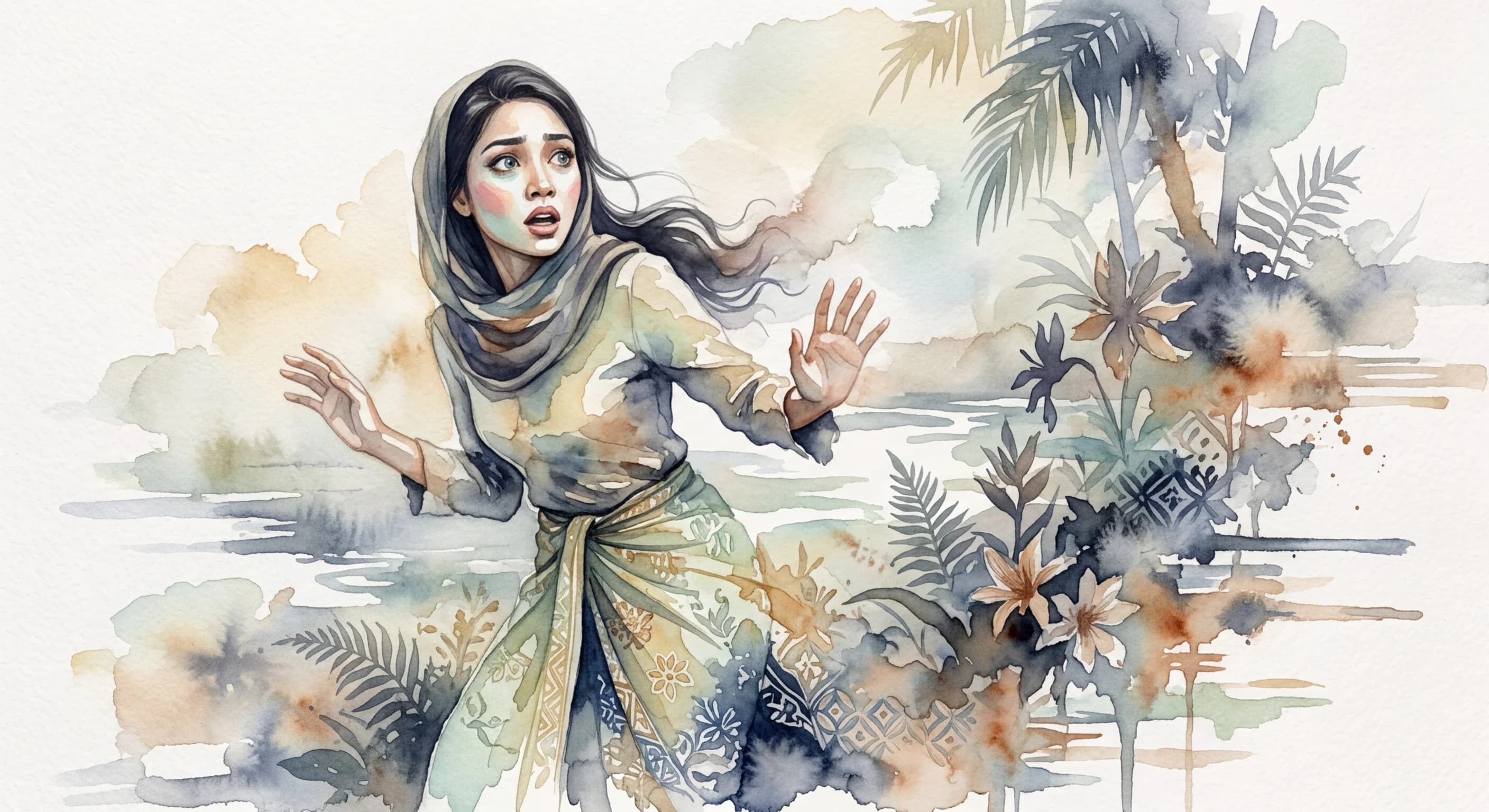
    Artistic representation of Latah
    Malay•
    🇧🇳Brunei🇮🇩Indonesia🇲🇾Malaysia🇸🇬Singapore

    Latah

    /LAH-tah/

    Meaning

    Latah is a captivating psychogenic disorder, predominantly observed in Southeast Asian cultures, characterized by an involuntary, dramatic response to startling stimuli. Individuals may suddenly mimic gestures, utter obscenities, or fall into trance-like states, often accompanied by echolalia or forced obedience. It's a complex cultural syndrome, deeply embedded in social dynamics, revealing the intricate interplay between psychological vulnerability and cultural interpretation of stress and anxiety.

    Literal Translation

    The literal meaning is debated, but it is often associated with 'falling' or 'dropping' in some Malay dialects, perhaps referring to the sudden onset of symptoms.

    The Story Behind the Word

    Latah is deeply woven into the cultural fabric of Malay-speaking communities, existing not merely as a medical condition but as a recognized social phenomenon. Historically, it has been viewed with a mix of amusement, sympathy, and sometimes, a degree of fear or superstition. Its prevalence, particularly among women, is often linked to social hierarchies, power dynamics, and the pressures of communal living. The acceptance of latah as a distinct syndrome reflects a cultural understanding that psychological distress can manifest in highly dramatic, yet socially acknowledged, ways, offering a temporary release from societal constraints and a unique form of expression that might otherwise be suppressed. It reveals a worldview where the mind and body are not strictly separated, and where social environment profoundly shapes individual experience.

    Experience It

    Marketplace Mayhem

    At the bustling market, a vendor accidentally drops a pile of fruit with a loud crash. Makcik Kiah, known for her latah, immediately claps her hands, shouts a string of nonsensical phrases, and then mimics the vendor's frantic movements, much to the amusement and knowing glances of the other shoppers.

    Startled Mimicry

    During a quiet family gathering, a child's sudden, loud sneeze makes Auntie Fatimah jump. In her latah state, she instinctively repeats the sneeze sound exactly, then begins to mimic the child's subsequent actions, like scratching her head, until the family gently redirects her attention.

    The Deeper Meaning

    Latah underscores a profound philosophical insight: the permeable boundary between the self and the social. It suggests that individual psychological states are not solely internal but are deeply intertwined with, and often shaped by, collective norms, expectations, and the very act of social interaction. It challenges Western notions of autonomous individuality, highlighting how culture can co-create and interpret expressions of distress.

    Did You Know?

    Latah was one of the first culture-bound syndromes to be scientifically documented in the Western medical literature, challenging the universality of psychiatric diagnoses.

    How It's Used

    Latah is typically observed in women and is often triggered by being startled. It can manifest as mimicry, shouting, or unusual behaviors, and is considered a cultural syndrome within Southeast Asian medical and anthropological contexts.

    Emotions
    anxiety,fear,wonder
    Contexts
    art,social interaction
    🇧🇳Brunei🇮🇩Indonesia🇲🇾Malaysia🇸🇬Singapore

    by Sofia Rossi·Written Mar 10, 2026·Updated Apr 3, 2026

    Related Words

    Explore more
    Wabi-sabiJapanese

    Wabi-sabi is the profound appreciation for the ephemeral, the imperfect, and the incomplete aspects of existence. It is about discovering beauty in the subtle textures of age, the unique character of flaws, and the gentle decay that marks the passage of time. This philosophy encourages a quiet acceptance of impermanence and a mindful connection to the natural world, finding elegance in simplicity and authenticity.

    IkigaiJapanese

    Ikigai is more than just a reason to get out of bed; it's a deeply personal and evolving sense of purpose that brings genuine fulfillment and joy to one's life. It represents the sweet spot where your passions, talents, needs of the world, and what you can be paid for beautifully converge. Discovering your ikigai often leads to a life lived with intentionality, resilience, and a profound connection to one's contributions. It's the intrinsic motivation that fuels a meaningful existence, regardless of external circumstances.

    NunchiKorean

    Nunchi is the sophisticated, almost telepathic, ability to instantly grasp the unspoken dynamics of any social situation, anticipating others' thoughts and feelings, and then responding with impeccable grace and timing. It's an acute form of social intuition, allowing one to navigate complex interpersonal landscapes by reading subtle cues like body language, tone, and context. Possessing good nunchi means effortlessly understanding the underlying emotional currents and adjusting one's behavior to maintain harmony and effectiveness, often without a single word exchanged.

    JugaadHindi

    Jugaad is more than just a quick fix; it embodies the spirit of resourceful, ingenious improvisation in the face of scarcity or systemic challenges. It's the art of bending rules, repurposing materials, and thinking outside the box to achieve a desired outcome, often with limited financial or technological resources. This approach celebrates clever workarounds and innovative adaptations, turning constraints into catalysts for creative problem-solving. It's about making do and making something work, brilliantly.