Manja
/MAHN-jah/
Meaning
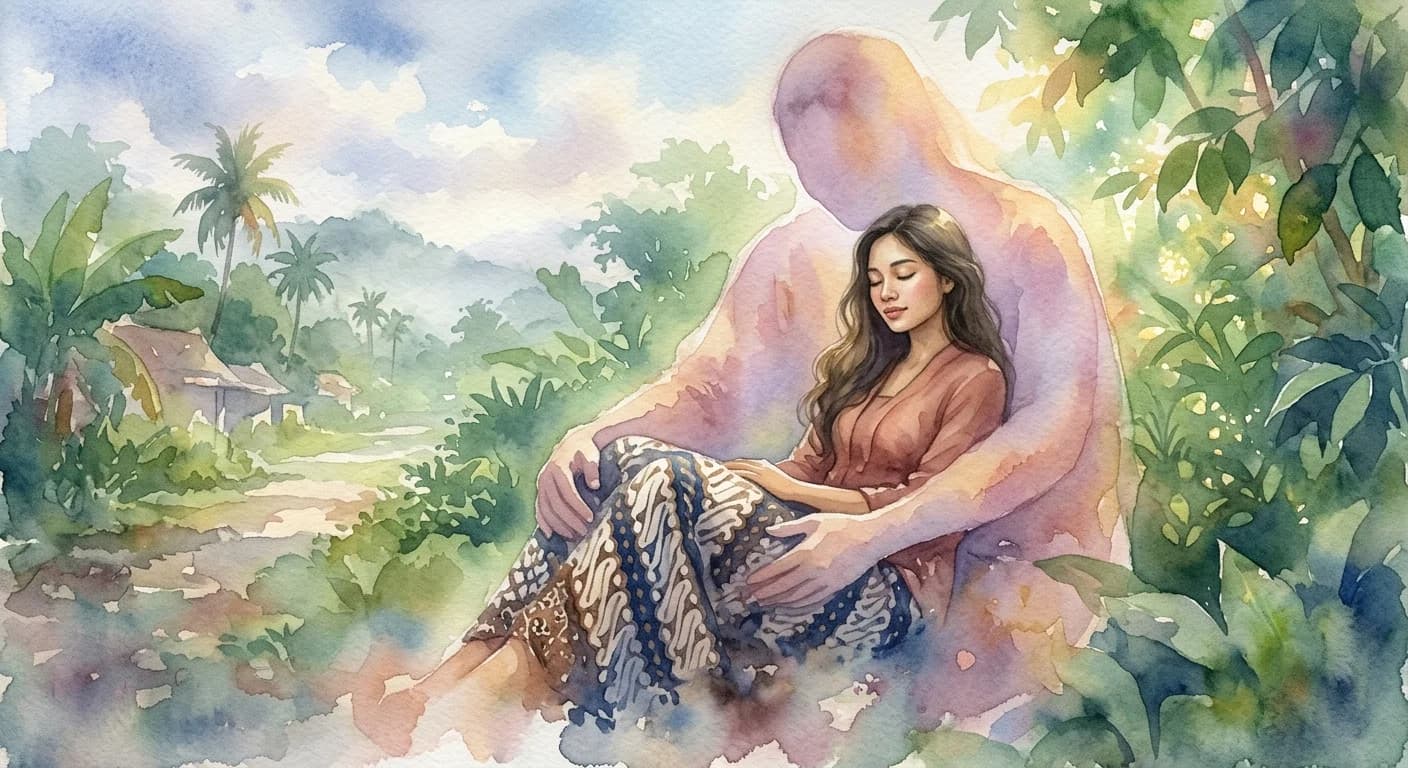
Manja encapsulates a unique Indonesian concept of affectionate indulgence, describing a person, often a woman or child, who deliberately displays a charming, playful dependence to elicit care and attention from their loved ones. It's a nuanced blend of being pampered, acting slightly childish, and seeking emotional closeness, not as a negative trait, but as an accepted, even endearing, way to express vulnerability and strengthen relational bonds. This behavior often involves a gentle coaxing or a sweet, indirect request for affection, creating a specific dynamic within intimate relationships that prioritizes emotional connection.
Literal Translation
Spoiled/Pampered (colloquial)
The Story Behind the Word
The concept of 'manja' is deeply rooted in Indonesia's collectivist culture, where strong family ties and community interdependence are highly valued. Unlike Western individualistic societies that might view such behavior as weakness or manipulation, 'manja' is often seen as a legitimate way to express affection, vulnerability, and a desire for connection within close relationships. It reflects a cultural emphasis on emotional expression and the nurturing role of family members. Historically, in many traditional Indonesian societies, women were often encouraged to embody a certain softness and dependence, and 'manja' behavior could be an extension of this, fostering care and protection within the family unit. It speaks to a worldview where openly seeking and receiving affection is a positive reinforcement of belonging and love.
Experience It
Morning Coffee Request
Lila woke up and saw her husband, Adi, already making coffee. Instead of asking directly for a cup, she draped herself dramatically over his shoulder, pouting playfully, 'Aduh, my head hurts so much, darling. I wish I had a magical coffee appear!' Adi chuckled, knowing her 'manja' act, and handed her a freshly brewed mug.
Grandma's Special Treat
Little Maya wanted another cookie from her grandmother. Instead of just asking, she hugged her grandma's leg, batted her eyelashes, and whispered, 'Nenek, you're the best grandma in the whole world! Your cookies are like magic!' Her grandmother, delighted by Maya's 'manja' charm, gave her an extra cookie.
What Gets Lost in Translation
English speakers often misunderstand 'manja' as simply being 'spoiled' or 'demanding' in a negative sense. However, in Indonesian culture, it carries a positive connotation of vulnerability and a desire for intimacy. It's not about being selfish, but about expressing a need for affection and strengthening emotional bonds, often through a playful, endearing display rather than a direct request.
Across Cultures
While there's no direct equivalent, some cultures have similar ideas. Japanese 'amae' describes a desire to be loved and taken care of, often seen in a parent-child dynamic. Spanish 'mimado/a' refers to being spoiled, but lacks the deliberate, affectionate seeking of attention. The closest English might be 'pampered' or 'indulged,' but these miss the active, sometimes strategic, and often charming element of 'manja' behavior.
The Deeper Meaning
'Manja' reveals a cultural philosophy that values emotional expression and interdependence within relationships. It suggests that vulnerability, when expressed with a certain charm, is not a weakness but a way to invite care, deepen connection, and reinforce the bonds of affection. It highlights a worldview where the active pursuit and reception of love and attention are integral to relational well-being, rather than being seen as a sign of immaturity.
Did You Know?
Did you know 'manja' can also be used ironically? A husband might jokingly call his wife 'manja' if she's being particularly demanding but in an endearing way, highlighting the playful and affectionate undertone of the word.
How It's Used
Used to describe someone, typically a woman or child, who is being pampered, spoiled, or acting in a way to elicit affection and care.