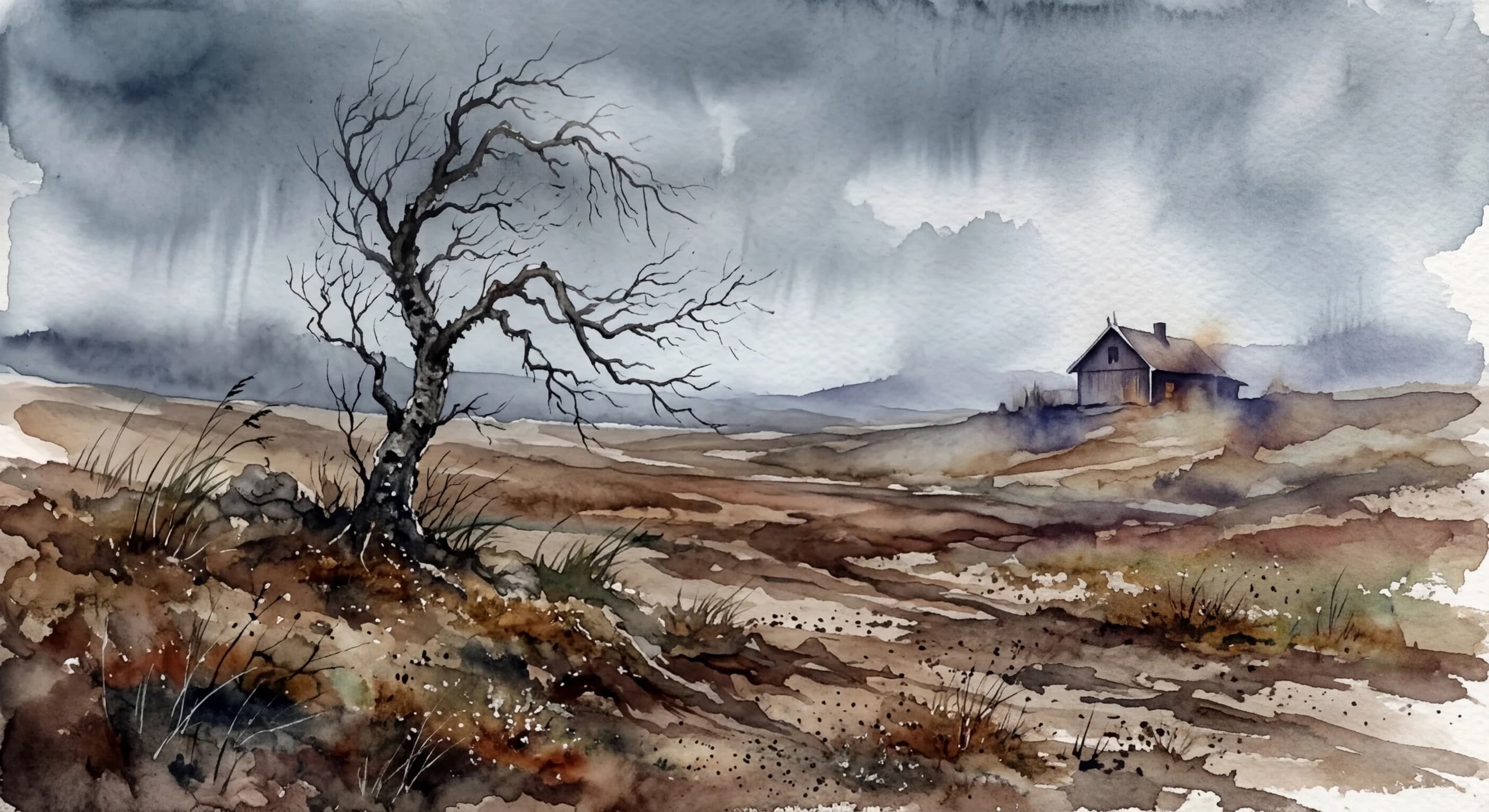
Nälkämaa
/NAHL-kah-mah/
Meaning
Nälkämaa is a profoundly evocative Finnish term that translates to 'hunger land' or 'starvation land,' denoting a place of extreme barrenness and scarcity where mere survival is a relentless struggle. It encapsulates not just physical poverty, but a deep-seated environmental hostility that forces inhabitants into a perpetual battle against the elements for sustenance. This word conjures a visceral sense of hardship, reflecting generations of Finns' intimate knowledge of unforgiving landscapes and the precariousness of life in such regions.
Literal Translation
hunger land
The Story Behind the Word
The existence of 'nälkämaa' is deeply etched in Finnish history and geography, particularly in the vast, sparsely populated eastern and northern regions characterized by challenging terrain, long winters, and poor soil. For centuries, life in these areas was a constant battle against hunger, where crop failures meant literal starvation. The word reflects a collective memory of resilience, resourcefulness, and a stoic acceptance of nature's harsh realities. It embodies the Finnish concept of 'sisu' – an indomitable spirit and perseverance in the face of adversity – as survival in a 'nälkämaa' demanded extraordinary fortitude. This term reveals a worldview where humanity is not always dominant over nature, but often in a precarious, dependent relationship with it, a stark contrast to more fertile lands where sustenance is taken for granted.
Experience It
Winter's Iron Grip
After the late spring frosts destroyed the rye crop, the old farmer sighed, looking out at his fields. 'This land has always been a nälkämaa,' he murmured, knowing the coming winter would be long and lean, demanding every ounce of their family's strength to survive.
Metaphorical Despair
The young artist felt his creative spirit dwindling in the soulless corporate job. 'This office feels like a nälkämaa for my soul,' he confided in a friend, 'there's no nourishment, just endless, barren tasks.'
What Gets Lost in Translation
English speakers might mistake 'nälkämaa' as simply 'poor land' or 'barren land,' missing the profound historical and emotional weight. It's not just about a lack of wealth, but a fundamental lack of life-sustaining resources, often due to harsh climate or infertile soil. The term carries a collective memory of famine and extreme resilience, a nuance often lost when translated without context.
Across Cultures
While direct equivalents are rare, many cultures have terms for difficult landscapes. The Scottish Highlands historically faced similar struggles, though without a single word capturing the 'hunger land' essence. Ireland's 'An Gorta Mór' (The Great Hunger) refers specifically to the potato famine, highlighting a period of starvation rather than a permanent state of the land. 'Terra nullius' (Latin for 'nobody's land') denotes unclaimed or uninhabited territory but lacks the element of struggle for survival.
The Deeper Meaning
Nälkämaa embodies a profound philosophical understanding of humanity's place within a sometimes-hostile natural world. It underscores the fragility of existence and the constant need for vigilance, resilience, and community in the face of scarcity. This word reveals a worldview where hardship is not an anomaly but a potential baseline, fostering a deep respect for resources and an enduring appreciation for any abundance, however small.
Did You Know?
Historically, some of the most remote and challenging parts of Finland were literally called 'Nälkämaa' on old maps, reflecting their notorious reputation for extreme hardship and scarcity.
How It's Used
Used to describe a place that is barren, impoverished, or where survival is difficult due to lack of resources. Can be used literally or metaphorically.