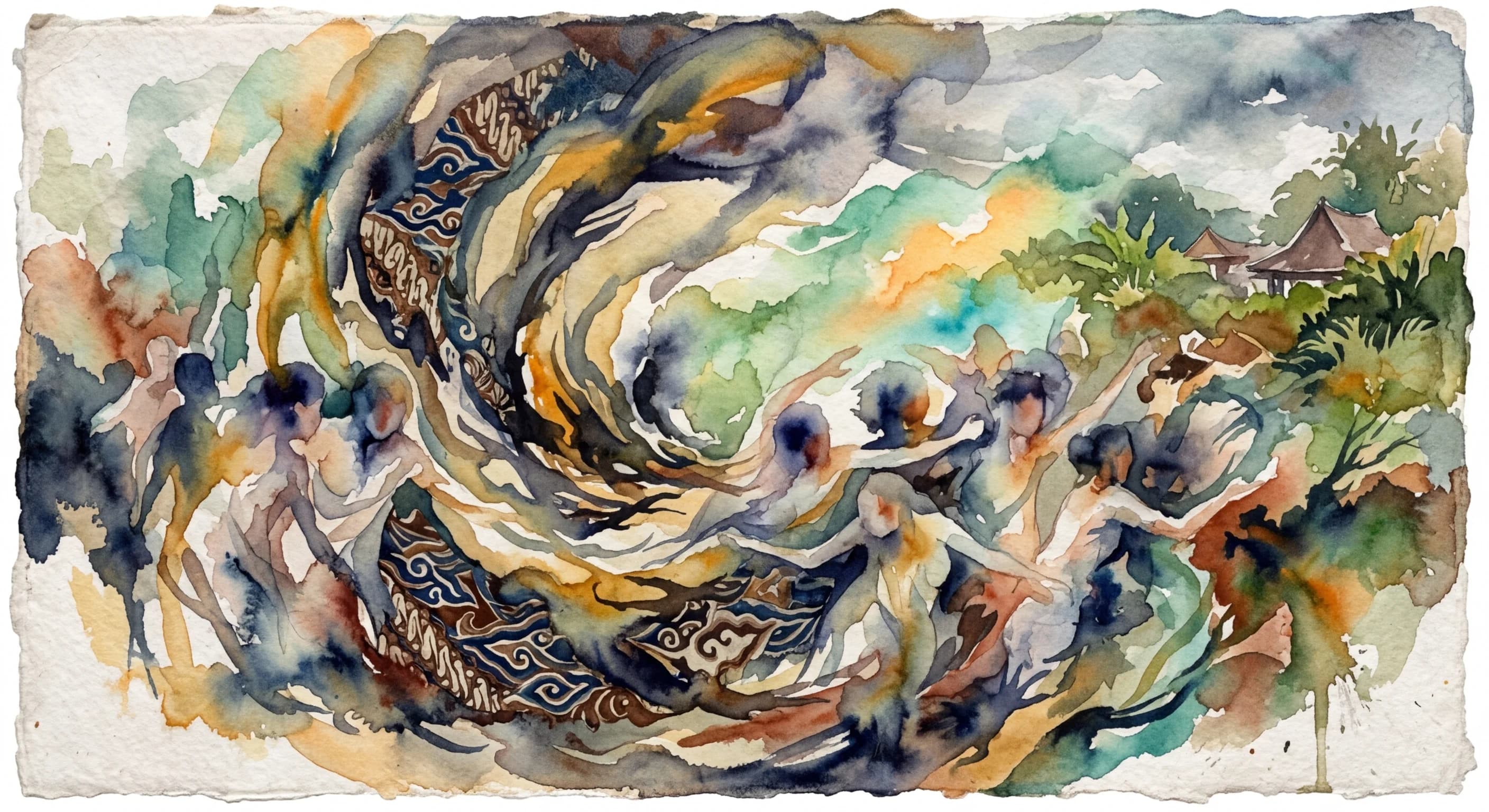
Tawuran
/TAH-oo-rahn/
Meaning
Tawuran describes a visceral, large-scale street brawl or riot, predominantly involving groups of students or rival youth gangs in Indonesia. Far exceeding a mere fight, it embodies a complex socio-cultural phenomenon fueled by deeply ingrained group identity, honor disputes, and territorial claims. The term evokes the sudden, chaotic eruption of collective aggression, often resulting in property damage, significant injuries, and a profound, albeit temporary, breakdown of public order. It is a powerful descriptor for intense, often ritualized, inter-group rivalry.
Literal Translation
brawl, riot, free-for-all
The Story Behind the Word
Tawuran's existence is deeply intertwined with Indonesia's societal fabric, particularly in urban areas. It stems from a mix of factors including historical school rivalries, a strong emphasis on group loyalty (often at the expense of individual reason), and sometimes, a search for identity and belonging among young people in rapidly changing environments. The phenomenon reveals a cultural undercurrent where perceived slights against one's group can escalate rapidly into collective action, driven by a code of honor and a desire to assert dominance. It reflects a societal challenge in channeling youthful energy and group dynamics towards more constructive outlets, showcasing how communal bonds, when misdirected, can lead to destructive outcomes. The regularity of tawuran also points to systemic issues within education and social structures that fail to adequately address underlying tensions.
Experience It
School Rivalry Erupts
After a football match between two vocational schools, a minor verbal spat quickly escalated. Suddenly, dozens of students from both sides, armed with sticks and rocks, spilled onto the main road, initiating a full-blown tawuran that brought traffic to a standstill and sent pedestrians scattering.
Territorial Gang Clash
Rumors of a rival gang encroaching on their 'turf' spread like wildfire through the neighborhood. By nightfall, two large groups of young men, some wielding improvised weapons, met at the district border, engaging in a fierce tawuran that echoed through the residential streets until police intervention.
The Deeper Meaning
Tawuran, as a phenomenon, underscores a profound tension between individual agency and group identity within Indonesian youth culture. It reveals a worldview where collective honor and the perceived integrity of one's group can supersede personal safety and societal norms. It highlights the complex interplay of belonging, aggression, and the search for significance in a rapidly developing society, often manifesting as a destructive expression of unmet needs for recognition and power.
Did You Know?
Despite its destructive nature, some studies suggest that for participants, tawuran can be a perverse form of 'social bonding,' solidifying group identity and loyalty through shared risk.
How It's Used
Used to describe large-scale group fights or riots, particularly among students or rival groups in Indonesia.