U.
HomeRegionsLanguagesEmotionsCollections
Find Your Word

“The limits of my language mean the limits of my world.”

— Ludwig Wittgenstein, Philosopher

Untranslatable

A curated collection of the world's most beautiful expressions—words that remind us language is humanity's greatest invention.

  • Home
  • Collections
  • Regions
  • Countries
  • Emotions
  • Tags
  • Contexts
  • Finder
  • Europe
  • Asia
  • Americas
  • Africa
  • Middle East
  • About
  • Contact
  • Privacy Policy
  • Terms of Service

2026 © Untranslatable. All rights reserved.

    /
    /
    1. Home
    2. /
    3. Asia
    4. /
    5. Tepok Jidat
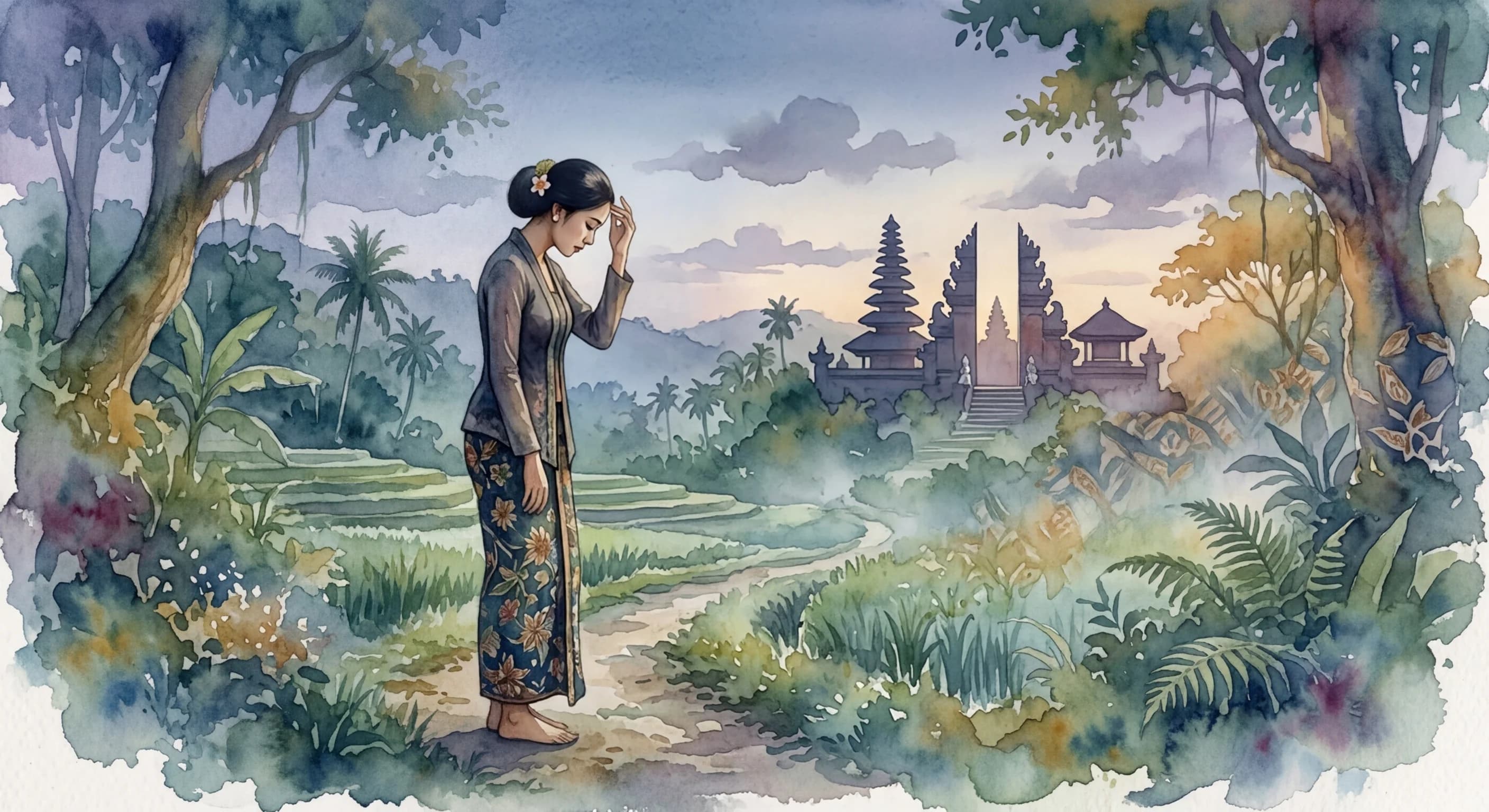
    Artistic representation of Tepok Jidat
    Indonesian•
    🇮🇩Indonesia

    Tepok Jidat

    /TEH-pok JEE-daht/

    Meaning

    This vivid phrase describes the exasperated, often self-deprecating gesture of slapping one's forehead, a universal non-verbal exclamation. It perfectly encapsulates that moment of dawning realization after making a foolish mistake, forgetting something crucial, or encountering a situation so absurdly frustrating it borders on comical. It's a spontaneous physical reaction that conveys a potent mix of self-reproach, disbelief at one's own oversight, and a resigned acceptance of life's minor, yet often repeatable, blunders.

    Literal Translation

    Slap Forehead

    The Story Behind the Word

    While the gesture itself is universal, 'tepok jidat' in Indonesian culture carries a particular weight within a society that values humility and self-awareness. It's an outward, albeit often internal, acknowledgment of a lapse in judgment, signifying that one takes responsibility for their oversight, however minor. This self-reproach, when expressed, can also serve as an icebreaker, diffusing tension in situations where a small error might otherwise cause embarrassment. It reflects a cultural inclination to acknowledge imperfections with a touch of humor and humility, rather than dwelling on blame, fostering an environment where minor mistakes can be openly recognized and moved past.

    Experience It

    Forgotten Anniversary

    Budi walks into the house, sees the untouched anniversary gift he bought last week, and his wife's expectant face. His eyes widen in horror, and he lets out a loud 'tepok jidat!' before rushing to apologize profusely, realizing he completely forgot the special day.

    Misplaced Keys Again

    After searching frantically for his car keys for twenty minutes, Adi finally finds them in his hand, where they've been all along. He groans, 'Oh, tepok jidat!' with a sheepish grin, shaking his head at his own absentmindedness.

    The Deeper Meaning

    This phrase subtly reflects a worldview that embraces imperfection and the inevitability of human error. It suggests a philosophy where minor blunders are not catastrophic but rather opportunities for a moment of self-deprecating humor and a quick return to composure. It highlights the cultural value of acknowledging one's own fallibility with grace, rather than shame, fostering a resilient and forgiving approach to daily life's little frustrations.

    Did You Know?

    The gesture of 'tepok jidat' is so ingrained that it's often accompanied by a verbal exclamation, making the physical act and the spoken phrase almost interchangeable in conveying exasperated self-realization.

    How It's Used

    Used colloquially when someone makes a silly mistake, forgets something obvious, or encounters a frustratingly absurd situation.

    Emotions
    anger,melancholy
    Contexts
    daily life,family,work
    🇮🇩Indonesia

    by Kwame Nkrumah·Written Mar 10, 2026·Updated Apr 3, 2026

    Related Words

    Explore more
    SaudadePortuguese

    Saudade encapsulates a profound, melancholic longing for something or someone cherished that is absent, often with the bittersweet knowledge that it may never return. It's a deep emotional state tinged with nostalgia, evoking a sense of loss for past experiences, places, or people, yet also holding a tender appreciation for the beauty of what once was. This yearning is not merely sadness, but a complex tapestry of desire, memory, and a poignant acceptance of absence, holding the beloved in a warm, persistent embrace within the heart.

    Wabi-sabiJapanese

    Wabi-sabi is the profound appreciation for the ephemeral, the imperfect, and the incomplete aspects of existence. It is about discovering beauty in the subtle textures of age, the unique character of flaws, and the gentle decay that marks the passage of time. This philosophy encourages a quiet acceptance of impermanence and a mindful connection to the natural world, finding elegance in simplicity and authenticity.

    IkigaiJapanese

    Ikigai is more than just a reason to get out of bed; it's a deeply personal and evolving sense of purpose that brings genuine fulfillment and joy to one's life. It represents the sweet spot where your passions, talents, needs of the world, and what you can be paid for beautifully converge. Discovering your ikigai often leads to a life lived with intentionality, resilience, and a profound connection to one's contributions. It's the intrinsic motivation that fuels a meaningful existence, regardless of external circumstances.

    NunchiKorean

    Nunchi is the sophisticated, almost telepathic, ability to instantly grasp the unspoken dynamics of any social situation, anticipating others' thoughts and feelings, and then responding with impeccable grace and timing. It's an acute form of social intuition, allowing one to navigate complex interpersonal landscapes by reading subtle cues like body language, tone, and context. Possessing good nunchi means effortlessly understanding the underlying emotional currents and adjusting one's behavior to maintain harmony and effectiveness, often without a single word exchanged.