Terma
/TER-mah/
Meaning
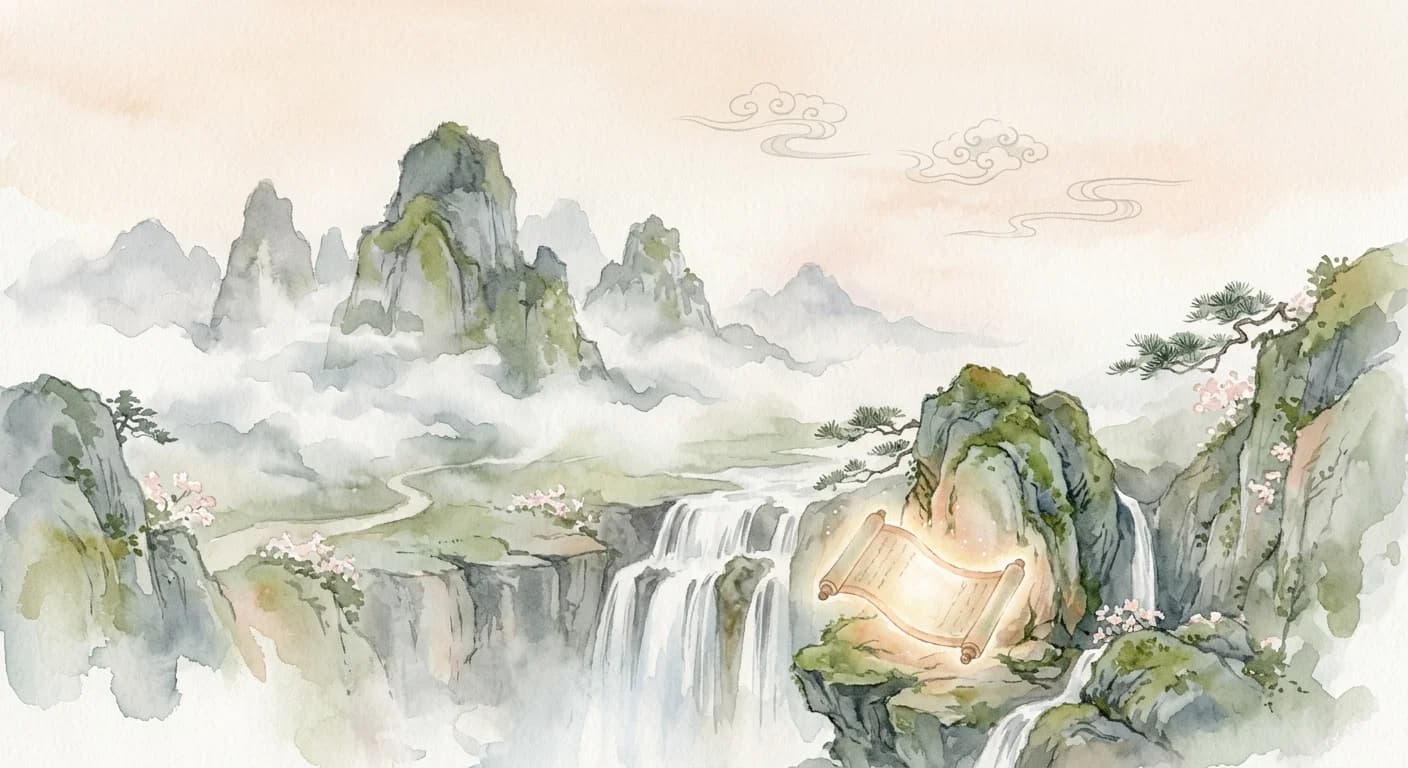
In Tibetan Buddhism, a terma is far more than a mere treasure; it is a divinely concealed spiritual revelation, often in the form of ancient texts, sacred objects, or even profound meditative insights, hidden by enlightened masters like Padmasambhava centuries ago. These 'earth treasures' or 'mind treasures' are destined to be discovered by predestined individuals, known as tertöns, at specific junctures in history when their profound wisdom is most urgently needed by sentient beings. The terma tradition ensures the Dharma's dynamic adaptability, allowing its core truths to re-emerge in fresh, relevant forms across evolving eras, perpetually rekindling spiritual vitality.
Literal Translation
Treasure
The Story Behind the Word
The concept of terma is fundamental to the Nyingma school of Tibetan Buddhism and reveals a profound understanding of time, enlightenment, and the preservation of truth. It exists because the early Buddhist masters, foreseeing future degenerations of the Dharma and the varying capacities of future disciples, intentionally safeguarded core teachings. This tradition reflects a belief in the ongoing, active presence of enlightened wisdom in the world, not just as historical doctrine, but as living, adaptable guidance. It demonstrates a culture that values spiritual continuity and resilience, where truth is dynamic and can manifest anew to meet the needs of each generation, ensuring the Dharma never becomes stagnant or obsolete. Terma provide a vital source of renewal and innovation within a deeply traditional framework, allowing for 'new' teachings that are simultaneously ancient and authentic.
Experience It
Unveiling Ancient Wisdom
A revered tertön, after years of secluded meditation, experiences a profound vision. Guided by cryptic symbols revealed in his dream, he journeys to a remote cave and unearths an ancient wooden box containing scroll-like texts, a terma, whose teachings perfectly address a growing spiritual confusion within the monastic community.
Mind Treasure Revelation
During an intense retreat, a young rinpoche enters a deep meditative state. Suddenly, a complete cycle of previously unknown tantric practices and commentaries, a 'mind terma,' spontaneously arises within his consciousness. He later transcribes these profound insights, which are recognized by elder lamas as authentic and potent new additions to the lineage.
What Gets Lost in Translation
English speakers might mistakenly view terma as simply 'lost' or 'archaeological' finds. However, terma are not accidentally misplaced items; they are intentionally concealed by highly realized beings with a precise purpose and timing for their revelation. The discovery process is a spiritual event, not a random excavation, and involves mystical visions or prophecies, not just physical searching. Furthermore, terma are not static relics but living teachings meant to actively guide practitioners.
Across Cultures
While unique in its systematic tradition, the concept of hidden wisdom reappearing can be found in various cultures. The Dead Sea Scrolls, though not 'hidden' in the same prophetic sense, represent ancient texts rediscovered that reshaped understanding of religious history. In some indigenous traditions, sacred knowledge is said to be revealed to shamans or wise elders at critical times, echoing the idea of timely spiritual disclosures. The idea of sacred texts being 'found' or 'given' to prophets, like the tablets of Moses or the revelations to Muhammad, also shares a resonance with the idea of divinely-sourced, timely knowledge.
The Deeper Meaning
The terma tradition embodies a philosophical view where spiritual truth is not static or confined to a single historical revelation, but is a living, adaptive force that can manifest cyclically to meet the evolving needs of humanity. It suggests an underlying cosmic intelligence that safeguards and redeploys wisdom, emphasizing the interconnectedness of past, present, and future enlightenment. This perspective cultivates a deep reverence for both tradition and innovation, seeing them not as opposing forces, but as complementary aspects of an unfolding spiritual journey.
Did You Know?
Did you know that some terma are said to be 'sky treasures' or 'pure vision' terma, revealed directly into the mind of the tertön through mystical experience, rather than being physical objects found in the earth?
How It's Used
Used within Tibetan Buddhist traditions to refer to specific discovered teachings, texts, or artifacts that are part of a lineage's spiritual heritage.