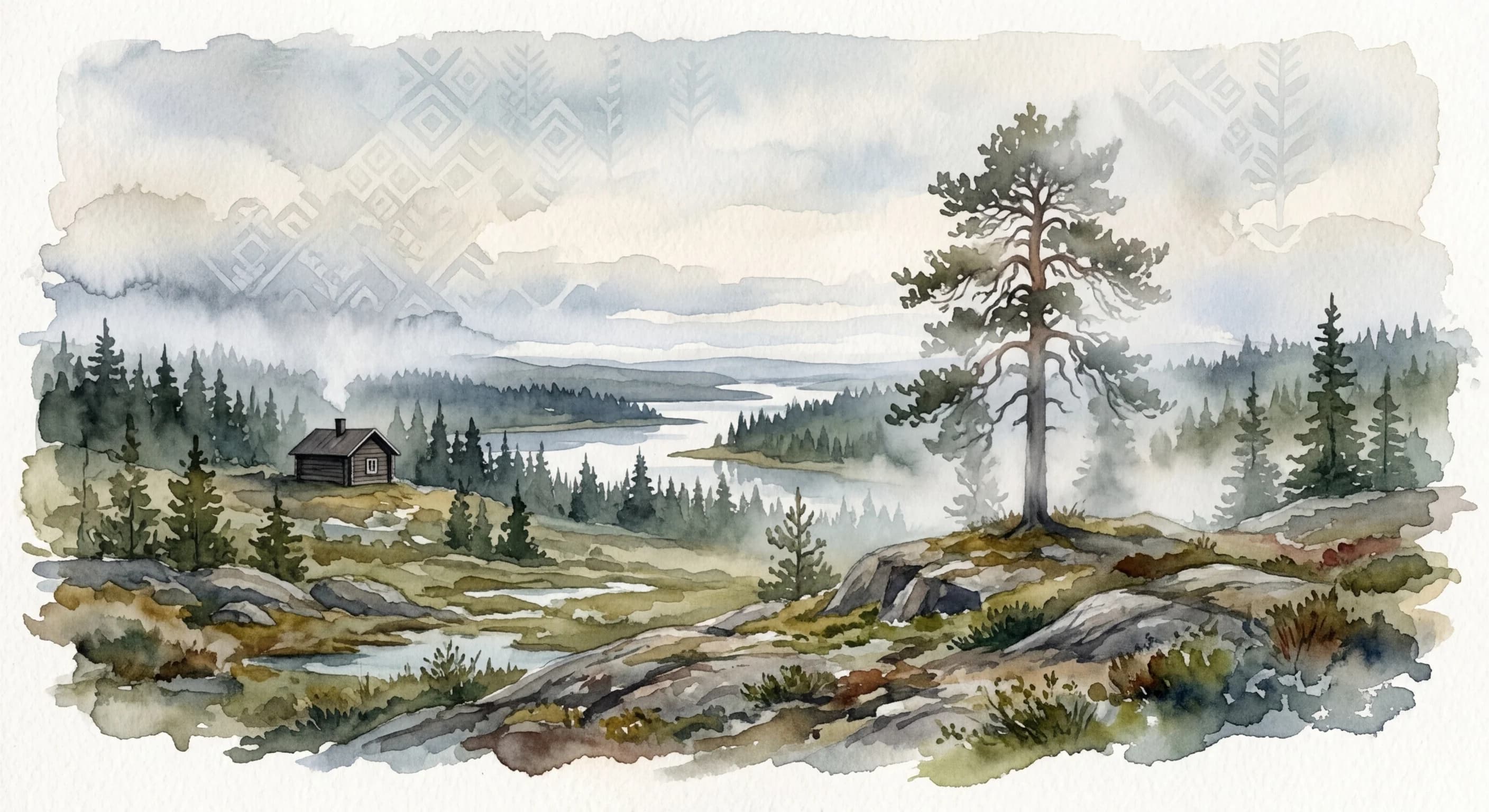
Erämaa
/EH-rah-mah/
Meaning
Erämaa transcends a mere geographical description; it refers to a profound, untamed wilderness, often in the far north, characterized by its vastness, ancient forests, and rugged terrain. It evokes a deep sense of primeval solitude, a place where human influence recedes into insignificance, and one confronts nature in its most raw and magnificent form. For Finns, it signifies not just undeveloped land, but a spiritual sanctuary, a source of resilience, and a powerful reminder of an enduring, untouched natural world that shapes their identity.
Literal Translation
wilderness, backwoods, wasteland
The Story Behind the Word
The concept of erämaa is deeply woven into the fabric of Finnish identity, stemming from centuries of living in close communion with a challenging northern landscape. Historically, these vast wildernesses were crucial for survival, providing resources through hunting, fishing, and foraging. This direct reliance fostered a profound respect and connection to nature, viewing it not as something to be conquered, but as a powerful, sacred entity. Philosophically, erämaa represents a counterpoint to modernity, a place where one can shed societal pressures and reconnect with a more elemental self. It embodies sisu (Finnish grit and resilience), as navigating and enduring the erämaa demands inner strength. It's a national treasure, legally protected in many areas, reflecting a collective understanding of its irreplaceable value for well-being and cultural heritage.
Experience It
Seeking Erämaa's Peace
After a grueling year in the city, Maija packed her minimal gear. Her destination was a remote cabin nestled deep within Lapland's erämaa, far beyond the reach of phone signals. She yearned for the profound silence, the ancient whisper of the pines, and the liberating feeling of being utterly alone in nature's grand embrace.
Erämaa's Harsh Beauty
The seasoned hikers battled through a blizzard in Käsivarsi's erämaa, the wind a relentless sculptor of snow and ice. Despite the brutal conditions, there was a stark beauty in the vast, white expanse, a humbling reminder of nature's power and their own smallness within its magnificent, untamed grip.
What Gets Lost in Translation
English speakers might equate 'erämaa' simply with 'wilderness' or 'backcountry,' missing its profound spiritual and cultural dimensions. It's not just any undeveloped land; it implies a specific type of vast, ancient, often northern wilderness, where one seeks a deeper connection to nature and self, far from civilization's grasp. It's less about recreation and more about existential experience.
Across Cultures
While many cultures have concepts of wilderness, 'erämaa' carries a specific Finnish nuance. Similar ideas exist in words like 'taiga' (Russian for boreal forest) or 'bush' (Australian English), but these often emphasize flora/fauna or undeveloped land, rather than the profound spiritual solitude and ancient untouched quality central to erämaa. Indigenous cultures globally often have terms for sacred, untamed lands, reflecting a similar deep connection.
The Deeper Meaning
'Erämaa' reveals a Finnish worldview where humanity is intrinsically linked to, and humbled by, the immense power and timelessness of nature. It embodies a philosophy of resilience, self-reliance, and a deep appreciation for solitude, suggesting that true clarity and connection to one's authentic self can often be found only when stripped bare of societal complexities, in the raw embrace of the wild.
Did You Know?
Finland has 12 official 'Wilderness Areas' (erämaa-alueet) established by law, primarily in Lapland. Unlike national parks, their main purpose isn't tourism, but preserving the wilderness character, traditional livelihoods, and the experience of solitude.
How It's Used
Used to describe remote wilderness areas, often in the context of nature, survival, or a desire for solitude away from civilization.