Tulku
/TOOL-koo/
Meaning
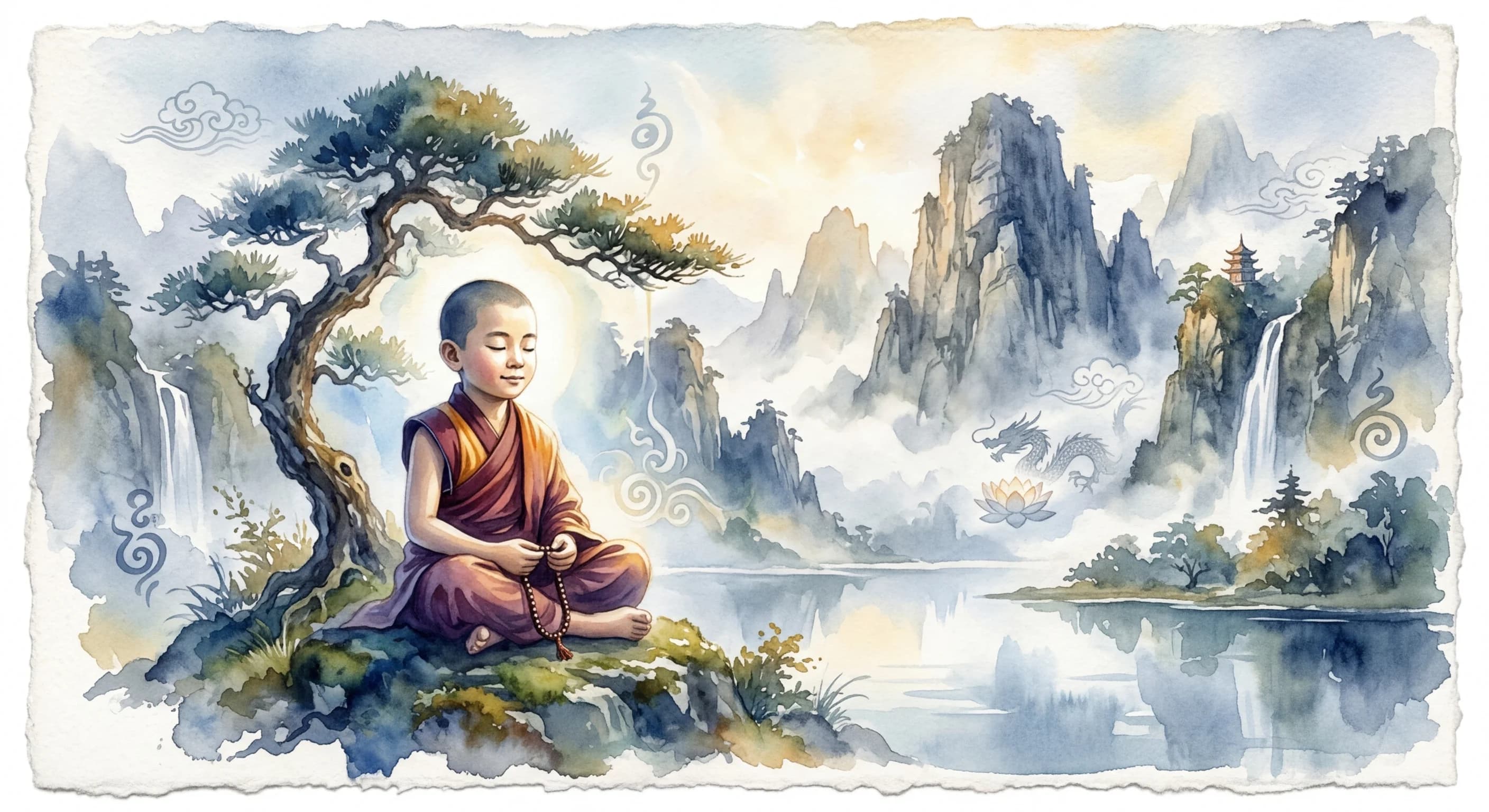
A tulku is a living embodiment of spiritual continuity, a recognized reincarnation of a highly enlightened Tibetan Buddhist master whose conscious intention guides their rebirth. This profound concept, rooted in Mahayana Buddhism, posits that certain bodhisattvas choose to return to the human realm to continue their work of guiding all sentient beings towards liberation. The intricate process of identifying a tulku, involving prophecies, visions, and rigorous examinations, underscores a deep cultural reverence for wisdom passed across lifetimes, ensuring the unbroken transmission of sacred teachings and compassionate leadership within the spiritual lineage.
Literal Translation
reincarnate
The Story Behind the Word
The concept of tulku is central to Tibetan Buddhism, reflecting a worldview where consciousness and enlightenment transcend individual lifetimes. It emerged prominently in the 13th century with the recognition of the Karmapa, establishing a unique system of spiritual succession that differs significantly from hereditary or elected leadership. This system provides stability and continuity for monasteries and spiritual traditions, embodying the belief that wisdom and compassion are not lost with physical death but intentionally reappear to benefit others. It reveals a culture that deeply values spiritual guidance, sees time as cyclical, and believes in the enduring power of enlightened intention to shape reality and guide humanity through successive ages.
Experience It
Searching for a Tulku
After the passing of a revered lama, monks embark on a sacred quest, guided by prophecies and signs. They travel to remote villages, interviewing children who exhibit unusual wisdom or recall details from a past life, meticulously searching for the young reincarnation destined to continue the lineage.
A Young Tulku's Education
A young boy, recognized as a tulku, begins a rigorous monastic education from an early age, surrounded by senior lamas. His days are filled with scripture study, meditation, and ritual practices, preparing him to eventually assume the spiritual leadership and responsibilities of his previous incarnation.
The Deeper Meaning
The tulku system profoundly illustrates the Buddhist philosophy of interdependent origination and the continuity of consciousness beyond a single life. It emphasizes the power of intention (karma) to manifest future existences, particularly the compassionate resolve of enlightened beings (bodhisattvas) to forgo final nirvana for the sake of others. This reveals a worldview where individual 'self' is fluid and interconnected across lifetimes, and spiritual wisdom is a continuous, evolving stream rather than a finite, singular event.
Did You Know?
The Dalai Lamas are the most famous tulku lineage, believed to be successive reincarnations of Avalokiteshvara, the Bodhisattva of Compassion, continuously guiding the Tibetan people for centuries.
How It's Used
Used within Tibetan Buddhism to refer to a reincarnate lama or spiritual master.