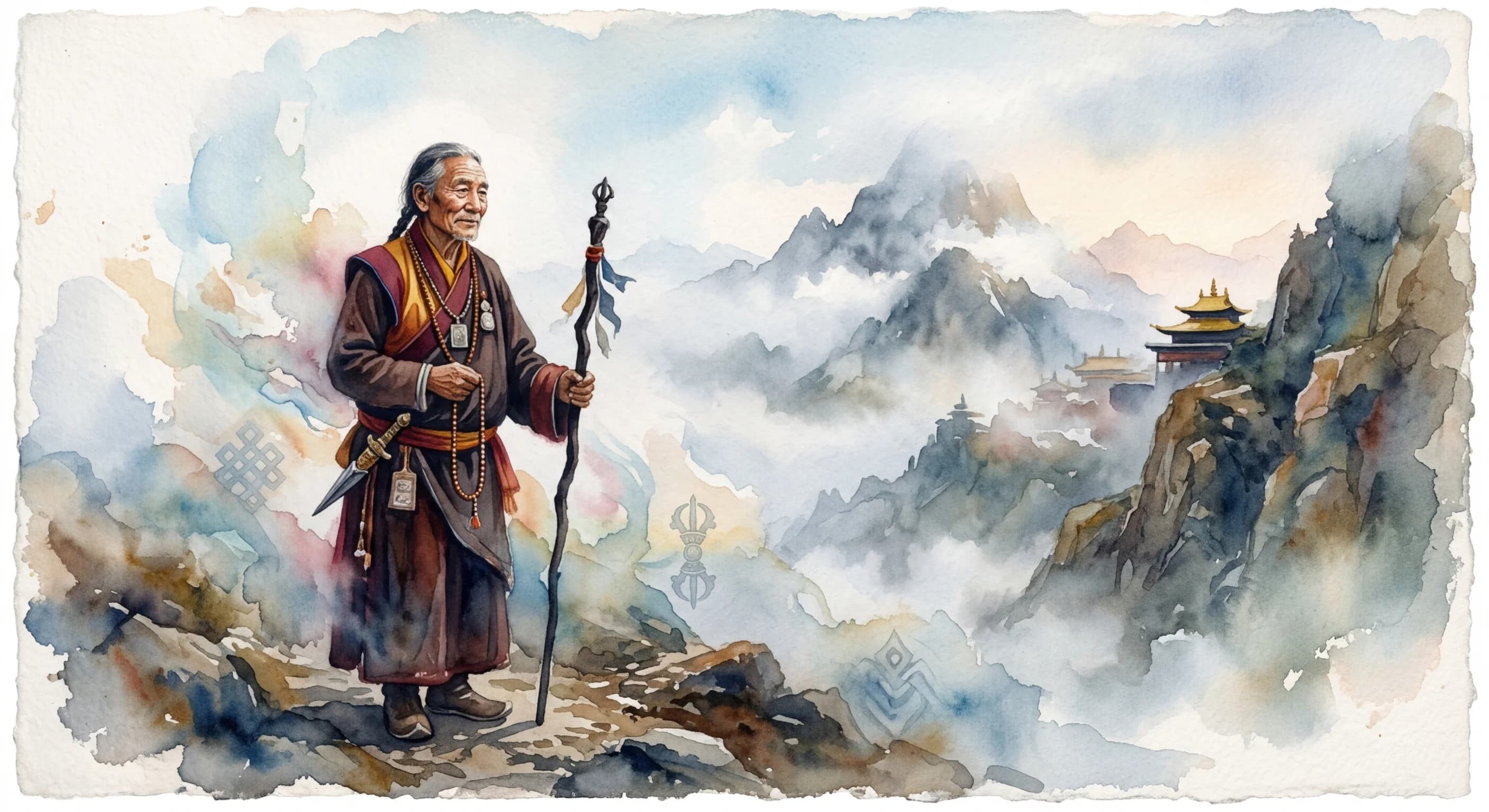
Ngagpa
/NGAHG-pah/
Meaning
A ngagpa embodies the vibrant, often unconventional, heart of Tibetan Buddhist tantric practice, integrating profound spiritual discipline with the fabric of everyday life. Unlike celibate monks, these 'mantra-holders' marry, raise families, and maintain professions, demonstrating that enlightenment is not exclusive to monastic walls. They are revered figures within their communities, serving as vital spiritual conduits, offering healing rituals, divination, and guidance rooted in a rich lineage of esoteric wisdom. Their path celebrates the transformation of worldly experience into a vehicle for liberation, proving that sacredness can permeate all aspects of existence.
Literal Translation
Literally translates to 'mantra-holder' or 'one who recites mantras', referring to their practice of chanting sacred syllables.
The Story Behind the Word
The existence of ngagpas highlights a fundamental aspect of Tibetan Buddhism: the recognition of diverse paths to enlightenment, particularly within the tantric tradition. While monasticism has been a dominant force, the ngagpa tradition preserves an older, indigenous form of spiritual practice, often predating the full institutionalization of Buddhism in Tibet. It underscores the belief that spiritual realization is not solely dependent on renouncing worldly life, but can be achieved through the skillful integration of tantric practices, ritual, and devotion within householder responsibilities. This path often involves working with potent energies and maintaining specific lineages of esoteric knowledge, passed down orally and through direct transmission, revealing a worldview where spiritual power and wisdom are intimately connected with ancestral heritage and communal well-being, not just scholarly pursuit or celibacy.
Experience It
Village Healing Ritual
When a mysterious illness swept through the high mountain village, the elders immediately sent for the local ngagpa. He arrived, his long hair braided with red cords, and spent days performing elaborate tantric rituals, chanting ancient mantras, and preparing medicinal compounds, ultimately bringing comfort and recovery to many.
Family Blessing
A young couple, anxious about their upcoming harvest, sought the ngagpa's counsel. He performed a blessing ceremony in their home, invoking protective deities and offering guidance rooted in both spiritual wisdom and practical understanding of their farming life, reassuring them with his grounded presence.
The Deeper Meaning
The ngagpa tradition embodies a profound philosophical insight: that spiritual liberation is not found by escaping the world, but by transforming one's relationship to it. It champions the integration of the sacred and the mundane, demonstrating that even within the complexities of family life, work, and community, one can cultivate deep wisdom and compassion. This path challenges the common dichotomy between spiritual and worldly pursuits, suggesting that true awakening embraces and transmutes all experience.
Did You Know?
Many ngagpas are recognizable by their distinctive long, untrimmed hair, often tied up or braided with red or white sashes, a symbolic rejection of monastic tonsure and an embrace of their unique tantric path.
How It's Used
Used to refer to a specific type of Tibetan Buddhist practitioner who is not a monk or nun.