Ngondro
/NGOHN-droh/
Meaning
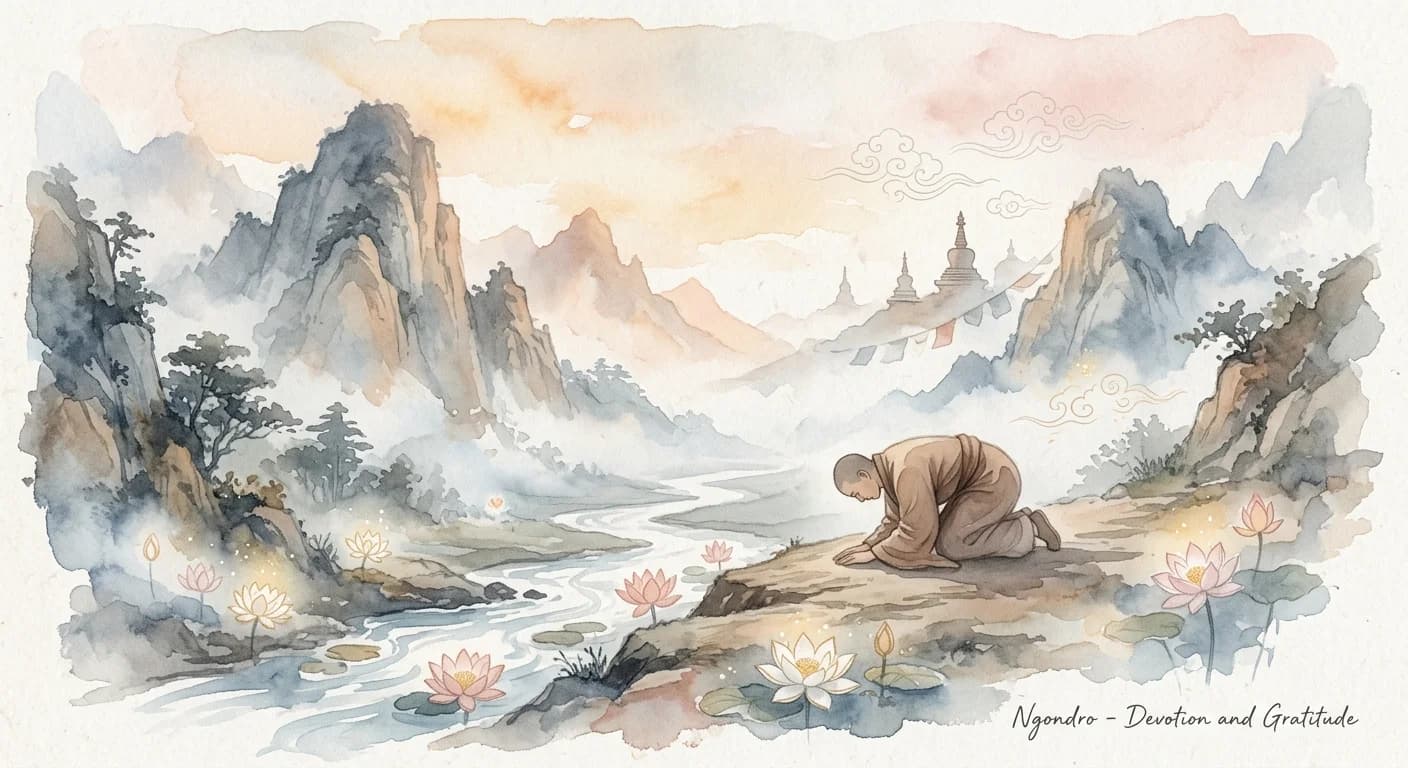
Ngöndro signifies the profound foundational practices in Tibetan Buddhism, a rigorous spiritual bootcamp that meticulously prepares the mind, body, and spirit for the advanced paths of Vajrayana. It involves a series of intensive exercises, such as prostrations, mandala offerings, and mantra recitations, designed to purify negative karma, accumulate merit, and cultivate unwavering devotion. Far beyond mere rituals, ngöndro is a transformative journey that reshapes one's inner landscape, instilling humility and an unshakeable spiritual commitment essential for genuine realization.
Literal Translation
preliminary/foundation
The Story Behind the Word
Ngöndro is deeply embedded in Tibetan Buddhist culture, reflecting a worldview that emphasizes gradual spiritual development, karmic purification, and the profound interconnectedness of all beings. Its existence highlights the Tibetan understanding that genuine spiritual insight is not easily attained but requires diligent effort, ethical groundwork, and the systematic removal of mental obscurations. The sheer dedication required for ngöndro – often involving hundreds of thousands of repetitions – reveals a cultural value placed on perseverance, unwavering devotion to one's guru, and the ultimate pursuit of enlightenment for the benefit of all sentient beings. It's a testament to a society that prioritizes spiritual transformation as the highest endeavor.
Experience It
The Aspiring Monk's Dedication
Young Tenzin, having taken his monastic vows, wakes before dawn each day. He begins his ngöndro, meticulously performing prostrations, envisioning the accumulation of merit and the purification of his past actions. Each repetitive movement is a step closer to clearing his mind for deeper study and meditation, a testament to his profound spiritual commitment.
A Lay Practitioner's Retreat
After years of balancing family and work, Dechen decides to dedicate a month to intensive practice. She retreats to a quiet hermitage, focusing solely on her ngöndro. The repetitive mantra recitations and mandala offerings bring a profound sense of peace and clarity, deepening her devotion and fortifying her mind against worldly distractions.
What Gets Lost in Translation
English speakers often perceive ngöndro as merely 'preliminary exercises' or a 'checklist' to be completed before the 'real' practice begins. This misses its profound depth; ngöndro is not just a prerequisite but a complete path in itself, continuously integrated throughout a practitioner's life. It's not about finishing a task, but about fundamentally transforming one's being.
Across Cultures
While specific practices differ, the concept of foundational spiritual training exists across many traditions. In Japanese Zen, 'shugyo' refers to ascetic training for spiritual discipline. In Christianity, monastic vows and early contemplative practices serve a similar preparatory function. Hinduism's 'sadhana' encompasses various spiritual disciplines, often including purification and devotion, before deeper meditative states are pursued, echoing ngöndro's purpose.
The Deeper Meaning
Ngöndro embodies the Buddhist philosophy of karma and purification, asserting that mental and physical actions have profound consequences that must be addressed for spiritual progress. It reflects the understanding that the mind, initially clouded by defilements, can be systematically cleansed and refined, revealing its inherent pure nature. This preparatory work is seen not as an optional extra, but as an indispensable foundation for genuine insight into the nature of reality and the path to liberation.
Did You Know?
Many dedicated ngöndro practitioners will perform 100,000 prostrations, 100,000 mantra recitations, and other practices, often taking years to complete, demonstrating immense spiritual fortitude.
How It's Used
Used to describe the set of preliminary Buddhist practices that form the basis of Vajrayana teachings.