U.
HomeRegionsLanguagesEmotionsCollections
Find Your Word

“The limits of my language mean the limits of my world.”

— Ludwig Wittgenstein, Philosopher

Untranslatable

A curated collection of the world's most beautiful expressions—words that remind us language is humanity's greatest invention.

  • Home
  • Collections
  • Regions
  • Countries
  • Emotions
  • Tags
  • Contexts
  • Finder
  • Europe
  • Asia
  • Americas
  • Africa
  • Middle East
  • About
  • Contact
  • Privacy Policy
  • Terms of Service

2026 © Untranslatable. All rights reserved.

    /
    /
    1. Home
    2. /
    3. Asia
    4. /
    5. Sipa
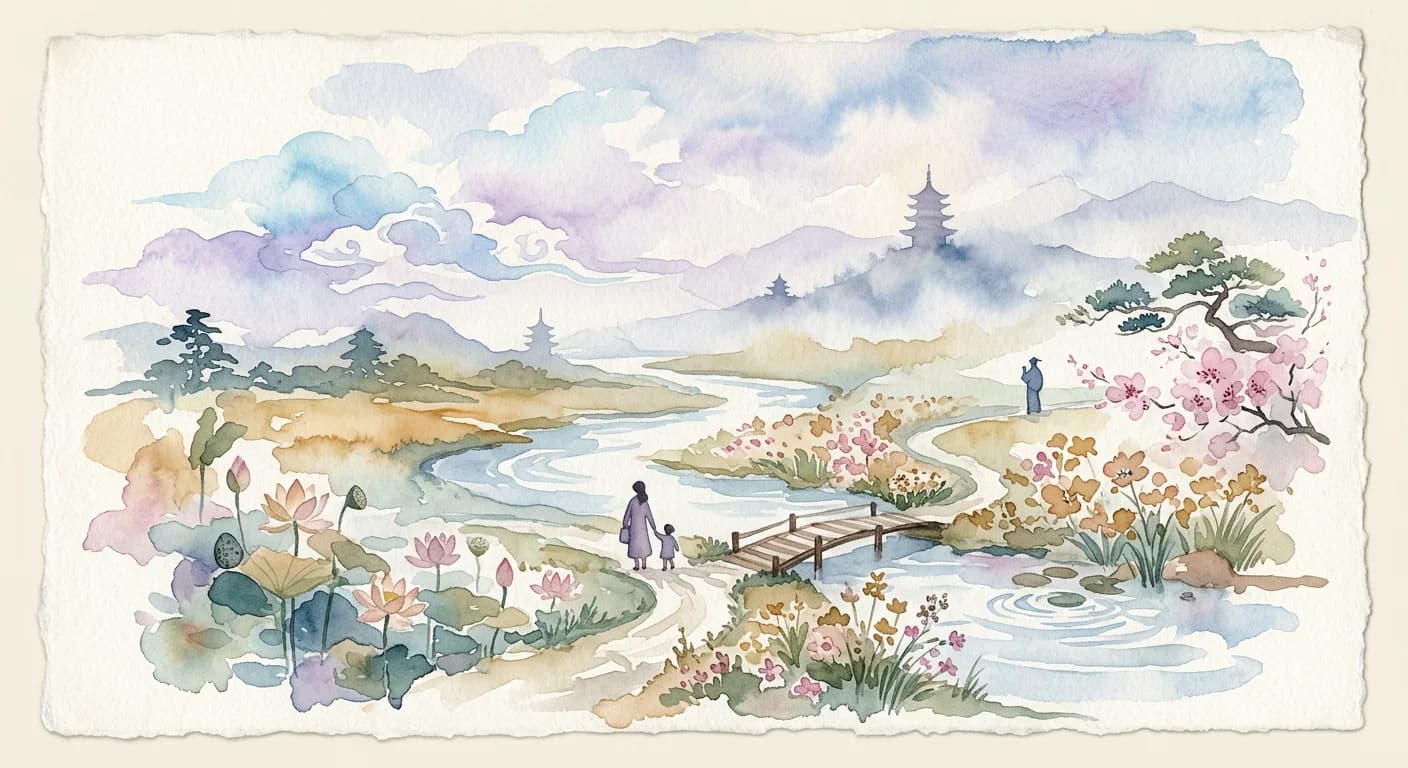
    Artistic representation of sipa
    Tibetan•
    🇨🇳China

    Sipa

    /SEE-pah/

    Meaning

    Sipa encapsulates the pervasive Buddhist understanding of existence as an unceasing cycle of birth, death, and rebirth, driven by karmic actions and the illusion of a permanent self. It's not merely a series of lives, but the continuous, often suffering-laden, process of becoming, fueled by attachment and ignorance. This profound concept underscores the impermanence of all phenomena and highlights the urgent need for ethical living and spiritual practice to break free from this endless, often painful, existential loop towards enlightenment.

    Literal Translation

    cycle

    The Story Behind the Word

    The concept of sipa is foundational to Tibetan Buddhism, inheriting its roots from ancient Indian philosophical traditions and deeply integrating into Tibetan thought, art, and daily life. It provides the ultimate framework for understanding suffering, morality, and the purpose of existence. For Tibetans, the recognition of sipa shapes everything from agricultural practices (respecting all life forms) to the elaborate rituals for the deceased (guiding them through the bardo, or intermediate state). It reveals a worldview where actions have far-reaching consequences across countless lifetimes, fostering a deep sense of universal responsibility and compassion. The ultimate goal in this cultural context is not to extend life within sipa, but to transcend it entirely, achieving liberation.

    Experience It

    Understanding Suffering's Root

    A young monk meditates on the suffering he sees in the world – illness, loss, poverty. His teacher reminds him, 'All this arises from sipa, from the clinging to transient forms and the karmic seeds planted in past lives. Understanding this cycle is the first step towards true compassion and liberation.'

    Ethical Choices

    A merchant contemplates cheating a customer to gain more profit. He pauses, remembering the teachings of sipa. He understands that negative actions will inevitably lead to unfavorable conditions in future existences, perpetuating the cycle of suffering. He chooses honesty instead.

    The Deeper Meaning

    Sipa reveals a worldview centered on impermanence, interdependence, and the power of volitional actions (karma) to shape one's future existences. It posits that suffering is inherent in conditioned existence, not a punishment, but a natural consequence of attachment and ignorance. The ultimate philosophical insight is that liberation from this cycle is possible through wisdom and compassionate action, leading to a state of profound peace beyond the confines of ordinary reality.

    Did You Know?

    The 'Wheel of Life' (Bhavachakra), a common painting in Tibetan monasteries, is a visual metaphor for sipa, depicting its various realms and the forces that drive it.

    How It's Used

    Used in philosophical and religious discussions, often to explain the nature of existence and the path to liberation.

    Emotions
    acceptance,serenity,wonder
    Contexts
    meditation,philosophy,religion
    🇨🇳China

    by Anya Petrova·Written Mar 10, 2026·Updated Apr 3, 2026

    Related Words

    Explore more
    Wabi-sabiJapanese

    Wabi-sabi is the profound appreciation for the ephemeral, the imperfect, and the incomplete aspects of existence. It is about discovering beauty in the subtle textures of age, the unique character of flaws, and the gentle decay that marks the passage of time. This philosophy encourages a quiet acceptance of impermanence and a mindful connection to the natural world, finding elegance in simplicity and authenticity.

    IkigaiJapanese

    Ikigai is more than just a reason to get out of bed; it's a deeply personal and evolving sense of purpose that brings genuine fulfillment and joy to one's life. It represents the sweet spot where your passions, talents, needs of the world, and what you can be paid for beautifully converge. Discovering your ikigai often leads to a life lived with intentionality, resilience, and a profound connection to one's contributions. It's the intrinsic motivation that fuels a meaningful existence, regardless of external circumstances.

    NunchiKorean

    Nunchi is the sophisticated, almost telepathic, ability to instantly grasp the unspoken dynamics of any social situation, anticipating others' thoughts and feelings, and then responding with impeccable grace and timing. It's an acute form of social intuition, allowing one to navigate complex interpersonal landscapes by reading subtle cues like body language, tone, and context. Possessing good nunchi means effortlessly understanding the underlying emotional currents and adjusting one's behavior to maintain harmony and effectiveness, often without a single word exchanged.

    JugaadHindi

    Jugaad is more than just a quick fix; it embodies the spirit of resourceful, ingenious improvisation in the face of scarcity or systemic challenges. It's the art of bending rules, repurposing materials, and thinking outside the box to achieve a desired outcome, often with limited financial or technological resources. This approach celebrates clever workarounds and innovative adaptations, turning constraints into catalysts for creative problem-solving. It's about making do and making something work, brilliantly.

    Featured in 1 collection

    🎌Japanese Philosophy