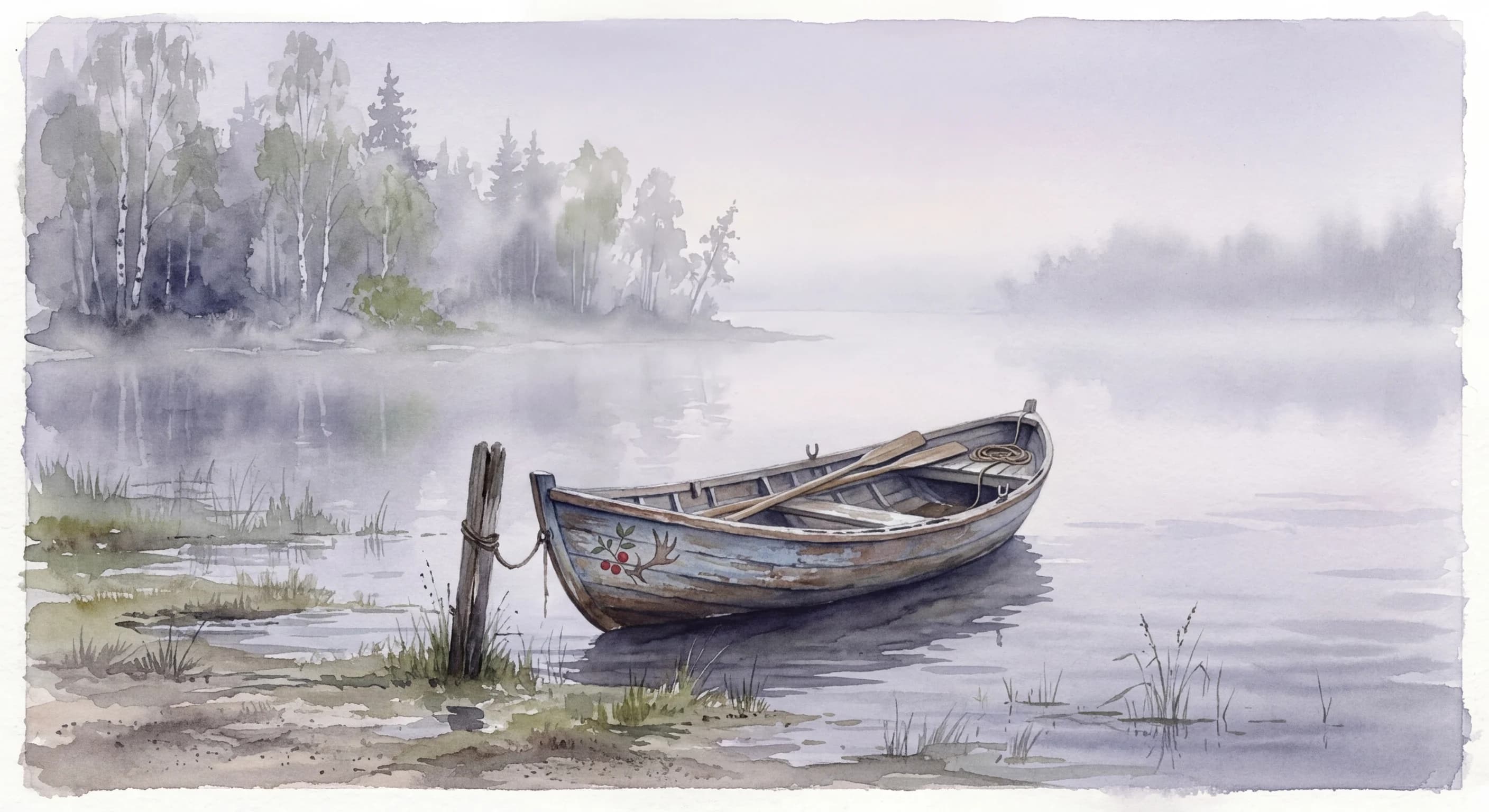
Rannalle jäänyt
/RAHN-nah-leh YAH-nyoot/
Meaning
This evocative Finnish phrase captures the profound, wistful melancholy of something or someone being left behind at the shore, a liminal space where land meets the infinite. It transcends mere physical separation, embodying a lingering regret or a quiet, persistent sadness for what was lost, could not be carried forward, or never truly began. The imagery conjures a poignant sense of being stranded, incomplete, or having missed a crucial departure, echoing the quiet contemplation over loss deeply embedded in the Finnish psyche.
Literal Translation
to the shore remained
The Story Behind the Word
The concept of "rannalle jäänyt" is deeply rooted in Finnish cultural history and geography. Finland, a land of countless lakes and a long coastline, has always had a relationship with water as both a pathway and a barrier. The imagery of a shore, a place of departures and arrivals, but also of being left behind, resonates with a national character often described as stoic, introspective, and prone to quiet contemplation. This word reflects a subtle, non-dramatic approach to grief or regret, where emotions are often internalized rather than outwardly expressed. It speaks to a collective appreciation for the fleeting nature of moments and opportunities, and the quiet acceptance of what cannot be changed, a theme often found in Finnish folk tales and literature.
Experience It
Missed Childhood Dream
After decades, he visited his childhood home, now overgrown and silent. He felt the weight of all the dreams he'd once harbored there, now "rannalle jäänyt," like forgotten toys on a deserted beach, forever out of reach.
Unspoken Farewell
She watched the train pull away, knowing she should have said more, done more. The unspoken words and unshared moments felt "rannalle jäänyt," a silent echo of what could have been, clinging to her heart like sea spray.
The Deeper Meaning
This phrase encapsulates a core aspect of Finnish philosophical outlook: a quiet acceptance of fate and the transient nature of existence. It highlights a profound awareness of missed opportunities and the inevitability of loss, not with despair, but with a contemplative melancholy. It suggests that true wisdom lies in acknowledging what remains behind, and finding a stoic peace in the face of what cannot be retrieved or changed.
Did You Know?
While usually metaphorical, "rannalle jäänyt" can literally describe a boat stranded on the shore after the water recedes, perfectly encapsulating the sense of being left behind and out of place.
How It's Used
Used to describe a person or thing that has been left behind, often in a metaphorical sense, such as a missed opportunity or a forgotten dream.