U.
HomeRegionsLanguagesEmotionsCollections
Find Your Word

“The limits of my language mean the limits of my world.”

— Ludwig Wittgenstein, Philosopher

Untranslatable

A curated collection of the world's most beautiful expressions—words that remind us language is humanity's greatest invention.

  • Home
  • Collections
  • Regions
  • Countries
  • Emotions
  • Tags
  • Contexts
  • Finder
  • Europe
  • Asia
  • Americas
  • Africa
  • Middle East
  • About
  • Contact
  • Privacy Policy
  • Terms of Service

2026 © Untranslatable. All rights reserved.

    /
    /
    1. Home
    2. /
    3. Asia
    4. /
    5. Delek
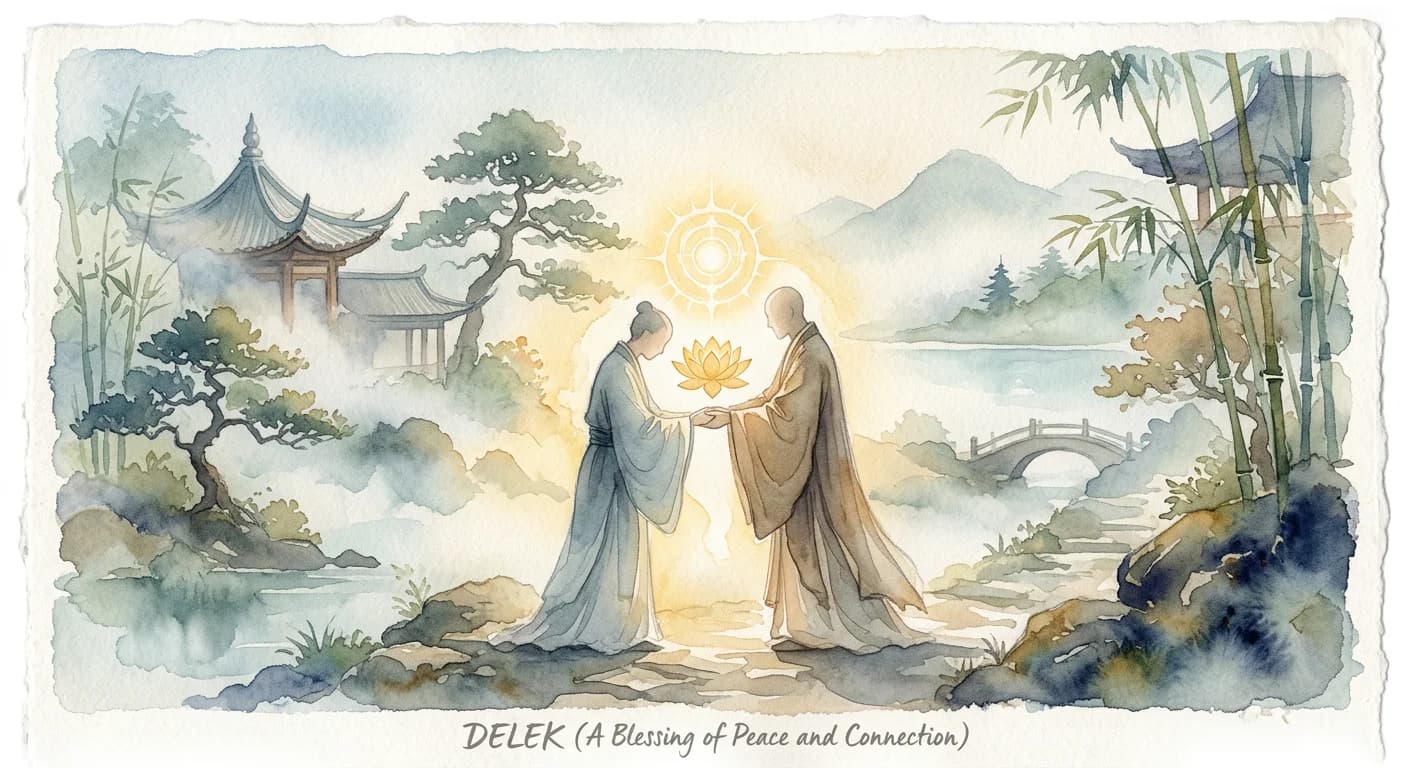
    Artistic representation of delek
    Tibetan•
    🇨🇳China

    Delek

    /deh-lek/

    Meaning

    Delek is a profound Tibetan greeting, far exceeding a simple 'hello.' It embodies a heartfelt invocation for the recipient's holistic well-being, prosperity, and good fortune, carrying with it a tangible sense of spiritual blessing and benevolent intention. More than just acknowledging presence, it's an active transmission of positive energy, fostering a deep-seated connection and reflecting a worldview where every interaction is an opportunity to wish peace and harmony upon another. This single word encapsulates a universe of interconnectedness and sincere goodwill.

    Literal Translation

    May you be well/prosperous

    The Story Behind the Word

    The word 'delek' is deeply rooted in Tibetan Buddhist philosophy, where compassion (karuna) and loving-kindness (metta) are central tenets. Its widespread use as a greeting underscores a societal value placed on mutual well-being and the interconnectedness of all beings. In a culture historically shaped by the harsh realities of the Tibetan plateau and the spiritual solace of Buddhism, 'delek' serves as a daily reminder of shared humanity and the aspiration for collective flourishing. It reflects a worldview where individual good fortune is intertwined with the good fortune of the community, and where every interaction, even a fleeting one, carries the potential for positive karmic exchange. The act of offering 'delek' is an affirmation of these core values, reinforcing community bonds and fostering an atmosphere of peace and mutual respect.

    Experience It

    Pilgrim's Welcome

    An elderly woman, having just completed a long kora around the Jokhang Temple, encounters a young monk. She bows slightly, pressing her palms together, and softly utters 'Tashi Delek,' her eyes crinkling with warmth, conveying a profound wish for his continued spiritual journey and well-being.

    Marketplace Exchange

    At a bustling market stall, a merchant hands a customer their purchase of yak butter. As they exchange goods, the merchant offers a sincere 'Delek,' acknowledging not just the transaction but also wishing prosperity and good fortune upon the customer and their family, enriching the simple interaction.

    The Deeper Meaning

    Delek reveals a foundational Buddhist worldview where individual happiness is intrinsically linked to the well-being of others. It underscores the belief that spoken words carry energetic weight, capable of transmitting positive intentions and fostering harmony. This perspective moves beyond mere politeness, transforming a simple greeting into a daily practice of compassion and an active invocation for collective peace and prosperity within the community.

    Did You Know?

    While often shortened to 'Delek,' the full traditional greeting is 'Tashi Delek' (བཀྲ་ཤིས་བདེ་ལེགས), meaning 'auspicious well-being' or 'good fortune and well-being.'

    How It's Used

    Used as a common greeting in Tibetan, often accompanied by a slight bow or hands pressed together in prayer position.

    Emotions
    belonging,gratitude,peace,warmth
    Contexts
    family,farewell,friendship,greeting
    🇨🇳China

    by Annelise Dubois·Written Mar 10, 2026·Updated Apr 3, 2026

    Related Words

    Explore more
    GezelligDutch

    Gezellig encapsulates a profound sense of warmth, belonging, and convivial comfort, extending beyond mere coziness to embrace the social and emotional atmosphere. It's the feeling of being truly at ease, surrounded by good company, laughter, and a shared sense of contentment. This untranslatable term describes not just a physical space, but a holistic experience where time seems to slow down, fostering genuine connection and a deep sense of well-being.

    Dolce far nienteItalian

    Dolce far niente captures the profound joy and effortless pleasure derived from simply existing without obligation or purpose. It's the art of savoring moments of pure, unadulterated idleness – lying in the sun, watching the clouds drift, or enjoying a leisurely coffee – not as a break from work, but as a valuable state in itself. This 'sweetness of doing nothing' is a conscious embrace of stillness and contentment, allowing the soul to breathe and the senses to fully engage with the present.

    SobremesaSpanish

    Sobremesa is the cherished, often extended period immediately following a meal, particularly lunch or dinner, where diners remain seated at the table to enjoy conversation, coffee, and digest not just the food, but the company itself. It’s a dedicated time for unhurried social bonding, storytelling, and shared laughter, transforming a simple meal into a profound communal experience. Far from just clearing the dishes, sobremesa is an integral part of Spanish social life, often lasting for hours.

    Wabi-sabiJapanese

    Wabi-sabi is the profound appreciation for the ephemeral, the imperfect, and the incomplete aspects of existence. It is about discovering beauty in the subtle textures of age, the unique character of flaws, and the gentle decay that marks the passage of time. This philosophy encourages a quiet acceptance of impermanence and a mindful connection to the natural world, finding elegance in simplicity and authenticity.