U.
HomeRegionsLanguagesEmotionsCollections
Find Your Word

“The limits of my language mean the limits of my world.”

— Ludwig Wittgenstein, Philosopher

Untranslatable

A curated collection of the world's most beautiful expressions—words that remind us language is humanity's greatest invention.

  • Home
  • Collections
  • Regions
  • Countries
  • Emotions
  • Tags
  • Contexts
  • Finder
  • Europe
  • Asia
  • Americas
  • Africa
  • Middle East
  • About
  • Contact
  • Privacy Policy
  • Terms of Service

2026 © Untranslatable. All rights reserved.

    /
    /
    1. Home
    2. /
    3. Asia
    4. /
    5. Gyaltsen
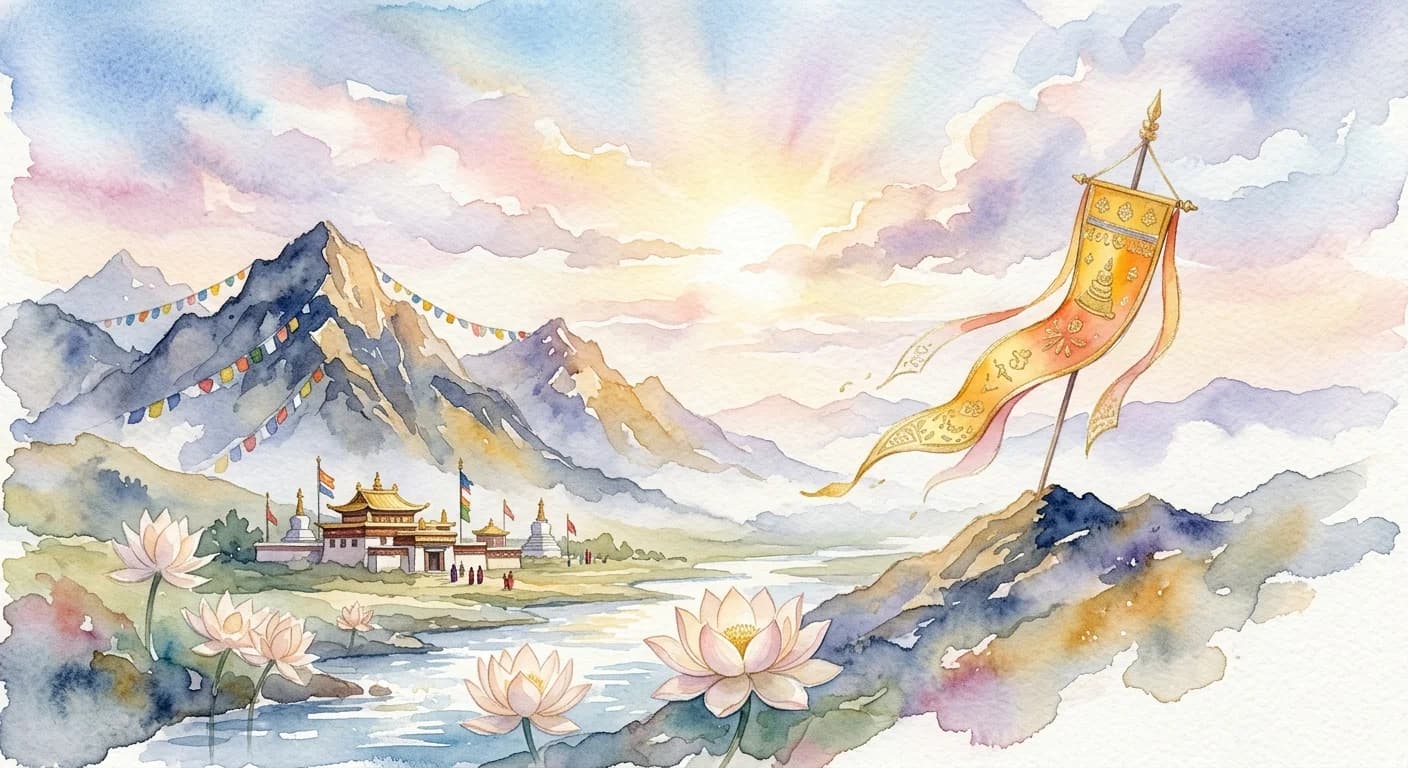
    Artistic representation of gyaltsen
    Tibetan•
    🇨🇳China

    Gyaltsen

    /GYAL-tsen/

    Meaning

    Gyaltsen is far more than mere victory; it embodies the profound triumph of spiritual awakening over the darkness of ignorance and suffering. It represents the unfurling banner of wisdom, compassion, and enlightenment, signaling the successful overcoming of inner afflictions and external obstacles on the path to liberation. This concept is a deep aspiration within Tibetan Buddhist philosophy, signifying not just a declaration of success, but a continuous upliftment of consciousness and the ultimate victory of the Dharma.

    Literal Translation

    Victory Banner

    The Story Behind the Word

    The concept of Gyaltsen is deeply woven into the fabric of Tibetan Buddhist culture, reflecting a worldview where spiritual attainment is the ultimate victory. Its existence stems from the core Buddhist teaching that life is characterized by suffering (dukkha), and the path to liberation involves overcoming this suffering through wisdom and ethical conduct. The 'Victory Banner' (Gyaltsen) itself is one of the Eight Auspicious Symbols (Ashtamangala) in Tibetan Buddhism, symbolizing the Buddha's triumph over the four Māras (demons of delusion, death, defilement, and desire). It represents the successful establishment of Buddhist teachings in the world and the ability of practitioners to conquer their own inner demons. Its prevalence as a name and a sacred object underscores the cultural value placed on spiritual progress and the aspiration for a life dedicated to transcending worldly limitations.

    Experience It

    Monastery Dedication

    At the grand dedication of the new monastery, a venerable Lama explained, 'This sacred space, our new gompa, is a Gyaltsen – a victory banner for the Dharma. It stands as a testament to the community's unwavering faith and the triumph of compassion over adversity, offering refuge and wisdom to all who enter.'

    A Child's Name

    When their son was born, the parents looked at his serene face. 'Let us name him Gyaltsen,' the father suggested, 'May his life be a continuous victory over ignorance, a journey of wisdom and kindness, and may he always uphold the precious teachings.'

    The Deeper Meaning

    Gyaltsen reveals a profound philosophical outlook where true victory is not external conquest but internal transformation. It posits that the greatest triumph lies in vanquishing the 'enemies' within – ignorance, attachment, and aversion – and cultivating wisdom and compassion. This perspective redefines success, shifting it from material gain to spiritual liberation, and underscores the Buddhist emphasis on the mind as the battleground and ultimate source of freedom.

    Did You Know?

    The physical 'Gyaltsen' or victory banner, often cylindrical and adorned with silk, was originally a military standard in ancient India, later adopted by Buddhism to symbolize the Buddha's spiritual conquest.

    How It's Used

    Gyaltsen is often used as a given name for males in Tibet and by Tibetan communities. It can also refer to a Dharma banner, a symbolic representation of victory in Tibetan Buddhism, often seen in monasteries and during religious ceremonies.

    Emotions
    gratitude,hope,peace
    Contexts
    celebration,greeting,religion
    🇨🇳China

    by Annelise Dubois·Written Mar 10, 2026·Updated Apr 3, 2026

    Related Words

    Explore more
    Dolce far nienteItalian

    Dolce far niente captures the profound joy and effortless pleasure derived from simply existing without obligation or purpose. It's the art of savoring moments of pure, unadulterated idleness – lying in the sun, watching the clouds drift, or enjoying a leisurely coffee – not as a break from work, but as a valuable state in itself. This 'sweetness of doing nothing' is a conscious embrace of stillness and contentment, allowing the soul to breathe and the senses to fully engage with the present.

    Wabi-sabiJapanese

    Wabi-sabi is the profound appreciation for the ephemeral, the imperfect, and the incomplete aspects of existence. It is about discovering beauty in the subtle textures of age, the unique character of flaws, and the gentle decay that marks the passage of time. This philosophy encourages a quiet acceptance of impermanence and a mindful connection to the natural world, finding elegance in simplicity and authenticity.

    IkigaiJapanese

    Ikigai is more than just a reason to get out of bed; it's a deeply personal and evolving sense of purpose that brings genuine fulfillment and joy to one's life. It represents the sweet spot where your passions, talents, needs of the world, and what you can be paid for beautifully converge. Discovering your ikigai often leads to a life lived with intentionality, resilience, and a profound connection to one's contributions. It's the intrinsic motivation that fuels a meaningful existence, regardless of external circumstances.

    NunchiKorean

    Nunchi is the sophisticated, almost telepathic, ability to instantly grasp the unspoken dynamics of any social situation, anticipating others' thoughts and feelings, and then responding with impeccable grace and timing. It's an acute form of social intuition, allowing one to navigate complex interpersonal landscapes by reading subtle cues like body language, tone, and context. Possessing good nunchi means effortlessly understanding the underlying emotional currents and adjusting one's behavior to maintain harmony and effectiveness, often without a single word exchanged.