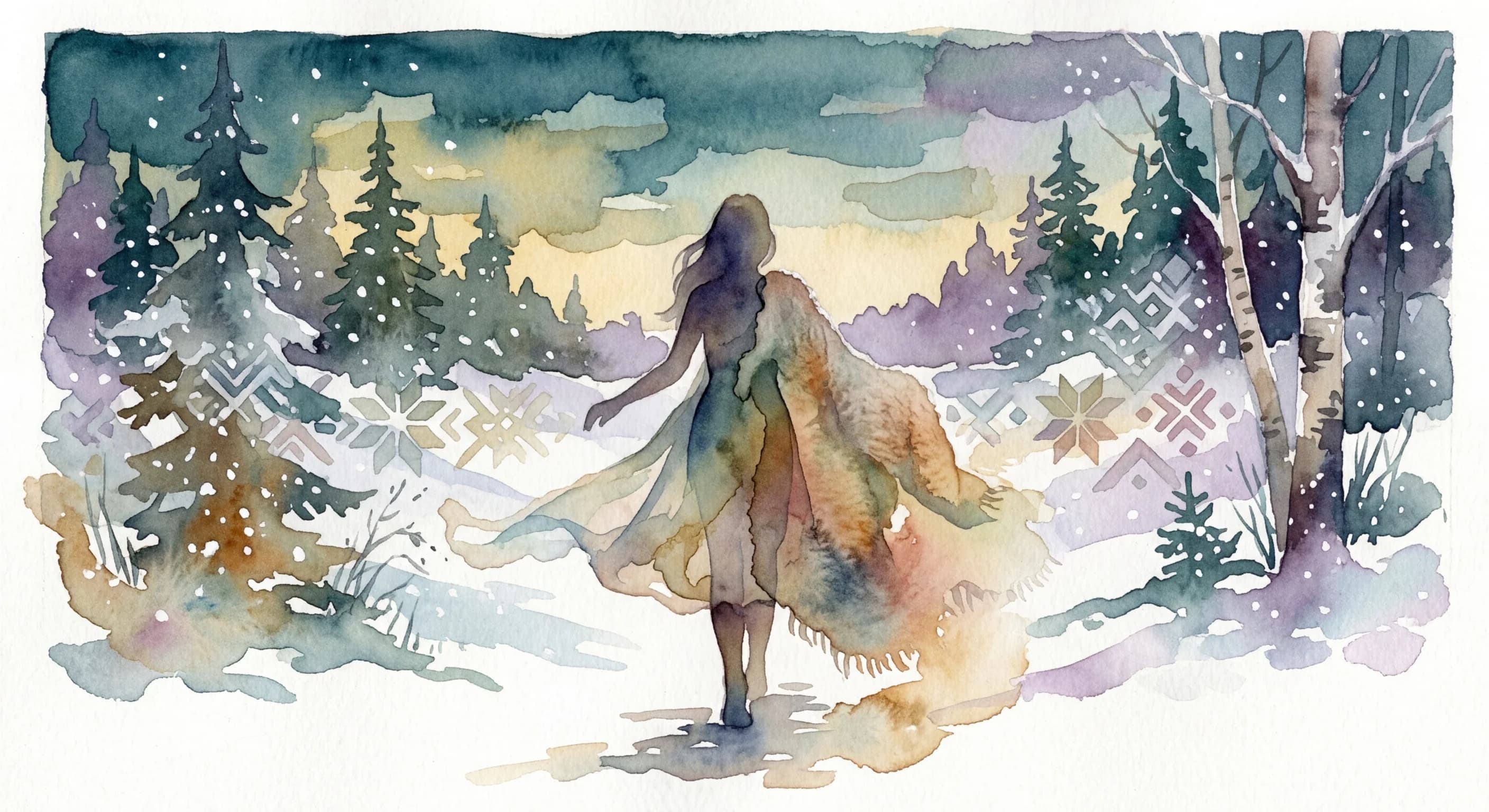
Talviturkki
/TAHL-vee-turk-kee/
Meaning
"Talviturkki" vividly describes the thick, insulating fur coat animals grow for winter, but more profoundly, it personifies the human transition into a resilient, winter-ready mindset. It signifies the shedding of summer's lightheartedness and the conscious donning of an inner fortitude, a stoic preparedness for the long, dark, and cold months ahead. This metaphorical "winter fur coat" represents a deep-seated cultural acknowledgment of nature's cycles and the essential need for mental and emotional robustness to navigate them with endurance and calm.
Literal Translation
winter fur coat
The Story Behind the Word
The existence of "talviturkki" is deeply rooted in Finland's northern climate and its historical reliance on nature. For centuries, survival in Finland meant a profound attunement to the changing seasons, especially the stark contrast between short, bright summers and long, arduous winters. This word encapsulates the practical wisdom passed down through generations: just as animals physically adapt, humans must mentally and emotionally prepare for the demanding winter. It reflects a stoic philosophy, not of dreading winter, but of acknowledging its inevitability and cultivating the inner strength to not just endure, but to function effectively within it. This preparedness is woven into the national psyche, fostering a sense of self-reliance and a respectful, almost reverent, acceptance of nature's power. It reveals a culture that values resilience, foresight, and a harmonious, albeit challenging, relationship with its environment.
Experience It
First Snowfall Reflection
As the first significant snow blanketed the ground, Matti gazed out his window. He felt a familiar shift within him. "Ah, the talviturkki is settling in," he murmured, instinctively reaching for a thicker sweater and mentally listing the indoor projects he'd tackle. The carefree days of summer felt distant, replaced by a quiet sense of readiness.
Winter Swimming Ritual
Elina braced herself on the icy pier, contemplating the dark, frigid water. "Time to shed the talviturkki," she thought, a mischievous grin playing on her lips. Plunging into the invigorating cold was her annual ritual, a symbolic act of embracing winter's harshness, proving her mental resilience even as she metaphorically cast off the 'winter fur' of cautious preparation for a moment of raw, vital connection with the elements.
What Gets Lost in Translation
English speakers might misunderstand "talviturkki" as simply 'winter blues' or 'seasonal depression.' However, it's not a negative state. Instead, it's a proactive, almost positive, embrace of the necessary mental and emotional hardening for winter, a shift towards stoicism and preparedness rather than a lamentation of the season. It's about resilience, not resignation.
Across Cultures
While not a direct equivalent, many northern cultures have concepts of seasonal adaptation. Japanese "wabi-sabi" embraces transience and imperfection, akin to accepting winter's starkness. In some Indigenous North American cultures, there are spiritual or ceremonial preparations for winter, focusing on community resilience and resourcefulness, echoing the collective mental shift embedded in "talviturkki."
The Deeper Meaning
"Talviturkki" reveals a deeply ecological and pragmatic worldview, where humanity is not separate from nature but intrinsically bound to its cycles. It underscores a philosophy of active adaptation and resilience, suggesting that true strength lies not in fighting external conditions, but in cultivating internal fortitude. This word embodies a stoic acceptance of reality and a proactive commitment to inner preparedness, reflecting a culture that finds peace in disciplined readiness.
Did You Know?
Finnish people sometimes playfully say they are "shedding their talviturkki" when they take their first swim of the summer in cold water, an act of symbolic rebirth after the long winter's mental and physical hibernation.
How It's Used
This term is used to describe the physical winter coat of animals, but more commonly, it's used metaphorically to describe the mental and emotional state of people as they prepare for winter.