Oodal
/OO-daal/
Meaning
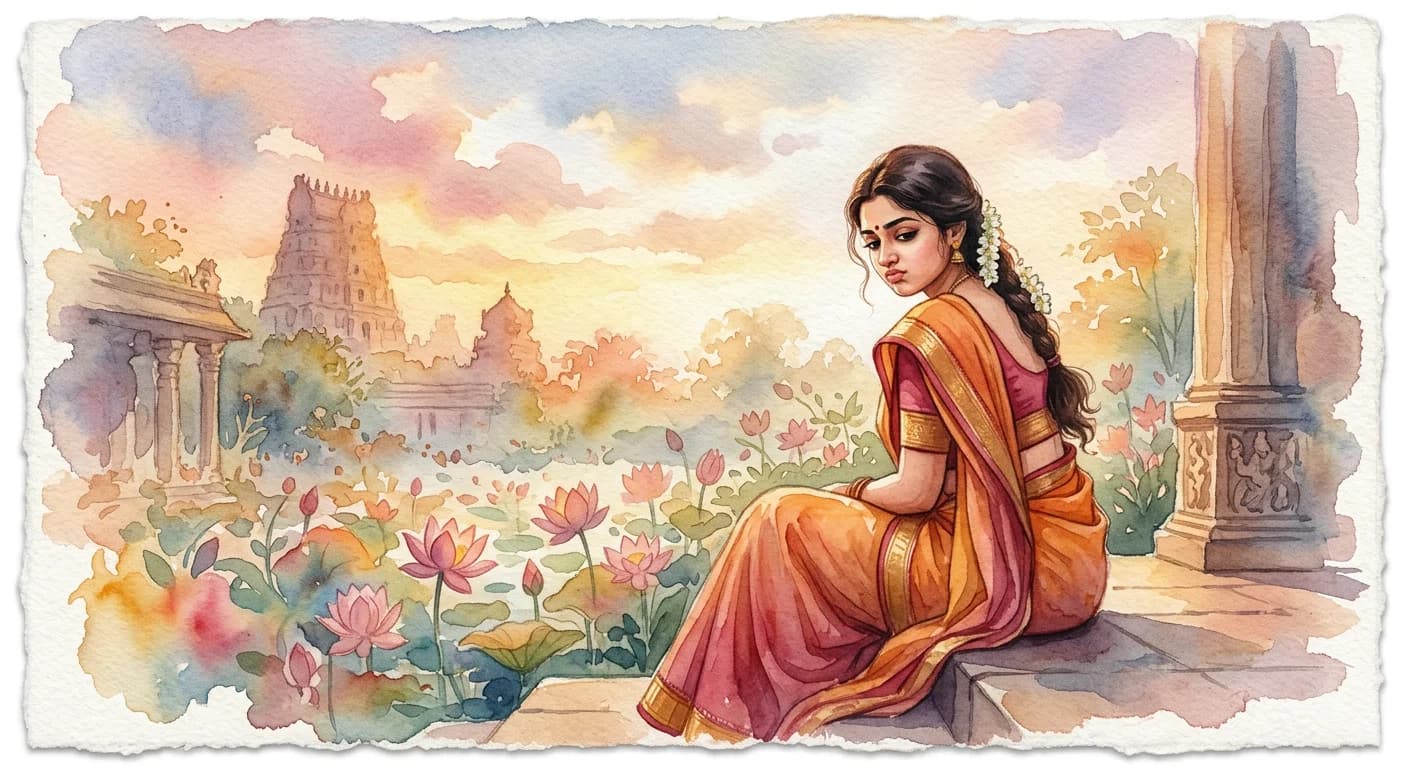
Oodal captures the delicate art of feigned displeasure, a playful sulking or mock anger exhibited by a lover toward their beloved. It's a nuanced emotional display, far from genuine resentment, designed to playfully test the boundaries of affection and elicit deeper expressions of love and reassurance. This tender withdrawal, often accompanied by a pout or a slight turning away, is a cherished dance of intimacy, signaling a secure and profound connection where such playful friction only strengthens the bond.
Literal Translation
mock anger, sulking
The Story Behind the Word
The concept of Oodal is deeply embedded in Tamil literary and cultural traditions, particularly in Sangam literature, which dates back over two millennia. Ancient Tamil poetry frequently depicts heroines engaging in Oodal to express their love, jealousy, or playful indignation, often as a prelude to passionate reconciliation. This tradition underscores a cultural understanding that conflict, when managed with affection and playfulness, can deepen intimacy rather than erode it. It reflects a societal value placed on emotional expression within relationships, recognizing that even minor 'disputes' can be opportunities for reaffirming love. Oodal is not about genuine anger, but about the secure knowledge that one's partner will understand the underlying affection and respond with renewed devotion, highlighting a worldview where emotional vulnerability is a strength within committed relationships.
Experience It
Breakfast Oodal
When Karthik forgot their anniversary, Priya didn't yell. Instead, she sat silently at breakfast, stirring her coffee with a slight pout, refusing to meet his eye. Karthik, seeing her deliberate quietness, immediately understood her Oodal and began showering her with apologies and promises of a special evening.
Playful Jealousy
During a family gathering, Meena saw her husband Ramesh laughing a little too heartily with his cousin. Later, she gave him the cold shoulder, answering in monosyllables. Ramesh, recognizing her playful Oodal, knew it was her way of seeking his exclusive attention, and he soon drew her into a whispered conversation, making her smile again.
The Deeper Meaning
Oodal reveals a profound philosophical understanding of love and intimacy within Tamil culture. It suggests that true love is robust enough to accommodate playful conflict and indirect emotional expression. It highlights the belief that vulnerability and the desire for reassurance are not weaknesses, but integral components of a deeply connected relationship, fostering a dynamic where affection is constantly reaffirmed through tender negotiation rather than overt confrontation.
Did You Know?
Oodal is a recurring theme in classical Tamil poetry, particularly in the 'Akam' genre, which focuses on love and intimate relationships, showcasing its ancient and enduring cultural significance.
How It's Used
Used primarily in romantic or marital relationships to describe a lover's feigned displeasure when they feel neglected or want to playfully tease their partner.