U.
HomeRegionsLanguagesEmotionsCollections
Find Your Word

“The limits of my language mean the limits of my world.”

— Ludwig Wittgenstein, Philosopher

Untranslatable

A curated collection of the world's most beautiful expressions—words that remind us language is humanity's greatest invention.

  • Home
  • Collections
  • Regions
  • Countries
  • Emotions
  • Tags
  • Contexts
  • Finder
  • Europe
  • Asia
  • Americas
  • Africa
  • Middle East
  • About
  • Contact
  • Privacy Policy
  • Terms of Service

2026 © Untranslatable. All rights reserved.

    /
    /
    1. Home
    2. /
    3. Asia
    4. /
    5. Geram
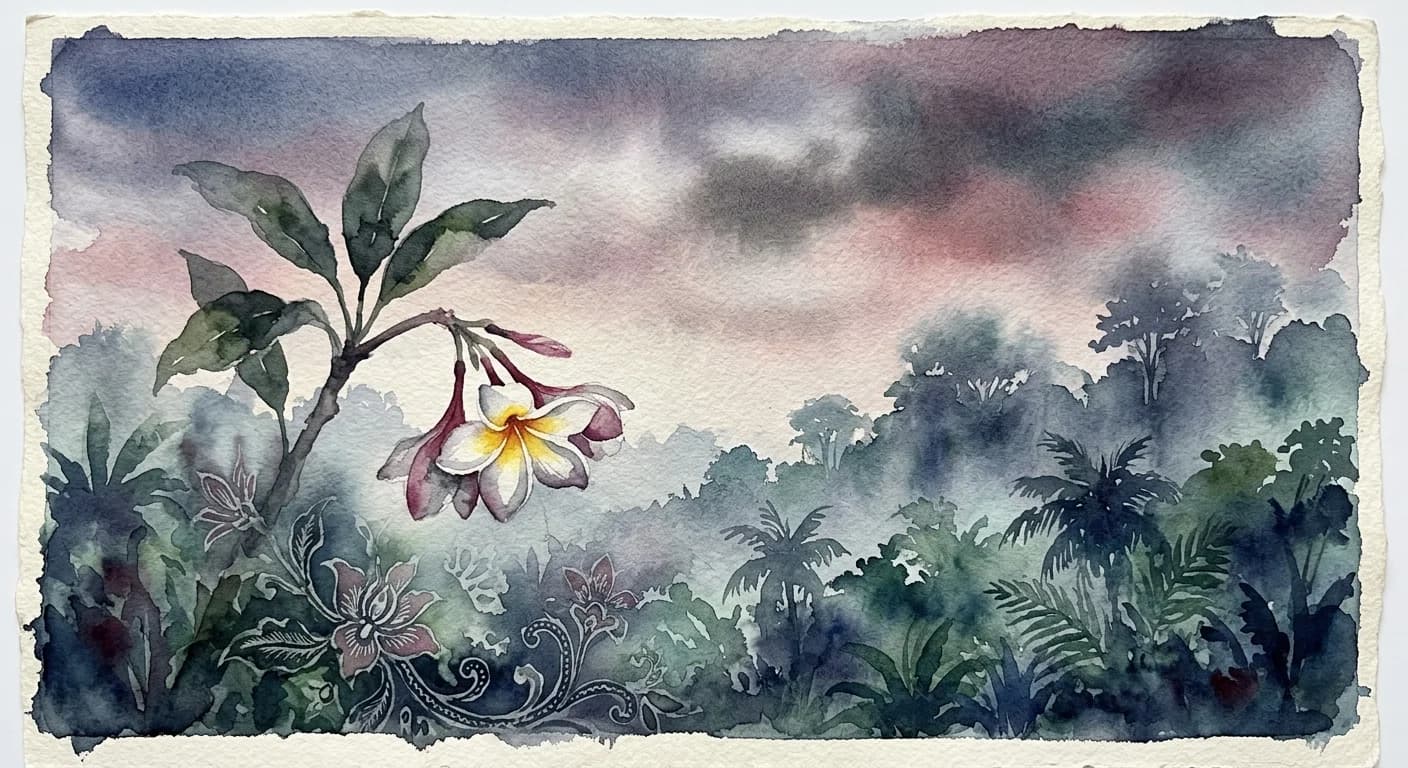
    Artistic representation of Geram
    Malay•
    🇮🇩Indonesia🇲🇾Malaysia

    Geram

    /geh-RAHM/

    Meaning

    Geram encapsulates a potent, simmering frustration, a feeling of intense annoyance that’s often suppressed but visibly taut beneath the surface. It's the exasperation that bubbles up when confronted with a situation or person that is persistently vexing, challenging one's patience to its absolute limit. This emotion carries a visceral edge, a desire to react strongly, yet it's frequently held in check by social decorum or the sheer futility of expressing outright anger, resulting in a clenched jaw or a sharp intake of breath.

    Literal Translation

    annoyance, rage (though 'geram' is usually a milder, more simmering form of rage)

    The Story Behind the Word

    The existence and common usage of 'geram' in Malay culture reveal a deep-seated value placed on emotional restraint and harmony, known as 'budi bahasa' or 'adat resam'. Malays are generally encouraged to maintain composure and avoid overt displays of anger or aggression, especially in public. 'Geram' provides a crucial outlet for acknowledging intense frustration without necessarily expressing it outwardly. It's the internal pressure cooker of annoyance that allows individuals to process vexation while still adhering to social norms that prioritize politeness and avoiding 'pecah muka' (losing face). This word reflects a society where collective well-being often takes precedence over individual emotional outbursts, highlighting a nuanced understanding of internal emotional states versus external expression.

    Experience It

    Stubborn Child's Refusal

    After countless attempts to get his toddler to eat her vegetables, Encik Rahman felt a surge of 'geram'. He clenched his jaw, resisting the urge to scold her loudly, instead taking a deep, exasperated breath as she stubbornly pushed the plate away again.

    Malfunctioning Wi-Fi

    Puan Liza was on the verge of missing her work deadline, and her internet kept cutting out. Each time the Wi-Fi signal dropped, she muttered 'geramnya!' under her breath, eyes narrowing with a mixture of frustration and helplessness, resisting the urge to throw her laptop.

    The Deeper Meaning

    The prevalence of 'geram' reflects a cultural philosophy that acknowledges the inevitability of internal emotional turmoil while simultaneously championing external composure. It highlights the human capacity for self-regulation and the societal expectation to navigate provocations with grace, even when one's patience is stretched to its breaking point. It speaks to a deep awareness of the gap between felt emotion and expressed behavior, a core tenet of maintaining social harmony.

    Did You Know?

    While often about irritation, 'geram' can also be used playfully to describe an overwhelming cuteness – like wanting to pinch a baby's cheeks because they're so adorable, a 'geram' of affection!

    How It's Used

    Used to describe a feeling of intense annoyance or frustration, often when dealing with something or someone perceived as difficult or unreasonable.

    Emotion
    anger
    Contexts
    conflict,daily life
    🇮🇩Indonesia🇲🇾Malaysia

    by Dr. Kenji Tanaka·Written Mar 10, 2026·Updated Apr 3, 2026

    Related Words

    Explore more
    Wabi-sabiJapanese

    Wabi-sabi is the profound appreciation for the ephemeral, the imperfect, and the incomplete aspects of existence. It is about discovering beauty in the subtle textures of age, the unique character of flaws, and the gentle decay that marks the passage of time. This philosophy encourages a quiet acceptance of impermanence and a mindful connection to the natural world, finding elegance in simplicity and authenticity.

    IkigaiJapanese

    Ikigai is more than just a reason to get out of bed; it's a deeply personal and evolving sense of purpose that brings genuine fulfillment and joy to one's life. It represents the sweet spot where your passions, talents, needs of the world, and what you can be paid for beautifully converge. Discovering your ikigai often leads to a life lived with intentionality, resilience, and a profound connection to one's contributions. It's the intrinsic motivation that fuels a meaningful existence, regardless of external circumstances.

    NunchiKorean

    Nunchi is the sophisticated, almost telepathic, ability to instantly grasp the unspoken dynamics of any social situation, anticipating others' thoughts and feelings, and then responding with impeccable grace and timing. It's an acute form of social intuition, allowing one to navigate complex interpersonal landscapes by reading subtle cues like body language, tone, and context. Possessing good nunchi means effortlessly understanding the underlying emotional currents and adjusting one's behavior to maintain harmony and effectiveness, often without a single word exchanged.

    JugaadHindi

    Jugaad is more than just a quick fix; it embodies the spirit of resourceful, ingenious improvisation in the face of scarcity or systemic challenges. It's the art of bending rules, repurposing materials, and thinking outside the box to achieve a desired outcome, often with limited financial or technological resources. This approach celebrates clever workarounds and innovative adaptations, turning constraints into catalysts for creative problem-solving. It's about making do and making something work, brilliantly.