U.
HomeRegionsLanguagesEmotionsCollections
Find Your Word

“The limits of my language mean the limits of my world.”

— Ludwig Wittgenstein, Philosopher

Untranslatable

A curated collection of the world's most beautiful expressions—words that remind us language is humanity's greatest invention.

  • Home
  • Collections
  • Regions
  • Countries
  • Emotions
  • Tags
  • Contexts
  • Finder
  • Europe
  • Asia
  • Americas
  • Africa
  • Middle East
  • About
  • Contact
  • Privacy Policy
  • Terms of Service

2026 © Untranslatable. All rights reserved.

    /
    /
    1. Home
    2. /
    3. Asia
    4. /
    5. Terkial-kial
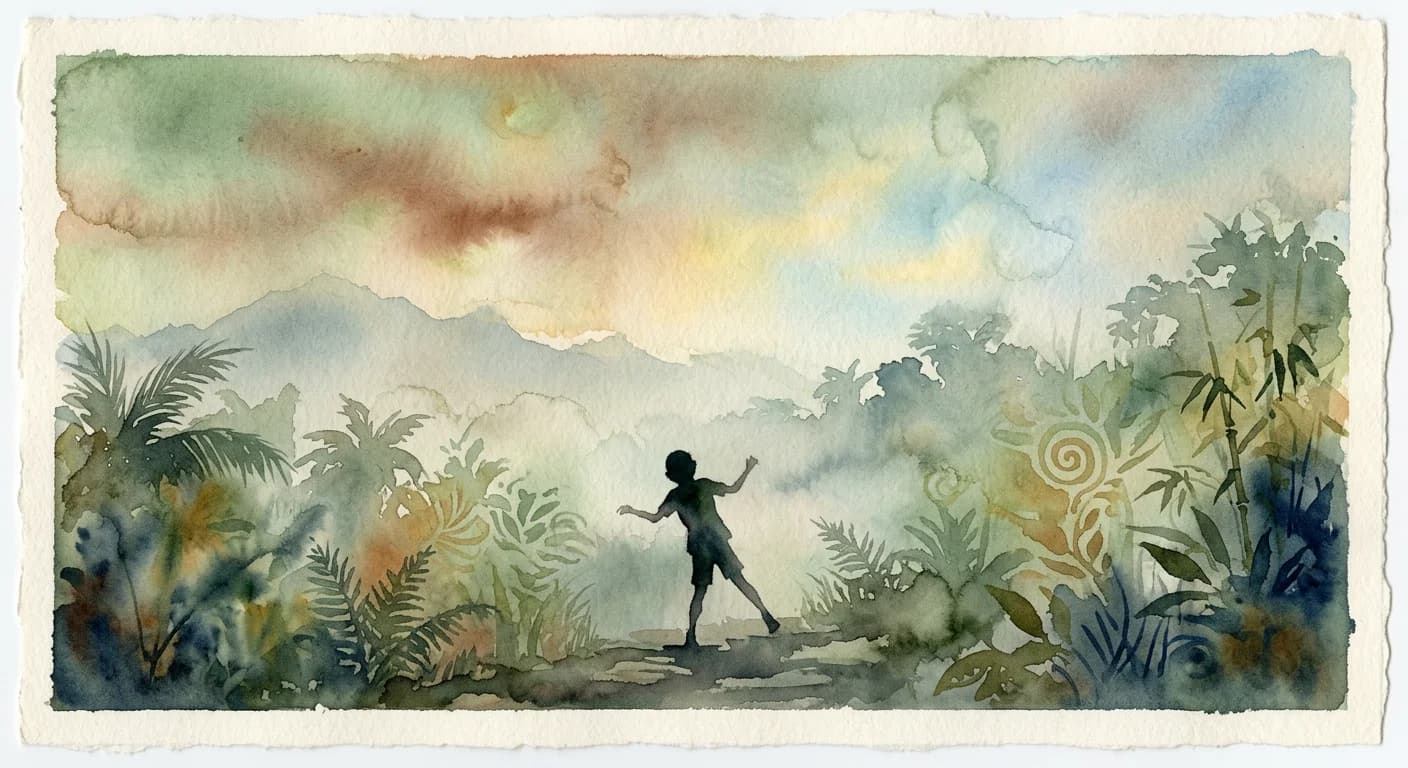
    Artistic representation of Terkial-kial
    Malay•
    🇧🇳Brunei🇮🇩Indonesia🇲🇾Malaysia

    Terkial-kial

    /TER-kee-al-kee-al/

    Meaning

    Terkial-kial vividly portrays the awkward, often comical, struggle of an individual grappling with a new or unfamiliar situation, much like a fledgling bird attempting its first, uncoordinated flights. It captures that universal human experience of initial disorientation and fumbling when faced with something novel, be it a new skill, a daunting social environment, or even an unfamiliar physical space. The reduplication emphasizes a continuous, often futile or ungainly, effort to find one's footing, highlighting the persistent lack of grace and comfort. It's the feeling of being conspicuously out of sync, noticeable to others, yet deeply felt by the person experiencing it.

    Literal Translation

    Flapping wings awkwardly (root word 'kial' means to flap wings)

    The Story Behind the Word

    The existence of 'terkial-kial' in Malay speaks to a cultural appreciation for observation and empathy towards those in transitional, vulnerable states. Malay culture, often emphasizing harmony (rukun) and collective well-being, acknowledges the initial awkwardness of adaptation without necessarily casting judgment. Instead, it offers a descriptive, almost affectionate, term for this universal human experience. It reflects a society that understands the learning curve, where the journey of mastering something new often begins with visible stumbles. The bird metaphor subtly links human experience to the natural world, a common thread in Malay language and folklore, suggesting that even nature's creatures experience their own 'terkial-kial' moments.

    Experience It

    First Time Paddleboarding

    Sarah, a city girl, tried paddleboarding for the first time. She stood up, wobbled precariously, and her arms flailed wildly, looking utterly terkial-kial before inevitably splashing into the water.

    New Job, Old Systems

    The new intern was terkial-kial trying to navigate the company's outdated software system. His fingers fumbled across the keyboard, clicking the wrong buttons repeatedly, his frustration evident to anyone watching.

    The Deeper Meaning

    This word subtly acknowledges that vulnerability and awkwardness are integral parts of growth and adaptation. It suggests that fumbling and struggling are not failures, but rather the necessary, often visible, precursors to competence. It implicitly encourages patience, both with oneself and with others, recognizing that mastery is often preceded by a period of being 'terkial-kial'.

    Did You Know?

    The root 'kial' is onomatopoeic, mimicking the sound and motion of wings flapping. The reduplication 'kial-kial' enhances the sense of continuous, repetitive, and often uncoordinated action.

    How It's Used

    Used to describe someone or something moving in an uncoordinated, awkward, or struggling manner, often due to unfamiliarity or difficulty.

    Emotions
    anger,anxiety,joy
    Contexts
    education,social interaction,travel
    🇧🇳Brunei🇮🇩Indonesia🇲🇾Malaysia

    by Dr. Kenji Tanaka·Written Mar 10, 2026·Updated Apr 3, 2026

    Related Words

    Explore more
    Wabi-sabiJapanese

    Wabi-sabi is the profound appreciation for the ephemeral, the imperfect, and the incomplete aspects of existence. It is about discovering beauty in the subtle textures of age, the unique character of flaws, and the gentle decay that marks the passage of time. This philosophy encourages a quiet acceptance of impermanence and a mindful connection to the natural world, finding elegance in simplicity and authenticity.

    IkigaiJapanese

    Ikigai is more than just a reason to get out of bed; it's a deeply personal and evolving sense of purpose that brings genuine fulfillment and joy to one's life. It represents the sweet spot where your passions, talents, needs of the world, and what you can be paid for beautifully converge. Discovering your ikigai often leads to a life lived with intentionality, resilience, and a profound connection to one's contributions. It's the intrinsic motivation that fuels a meaningful existence, regardless of external circumstances.

    NunchiKorean

    Nunchi is the sophisticated, almost telepathic, ability to instantly grasp the unspoken dynamics of any social situation, anticipating others' thoughts and feelings, and then responding with impeccable grace and timing. It's an acute form of social intuition, allowing one to navigate complex interpersonal landscapes by reading subtle cues like body language, tone, and context. Possessing good nunchi means effortlessly understanding the underlying emotional currents and adjusting one's behavior to maintain harmony and effectiveness, often without a single word exchanged.

    JugaadHindi

    Jugaad is more than just a quick fix; it embodies the spirit of resourceful, ingenious improvisation in the face of scarcity or systemic challenges. It's the art of bending rules, repurposing materials, and thinking outside the box to achieve a desired outcome, often with limited financial or technological resources. This approach celebrates clever workarounds and innovative adaptations, turning constraints into catalysts for creative problem-solving. It's about making do and making something work, brilliantly.

    Featured in 1 collection

    😄Humor Across Cultures