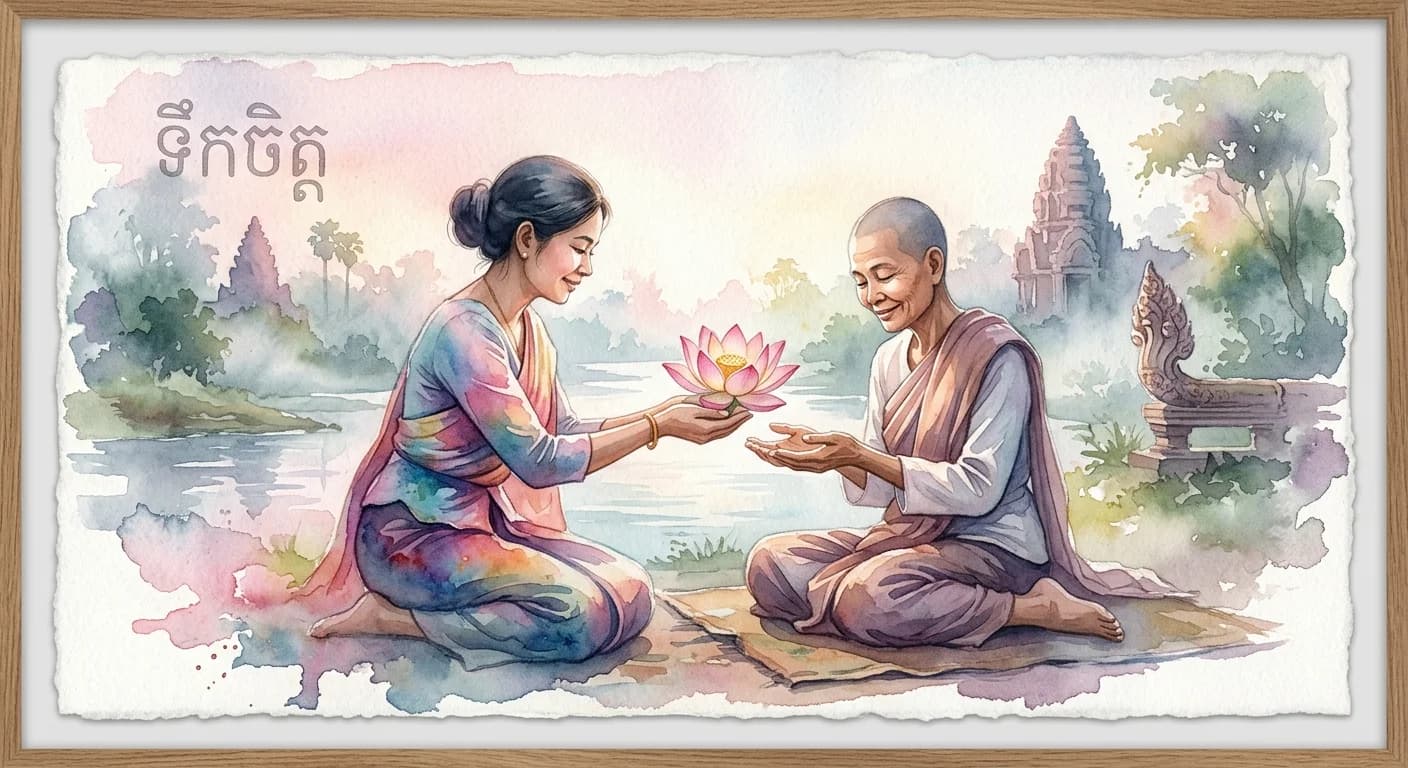
ទឹកចិត្ត
/tuk-cheut/
Meaning
ទឹកចិត្ត (Tuk-chet) encapsulates a profound, almost sacred, generosity of spirit, emanating directly from the heart's deepest wellspring. It describes an act of giving, support, or affection that is utterly pure, untainted by expectation of reciprocation or personal gain. This isn't mere kindness; it's the warm, unbidden empathy that moves one to extend a compassionate hand, reflecting a core Cambodian value of communal care and genuine human connection, flowing as freely and life-giving as water itself.
Literal Translation
Water-heart
The Story Behind the Word
The existence of ទឹកចិត្ត is deeply rooted in Cambodian Theravada Buddhism and its emphasis on metta (loving-kindness) and karuna (compassion). Centuries of shared community life, often in challenging circumstances, fostered a profound reliance on mutual support. This word didn't just emerge; it was cultivated through generations where collective well-being was paramount. It reflects a worldview where individual actions are seen through their impact on the social fabric, and where true merit (บุญ – bun) is gained not just through ritual, but through heartfelt, selfless contribution to others. It reveals a society that values the purity of intention above all, seeing the 'water of the heart' as the source of all good deeds, essential for harmony and resilience.
Experience It
A Neighbor's Helping Hand
When Mrs. Srey fell ill, her neighbor, without being asked, brought her home-cooked meals daily and helped tend her garden. This selfless act, driven purely by concern for Mrs. Srey's well-being, was a beautiful expression of ទឹកចិត្ត.
Sharing the Harvest
After a bountiful rice harvest, a farmer shared a significant portion of his yield with families who had struggled that season, asking for nothing in return. His generosity, stemming from a deep sense of community, perfectly embodied ទឹកចិត្ត.
The Deeper Meaning
ទឹកចិត្ត reveals a profound philosophical understanding of human connection and virtue. It posits that true goodness doesn't reside in external acts alone, but in the internal purity of one's intentions. This word underscores a worldview where empathy is a fundamental wellspring of human action, and where the most valuable contributions to society are those given freely, from a place of genuine, unadulterated compassion, fostering a sense of collective responsibility and shared humanity.
Did You Know?
The 'water' (ទឹក) in ទឹកចិត្ត isn't just symbolic; it evokes the life-giving, flowing, and purifying qualities of water, suggesting that true kindness should be as natural and abundant as water itself.
How It's Used
Used to describe acts of kindness, generosity, and sincere help offered to others, especially when it comes from a place of genuine care and compassion.