Chautari
/CHOW-tah-ree/
Meaning
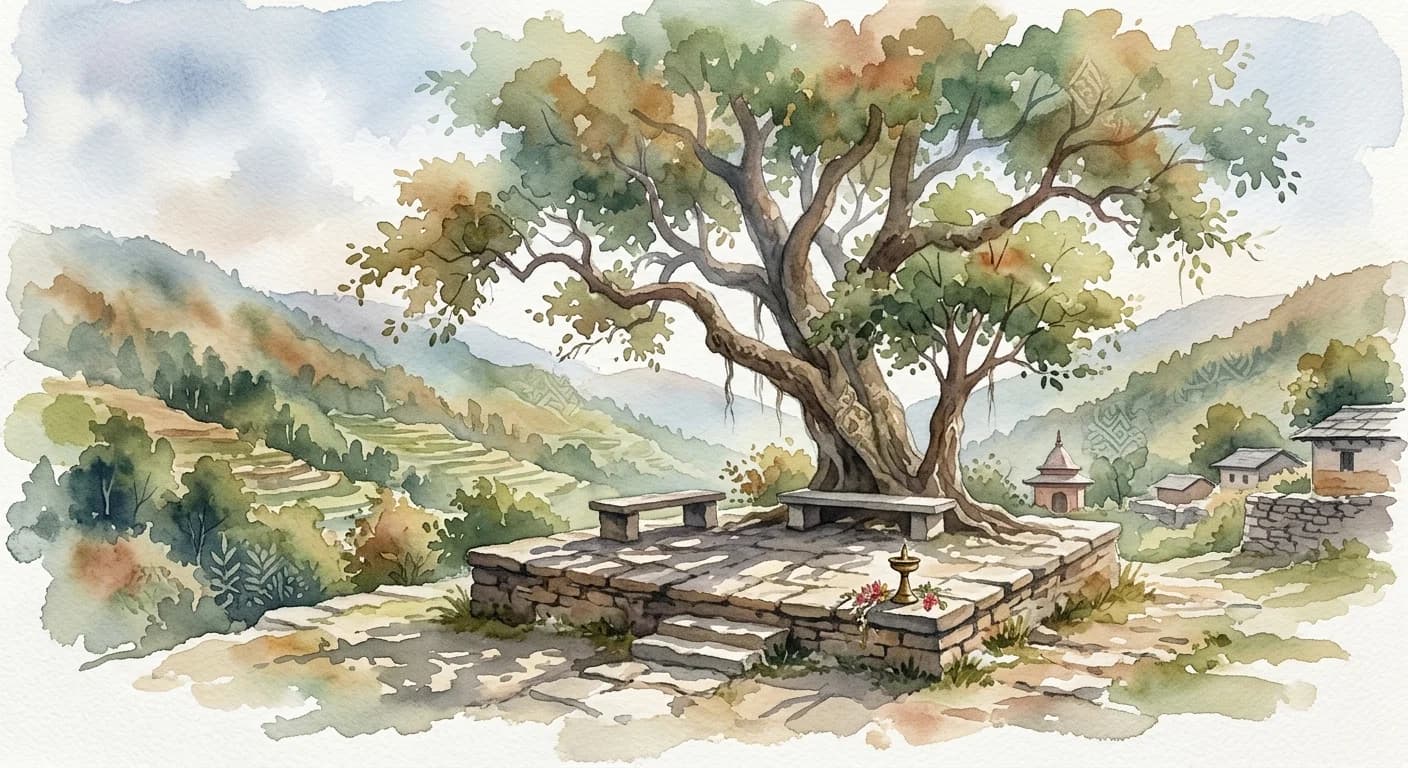
A chautari is far more than a simple resting spot; it is a venerable stone platform, often encircling a sacred pipal or banyan tree, that serves as an enduring symbol of community and respite across Nepal. These structures, meticulously crafted along ancient trails, bustling village centers, and serene pilgrimage routes, offer weary travelers and locals alike a place to pause, socialize, and revitalize. They embody a deep-seated tradition of spontaneous hospitality, providing shade, shelter, and a space for shared stories, brief conversations, and quiet contemplation amidst the journey of life.
Literal Translation
Resting platform
The Story Behind the Word
The existence of chautaris is deeply rooted in Nepal's history as a land of arduous mountain treks and close-knit village communities. Traditionally, building a chautari, often in memory of a deceased loved one or as an act of merit, was considered a highly virtuous deed (punya karma). This practice reflects a profound cultural value placed on selfless service and communal well-being, where individuals contribute to the collective good without expectation of personal gain. Chautaris reveal a worldview that prioritizes hospitality, mutual support, and the recognition of life's journey as something to be undertaken with periods of rest and connection. They are silent testaments to a society that understands the human need for both physical and spiritual pause, fostering a sense of shared humanity among strangers and neighbors alike. The shade-giving trees associated with them are often sacred, further imbuing these spaces with spiritual significance and a sense of timelessness.
Experience It
Pilgrim's Respite
After hours of climbing the steep, dusty trail towards the temple, an elderly pilgrim spots a grand chautari under a sprawling banyan tree. He gratefully sinks onto the cool stones, unshoulders his pack, and watches as other travelers share water and stories, finding renewed strength for the journey ahead.
Village Elders' Council
In the heart of the village, beneath the shade of the ancient pipal tree, the chautari serves as an informal meeting place. Elderly men gather there in the afternoons, discussing village affairs, settling minor disputes, and sharing wisdom with younger generations who occasionally stop by to listen.
The Deeper Meaning
Chautaris embody a philosophy of 'dharma' (righteous conduct) and 'seva' (selfless service), reflecting a profound cultural understanding that individual well-being is intertwined with collective welfare. They symbolize the importance of providing succor for others on life's journey, highlighting virtues of generosity, community, and an unwritten social contract of mutual aid. The act of creating and utilizing a chautari underscores a worldview where compassion and practicality merge to support human resilience and connection.
Did You Know?
Many chautaris are built around sacred pipal (Ficus religiosa) or banyan (Ficus benghalensis) trees, which are considered holy in Hinduism and Buddhism, linking these resting places to spiritual merit and natural reverence.
How It's Used
Used to refer to a traditional resting platform, typically made of stone, found along paths and in villages in Nepal, often shaded by a tree. It's a place where travelers and locals can rest, socialize, and find shelter.