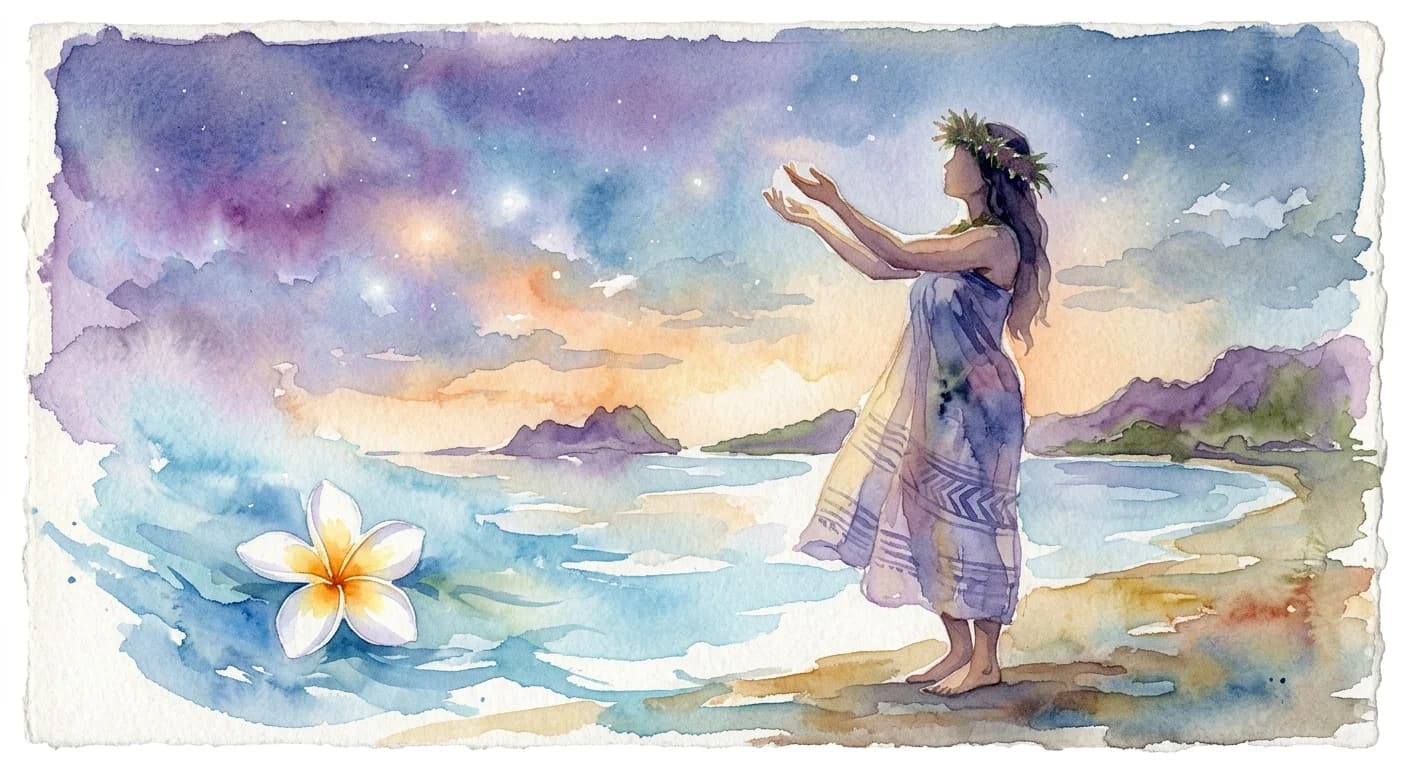
Hula
/HOO-lah/
Meaning
Hula transcends mere dance; it is a profound spiritual and artistic expression, a living repository of Hawaiian culture. Through intricate hand gestures (haka), rhythmic footwork, and swaying hips, accompanied by oli (chants) and mele (songs), it narrates epic tales of creation, gods, heroes, and the natural world. Each performance is a vibrant act of storytelling, connecting the practitioner and audience to ancestral wisdom, the 'āina (land), and the profound spiritual essence of Hawaiʻi, embodying a deep reverence for heritage and identity.
Literal Translation
The literal meaning of 'hula' is debated, but it is often associated with the concept of 'dance' or 'shaking'.
The Story Behind the Word
Hula is an integral part of Hawaiian identity, predating Western contact and serving as the primary means of recording and transmitting history, genealogy, mythology, and spiritual beliefs in an oral culture. Its existence reflects a worldview where the physical and spiritual realms are intertwined, and where storytelling through movement is as vital as spoken word. Hula was traditionally performed for religious ceremonies, royal entertainment, and significant life events. After its suppression by missionaries in the 19th century, it experienced a powerful resurgence in the 20th century, becoming a symbol of cultural resilience and a crucial tool for reclaiming and preserving Hawaiian language and traditions. It embodies the concept of 'mālama' (to care for, protect) for one's heritage.
Experience It
Honoring the Ancestors
During a solemn 'Aha Hula (hula gathering), Kumu Hula (hula teacher) Aunty Leilani leads her haumāna (students) in a kahiko (ancient) hula. Their synchronized movements and powerful chants narrate the epic journey of Pele, the volcano goddess, connecting everyone present to the raw, creative power of their ancestors and the land's fiery origins.
Joyful Celebration
At a vibrant lūʻau, the aroma of kalua pig fills the air as a group of young women perform 'auana (modern) hula. Their graceful movements tell a playful story of island life, their smiles radiating the aloha spirit, inviting guests to share in the joy and beauty of Hawaiian culture through their expressive dance.
What Gets Lost in Translation
Many English speakers mistakenly view hula as simply a recreational 'grass skirt dance' for tourists. This perception overlooks its deep spiritual, historical, and narrative significance. The nuanced hand gestures, often more important than hip movements, are a complex sign language, and the chants (oli) are vital, making it far more than just a physical performance; it's a living archive.
Across Cultures
Similar forms of storytelling through movement exist across various cultures. Indigenous Australian corroborees combine song, dance, and ritual to transmit sacred knowledge and history. Balinese dance-dramas like Legong and Barong also use stylized movements and intricate costumes to convey complex mythological narratives and spiritual concepts, embodying a similar integration of art, spirituality, and cultural preservation.
The Deeper Meaning
Hula reveals a Hawaiian worldview that values interconnectedness and intergenerational transmission of knowledge. It embodies the philosophy of 'mana' (spiritual power) inherent in all things, especially in nature and ancestral wisdom. Through hula, Hawaiians express their kuleana (responsibility) to their land and ancestors, demonstrating that culture is not static but a dynamic, embodied practice that sustains identity and meaning across generations.
Did You Know?
Did you know that during the 19th century, hula was briefly banned by Christian missionaries in Hawaiʻi? However, it continued to be practiced in secret, demonstrating its profound cultural significance and the resilience of the Hawaiian people.
How It's Used
Hula is performed during cultural gatherings, celebrations, religious ceremonies, and as a way to pass down stories and traditions through generations. It can be both a sacred ritual and a vibrant performance art.