Grúsk
/GROOSK/
Meaning
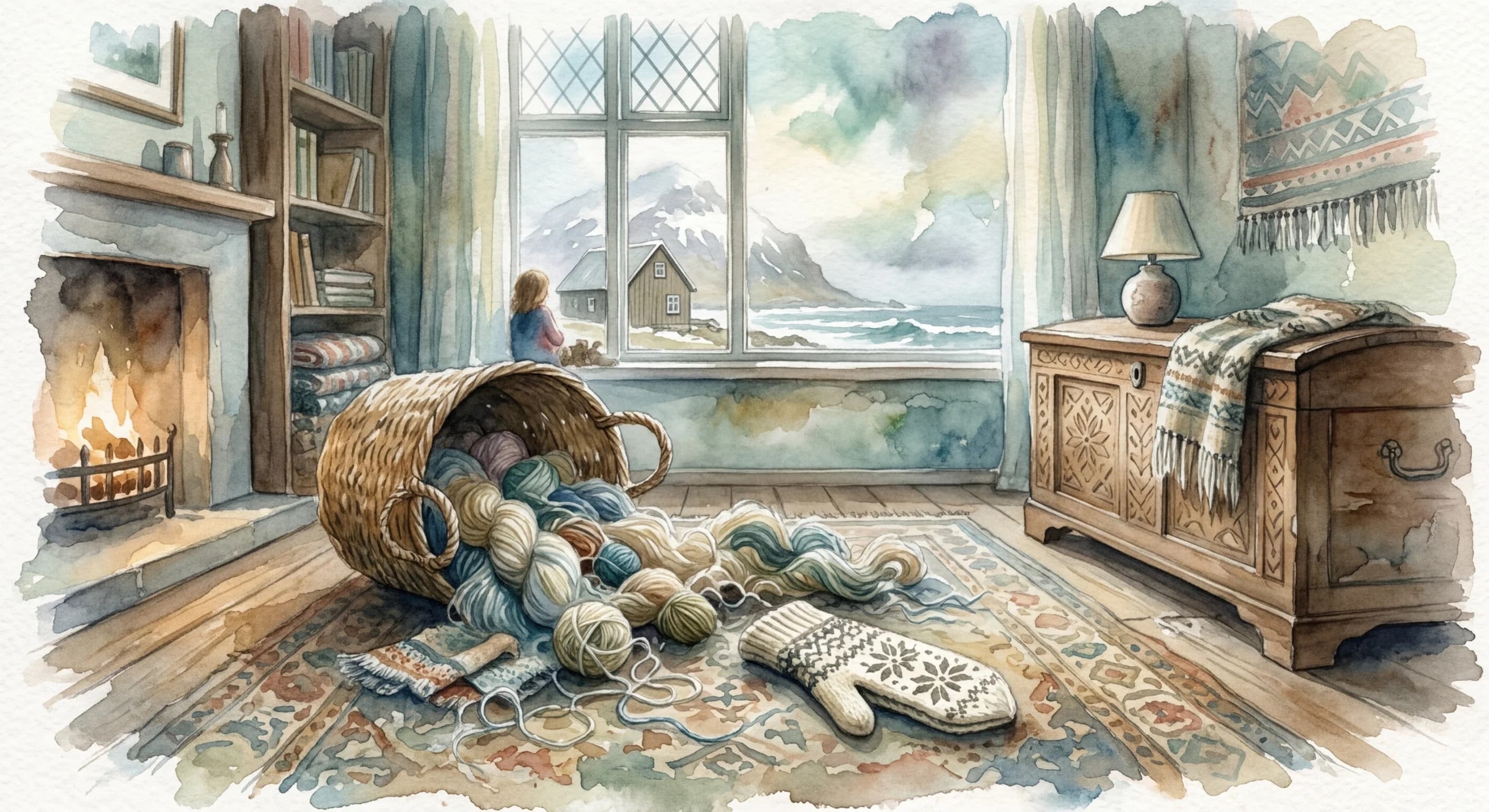
Grúsk describes the frantic, often noisy, and somewhat undignified act of rummaging through a confined space in a desperate search for something lost or misplaced. It encapsulates not just the physical disarray of an overturned drawer or a disheveled bag, but also the palpable mental state of urgency, frustration, and focused chaos. This isn't a gentle search; it's an immersive, almost primal hunt, leaving a trail of minor disorder in its wake as one delves deep into the jumble, driven by immediate need.
Literal Translation
rummage, search messily
The Story Behind the Word
The existence of 'grúsk' in Icelandic reflects a practical, resilient culture accustomed to making do and finding what's needed, even in disarray. In a land where resources could historically be scarce and organization sometimes secondary to survival or immediate tasks, the ability to efficiently (albeit messily) locate something vital was crucial. It speaks to a certain Icelandic pragmatism – sometimes things get messy, but you still need to find that essential item. The word also subtly acknowledges the human experience of momentary panic and the physical manifestation of that stress when searching for something important, suggesting a society that understands and verbalizes these common, relatable frustrations.
Experience It
Morning Key Hunt
Running late for work, Elísabet threw open her handbag, spilling its contents onto the kitchen counter. She began to grúsk, muttering under her breath as she dug through receipts, lipsticks, and old tissues, desperately searching for her car keys.
Archive Dive
The historian was in a dusty old archive, surrounded by stacks of unmarked boxes. He started to grúsk through a pile of brittle documents, stirring up decades of dust, hoping to unearth a specific letter from the early 20th century.
The Deeper Meaning
Grúsk, in its essence, highlights the human struggle against chaos and the immediate, often undignified, measures taken to restore order or fulfill a pressing need. It suggests that sometimes, the most effective way to find what's lost is not through meticulous organization, but through a focused, albeit messy, engagement with disarray – a testament to pragmatic resourcefulness over pristine order.
Did You Know?
The onomatopoeic quality of 'grúsk' is often noted; the sound of the word itself seems to mimic the rustling and fumbling associated with rummaging.
How It's Used
Used to describe the action of searching through belongings, often in a messy or hurried way. For example, someone might say 'Ég var að grúskast í töskunni minni eftir lyklunum mínum' (I was rummaging in my bag for my keys).